Categorizing Lions
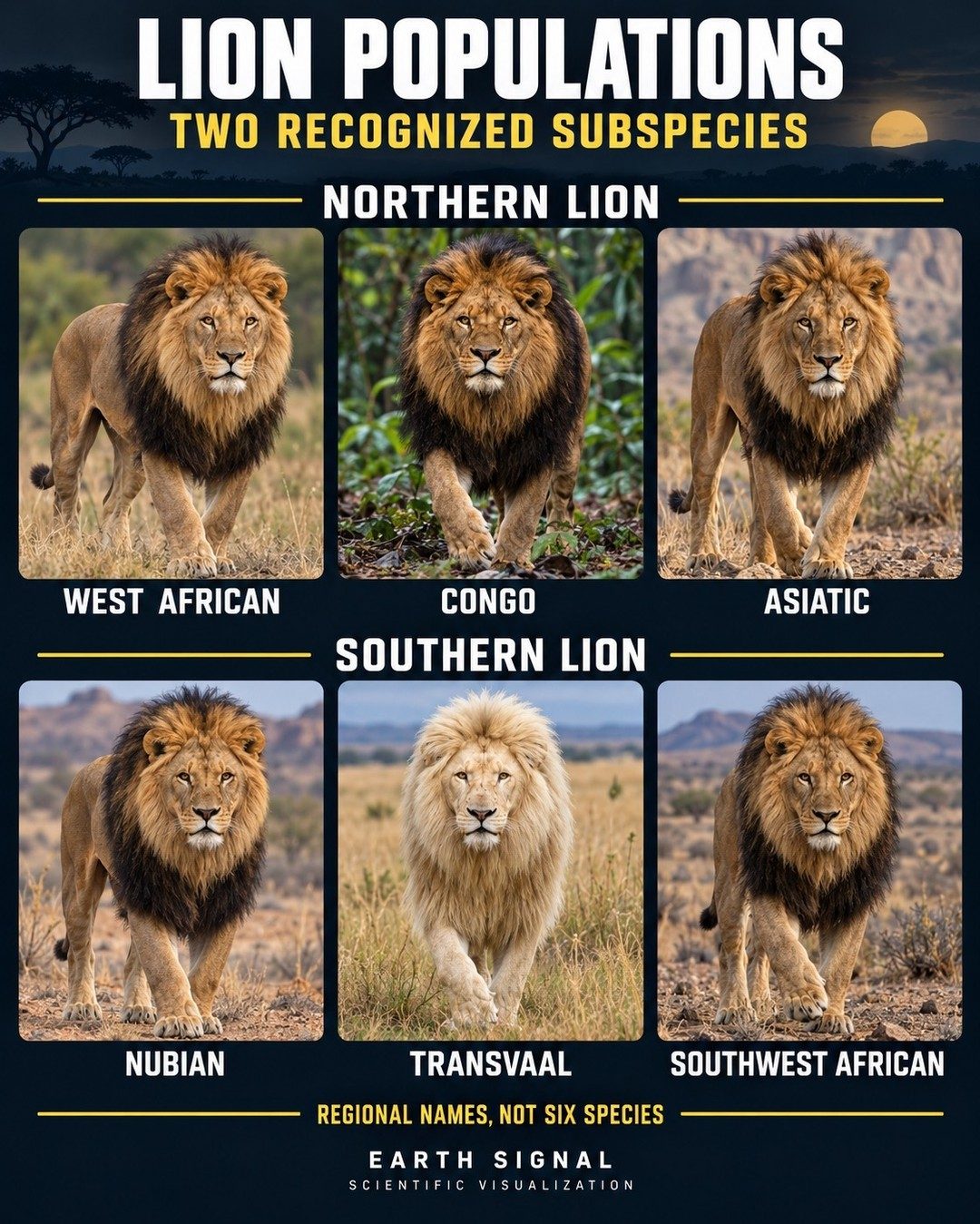
Lions, often romanticized as distinct "types" in popular media, are scientifically divided into just two subspecies. According to the IUCN Cat Specialist Group, these are the Northern lion (Panthera leo leo) and the Southern lion (Panthera leo melanochaita). This classification underscores the nuance in lion taxonomy, which often goes unrecognized. The Asiatic lion, for instance, falls under the Northern lion subspecies. The distinction between Northern and Southern lions is not a simple geographical divide. For example, in India, the Asiatic lion is found, and the Southern lion is typically found in sub-Saharan Africa This binary classification is based on data that might change as conservation and science develop, suggesting a dynamic understanding of lion taxonomy. Names like West African, Congo, Nubian, Transvaal, and Southwest African do not describe distinct species but rather regional populations or historical groupings. five lions and one tiger all have a great number of genes that can be followed back to them living in common groupings, this also places into question the circa 2023 narrative of a king of the jungle.
Understanding Subspecies Mistaken Identification
This misrepresentation of lions as multiple species often stems from regional names that describe local populations rather than distinct genetic lineages. In other words, while locations provide important insight into local population behaviors, they have limited bearing on the genetic data that biological classifications are built on. For instance, the West African and Congo lions are part of the Northern lion subspecies. On the other hand, populations in East and Southern Africa belong to the Southern lion subspecies. Though the Asiatic lions, whose persistence was very much in question as of circa 2015, are now retuned by locals,in the western world, it is one of the lesser known (outside of India) felines. The Asiatic lion and Northern lions often have small manes — especially when compared to that of the Eastern African lions. This is where the often quoted "king of the jungle" narrative has more credence.
Scientific Visualization
The visual aid created by Earth Signal clarifies these distinctions, illustrating six lion images categorized into Northern and Southern lions. However, the visuals only supports this limited classification, and does not provide a means for understanding the full scope of the ecosystems in which these felines live or their complex societies.
The Changing Nature of Lion Classification
Research on lions is still ongoing. Lion populations evolve, and so does the science of lion classification. Genetic data, which is constantly evolving as sequencing technology improves, informs researchers and conservation scientists, and they frequently refine their understanding of lion subspecies. This means that while the current classification recognizes only two subspecies of lions, future research may reveal more nuanced distinctions. West African and Congo lions, for example, may be classified as separate subspecies in the future, and not simply listed as regional variations. Conservation efforts, like the protection of Asiatic lions, could add to this shifting understanding, changing the face of how scientist analyze them. As the proverb goes, lions are like diamonds. They can be cut in many different ways, any of them might be the best way to classify them.
Watch the Reel
Related deep dives
Similar reads based on topic and creator.




Recent articles
Fresh deep dives from the latest Reels we unpacked.




Comments
Be the first to comment.