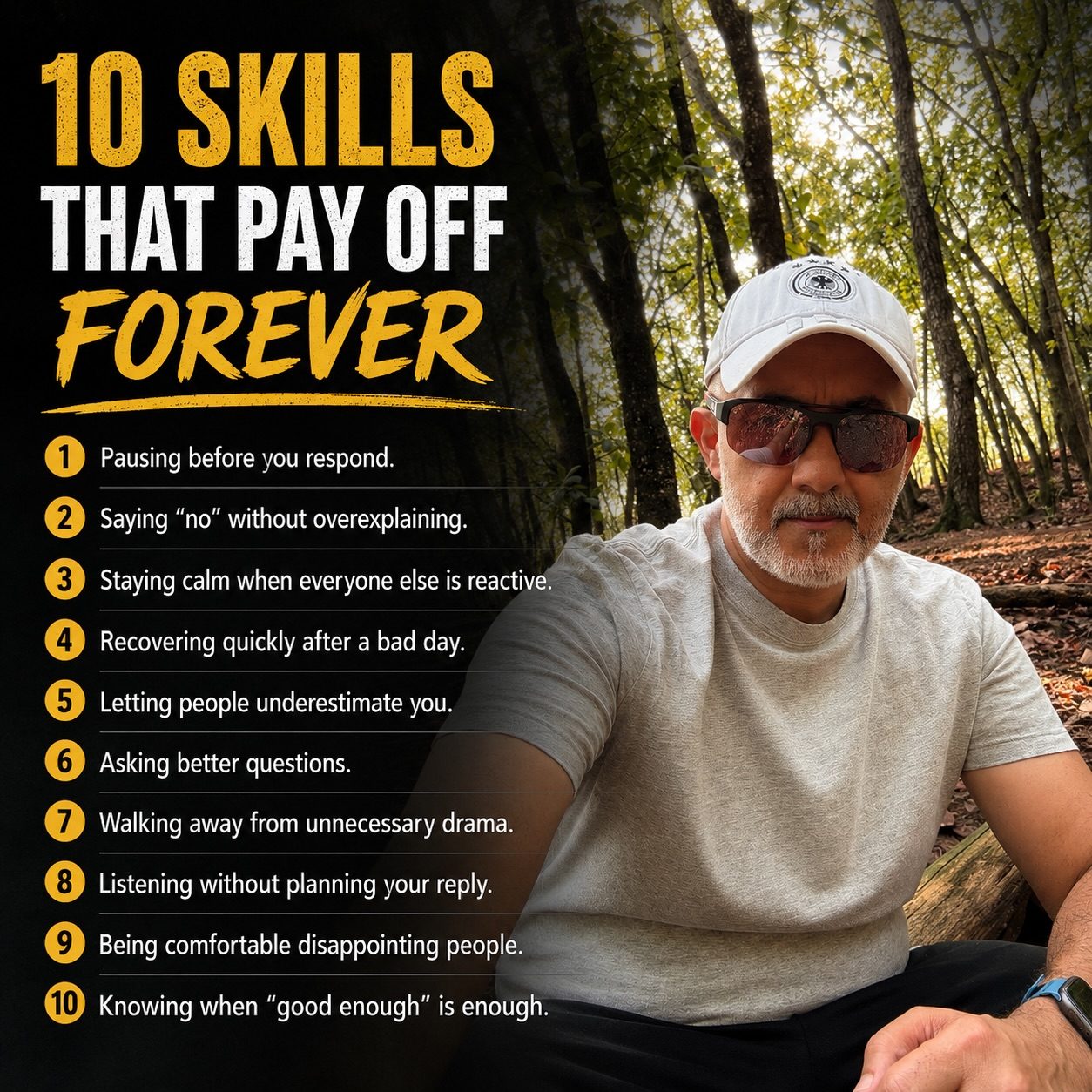
Skills That Pay Off Forever
Living a fulfilling and effective life often comes down to mastering certain everyday skills. Many of these abilities aren't flashy or immediately noticeable, but they have a profound impact on personal growth and leadership. Let's explore ten such skills that can significantly enhance your approach to life and work.
Context: Why This Matters
In today's fast-paced world, it's easy to get caught up in the whirlwind of constant notifications, meetings, and deadlines. However, taking a step back and reflecting on the fundamentals can lead to greater clarity and effectiveness. These ten skills are not just about getting things done; they're about doing them with a sense of purpose and resilience.
Main Discussion
Pausing Before You Respond
The ability to pause before responding is a powerful tool in communication. Rather than reacting impulsively, taking a moment to consider your words can lead to more thoughtful and effective conversations. It demonstrates respect for the speaker and allows you to formulate a more meaningful response.
Saying 'No' Without Overexplaining
Knowing when and how to say "no" is crucial for maintaining boundaries. It's important to understand that you don't need to justify every refusal. A simple, firm "no" can be enough to set clear expectations and preserve your time and energy.
Staying Calm When Everyone Else Is Reactive
In high-stress situations, staying calm can be a game-changer. It allows you to think more clearly and make better decisions. By remaining composed, you can also help others around you to stay calm and focused.
Recovering Quickly After a Bad Day
Life will inevitably throw challenges your way. The ability to bounce back from setbacks quickly is essential for maintaining momentum. It's about acknowledging the difficulty but not dwelling on it, so you can move forward with renewed energy.
Letting People Underestimate You
Allowing others to underestimate you can be a strategic move. It can create a surprise factor when you exceed expectations, and it can also help you avoid unnecessary pressure or scrutiny. It’s a quiet way of showing that actions often speak louder than words.
Asking Better Questions
Asking insightful questions is a mark of a good listener and a thoughtful thinker. It shows that you are engaged and genuinely interested in understanding the situation. Better questions can lead to better answers and more productive outcomes.
Walking Away from Unnecessary Drama
Drama can be a time and energy drain. Knowing when to walk away from unnecessary conflicts or distractions can help you focus on what truly matters. It’s about prioritizing your well-being and productivity over unnecessary turmoil.
Listening Without Planning Your Reply
True listening involves being present and engaged without planning your response. It allows you to fully absorb what the other person is saying, which can lead to more empathetic and considered interactions. Listening well is a sign of respect and attentiveness.
Being Comfortable Disappointing People
It can be difficult to disappoint others, but sometimes it’s necessary. Understanding that you can't please everyone allows you to make decisions based on your values and priorities, rather than trying to meet everyone's expectations.
Knowing When 'Good Enough' Is Enough
In a world that often values perfection, knowing when "good enough" is enough can save you from burnout. It’s about setting realistic expectations and understanding that sometimes, striving for perfection can be counterproductive.
Practical Tips
Implementing these skills in your daily life can be a transformative experience. Here are some practical tips to get you started:
Setting Aside Time for Reflection
Take regular breaks to reflect on your actions and decisions. This could be a daily journaling practice, a weekly review, or even a monthly retreat. Use this time to assess what’s working and what needs improvement.
Practice Active Listening
When engaging in conversations, focus on understanding rather than formulating a response. Paraphrase what the speaker is saying to ensure clarity and show that you are engaged.
Create a 'No' Policy
Set clear boundaries by having a policy for when and how you say "no." This can include specific criteria for when you take on new tasks or commitments, and communicating these clearly.
Plan Your Calm Down
When you anticipate a stressful situation, plan ahead for how you will maintain your composure. This could be through deep breathing, a quick walk, or another calming technique.
Prioritize Recovery Time
After a challenging day, take time to recover. This could be through exercise, relaxation, or simply taking a break. Make sure to prioritize self-care and give yourself the time you need to bounce back.
Ask Open-Ended Questions
When seeking information or solutions, use open-ended questions. These ask for more than a simple "yes" or "no" and can lead to deeper understanding and more nuanced responses.
Recognize When to Walk Away
If a situation is becoming overly dramatic or toxic, recognize when it's time to step away. Set boundaries and prioritize your own well-being and productivity.
Focus on Understanding
When listening, focus on the content of the message rather than planning your own response. Listen actively and ask clarifying questions if needed.
Prioritize Your Values
If you find yourself struggling with disappointing others, consider your values and priorities. Make decisions that align with your personal integrity, even if it means disappointing some people.
Embrace the 80/20 Rule
Accept that perfection is often unnecessary. Use the 80/20 rule to focus on the 20% of tasks that yield 80% of the results, and don’t stress over the remaining 20% of tasks that may not add much value.
Important Takeaways
-
Practice Patience: Many of these skills require patience and consistent effort. They are habits that become stronger over time.
-
Focus on the Process: Rather than fixating on the outcome, focus on the process of developing these skills. Small, incremental improvements can lead to significant results.
-
Value Your Time: Know the value of your time and energy. Don’t hesitate to say "no" when necessary.
-
Embrace Imperfection: Understand that “good enough” is often enough. Strive for progress, not perfection.
-
Cultivate Resilience: The ability to bounce back from setbacks is key. It allows you to maintain momentum and avoid burnout.
-
Listen Actively: Active listening enhances your communication skills and builds stronger relationships.
Conclusion
Incorporating these ten skills into your daily life can transform your approach to work, relationships, and self-improvement. Each skill is a quiet habit that can have a profound impact on your personal growth and leadership effectiveness.
Watch the Reel
Questions readers ask
Why is pausing before responding a crucial skill for personal growth?
Pausing before responding allows you to collect your thoughts, consider different perspectives, and react more thoughtfully. It helps you avoid impulsive decisions and fosters better communication, making it a vital skill for navigating life's challenges and enhancing personal growth.
How can learning to stay calm under pressure improve my leadership skills?
Staying calm under pressure enables you to make better decisions, communicate more effectively, and inspire confidence in others. This composure helps you manage stress, think clearly, and maintain a positive attitude, all of which are essential for effective leadership.
What are some effective strategies for saying 'no'?
Effective strategies for saying 'no' include being direct and polite, offering an alternative if possible, and explaining your reasons when appropriate. These methods help you manage your time and commitments, ensuring you only take on tasks that align with your values and priorities.
How does emotional resilience contribute to personal growth?
Emotional resilience enables you to adapt to change, recover from setbacks, and maintain a positive outlook. It helps you build mental toughness, bounce back from adversity, and develop a stronger sense of self, all of which are vital for personal growth and wellbeing.
What are the benefits of practicing purposeful actions in daily life?
Purposeful actions help you focus on what truly matters, align your activities with your values, and enhance your overall sense of fulfillment. By cultivating this skill, you can improve your daily habits, make better decisions, and create a more meaningful and productive life.
How can improving communication skills enhance leadership?
Improving communication skills can enhance leadership by enabling you to clearly convey your vision, listen actively to others, and foster a collaborative environment. Effective communication also helps you build trust, resolve conflicts, and motivate your team, making it indispensable for leadership skills development.
How can I develop the ability to stay calm under pressure?
Developing the ability to stay calm under pressure involves practicing mindfulness, deep breathing, and positive self-talk. Regular practice of these techniques can help you manage stress, think clearly, and maintain your composure in challenging situations, enhancing your resilience and decision-making skills.
Recent articles
Fresh deep dives from the latest Reels we unpacked.




Comments
Be the first to comment.