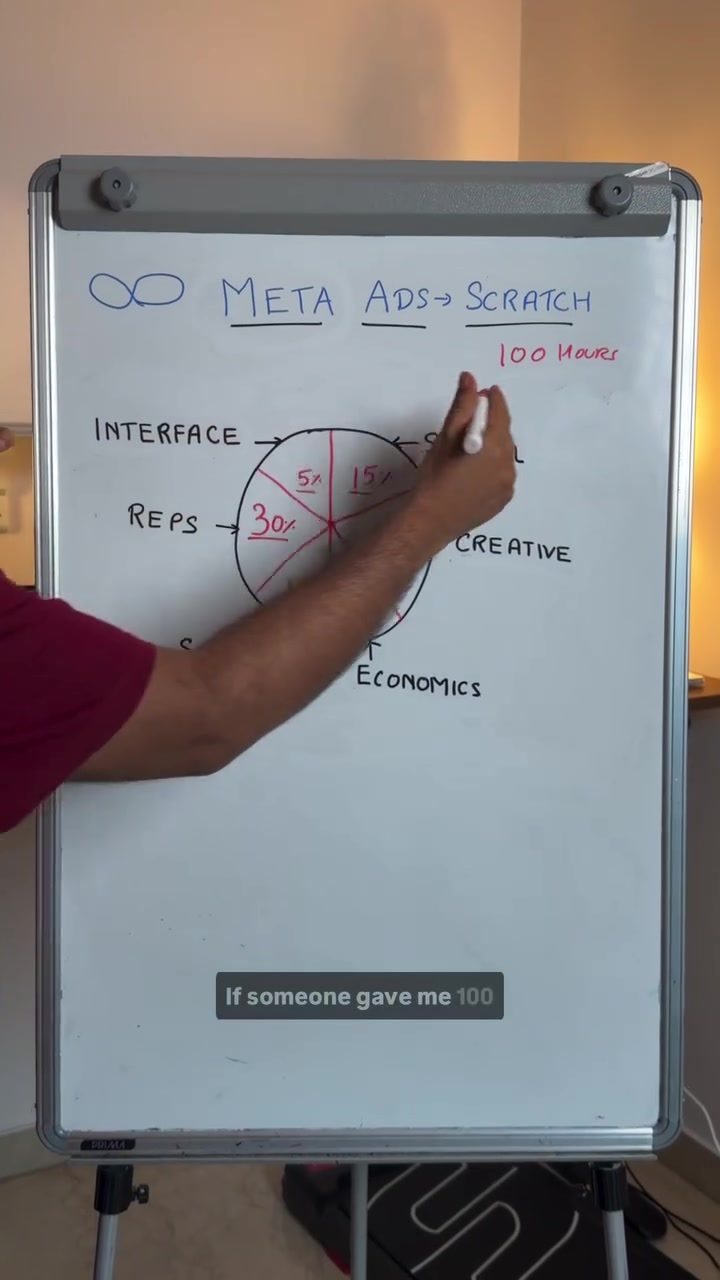
Meta Ads Strategy: The Optimal 100-Hour Learning Plan
Meta Ads can be a powerful tool for driving business growth, but mastering them requires a strategic approach. If you had 100 hours to learn Meta Ads from scratch, how would you allocate your time? The key is to focus on the aspects that truly impact performance, rather than getting bogged down in the technical details. Here's a breakdown of how to effectively use those 100 hours.
Why This Matters
Meta Ads can significantly boost your online presence and drive sales, but only if you understand how to use them effectively. Many beginners make the mistake of spending too much time on the ads manager interface, neglecting the more critical aspects that determine the success of their campaigns. A well-rounded approach that covers economics, signal, creative, scaling, and real-world practice is essential for achieving optimal results.
Main Discussion
Economics
Economics is the foundation of any successful Meta Ads strategy. Spend 10 hours understanding the basics of margins, Customer Acquisition Cost (CAC), Return on Ad Spend (ROAS), and Average Order Value (AOV). These metrics will help you determine your break-even number and differentiate between winning and losing campaigns. Without a solid grasp of these concepts, you won't be able to make informed decisions about your ad spend.
Interface
The interface is often where beginners spend the most time, but it's the least important aspect of Meta Ads. With automated tools like Meta Campaign Planner, much of the interface work is handled for you. Allocate just 5% of your time (around 5 hours) to learning the interface. Watch a couple of YouTube tutorials on setting up a Meta ad campaign and making changes, and then move on. The machine will handle most of the heavy lifting, so there's no need to spend excessive time on this.
Signal
Signal refers to the data you send back to Meta from your server. This data is crucial for Meta's algorithms to find relevant audiences for your ads. Spend 15 hours learning about server-side tracking and ensuring that all relevant data is being passed back to Meta. This includes understanding how to track conversions, events, and other key metrics that will help Meta optimize your campaigns.
Creative
Creative is where the magic happens. Around 60 to 70% of your campaign's success depends on your creative strategy. Spend 30 hours focusing on your creative approach. Start by analyzing your competition's top-performing ad hooks and replicating them. Create an agent that scans the Meta Ad Library to identify the top 20 hooks used by your competitors. Once you have a solid foundation, start experimenting with your own creative ideas. Remember, the creative aspect is the most critical part of your campaign, so invest your time wisely.
Scaling
Scaling your campaigns is essential for maximizing your return on investment. Spend 10 hours learning how to scale your campaigns effectively. This includes knowing how to decide which campaigns to scale and at what pace. Scaling ties back to economics, as scaling too quickly can negatively impact your ROI. Learn to raise your budgets gradually to avoid resetting the learning phase of your campaigns.
Real Reps
Finally, spend 30 hours running real campaigns with your own budget. There's no better way to learn than by experiencing the consequences of your decisions firsthand. Spend 10 to 20 dollars on your own and see how quickly your budget disappears. This hands-on experience will teach you more than any tutorial or guide ever could. By running real campaigns, you'll gain valuable insights into what works and what doesn't.
Practical Tips
-
Set Clear Goals: Before diving into Meta Ads, define what success looks like for your business. Whether it's increasing sales, generating leads, or boosting brand awareness, clear goals will guide your strategy.
-
Leverage Automation: Take advantage of automated tools and algorithms to handle the tedious parts of campaign management. This will free up your time to focus on the more strategic aspects.
-
Continuous Learning: The world of digital marketing is constantly evolving. Stay updated with the latest trends, tools, and best practices to ensure your campaigns remain effective.
-
Data-Driven Decisions: Use the data from your campaigns to make informed decisions. Regularly review your metrics and adjust your strategies accordingly.
-
Test and Iterate: Don't be afraid to experiment with different creative approaches, targeting strategies, and bidding methods. Continuous testing and iteration will help you refine your campaigns for better performance.
Important Takeaways
-
Prioritize Economics: Understanding the fundamentals of margins, CAC, ROAS, and AOV is crucial for making informed decisions about your ad spend.
-
Minimize Interface Time: Spend just 5 hours learning the interface, as automated tools handle much of the work.
-
Focus on Signal: Ensure your server-side tracking is set up correctly to feed Meta clean data.
-
Invest in Creative: Allocate 30 hours to creative development, as it significantly impacts your campaign's success.
-
Scale Thoughtfully: Gradually increase your budgets to avoid resetting the learning phase of your campaigns.
-
Gain Real-World Experience: Spend 30 hours running real campaigns with your own budget to gain practical insights.
Conclusion
Learning Meta Ads from scratch can be a daunting task, but with a well-structured plan, you can maximize your time and achieve great results. By focusing on economics, signal, creative, scaling, and real-world practice, you'll be well on your way to mastering Meta Ads. Remember to stay updated, leverage automation, and continuously test and iterate your strategies for optimal performance.
Watch the Reel
Questions readers ask
How should I allocate my 100 hours of learning Meta Ads to see the best results?
First, dedicate 20-30 hours to understanding the economics of Meta Ads, including budgeting, bidding strategies, and cost per acquisition. Next, spend 20-25 hours on creative strategies, focusing on compelling ad content and engaging video ads. Allocate 15-20 hours to mastering data signals and analytics, and finally, use 20-25 hours to learn about scaling your campaigns effectively.
Why is it important to focus on the economics of Meta Ads?
Understanding the economics of Meta Ads is crucial because it helps you manage your budget efficiently. This knowledge lets you make informed decisions about bidding strategies, cost per acquisition, and overall campaign spending, ensuring you get the most out of your investment.
What are data signals and why are they important for Meta Ads?
Data signals in Meta Ads refer to the information gathered from user interactions, which helps you understand your audience better. These signals can guide your targeting, personalization, and optimization strategies, ultimately enhancing the effectiveness of your campaigns.
How can creative strategies impact the success of my Meta Ads campaigns?
Creative strategies play a pivotal role in capturing attention and driving engagement. Spend time developing compelling ad content, including video ads, that resonate with your target audience. This will help improve click-through rates, conversions, and overall campaign performance.
Should I spend significant time learning the Meta Ads interface?
While familiarity with the Meta Ads interface is necessary, avoid spending too much time on it. Focus more on the strategic aspects like economics, data signals, and creative strategies. Once you understand the core principles, navigating the interface will become more intuitive.
What are some key metrics to track when scaling Meta Ads campaigns?
When scaling your Meta Ads campaigns, key metrics to track include cost per acquisition (CPA), return on ad spend (ROAS), click-through rate (CTR), and conversion rate. These metrics will help you assess the performance and efficiency of your campaigns as you increase your ad spend.
How can I effectively manage my time while learning Meta Ads?
To manage your time effectively, create a structured learning plan. Break down the 100 hours into focused segments for each key area: economics, data signals, creative strategies, and scaling. Set specific goals for each segment and regularly review your progress to stay on track.
Recent articles
Fresh deep dives from the latest Reels we unpacked.




Comments
Be the first to comment.