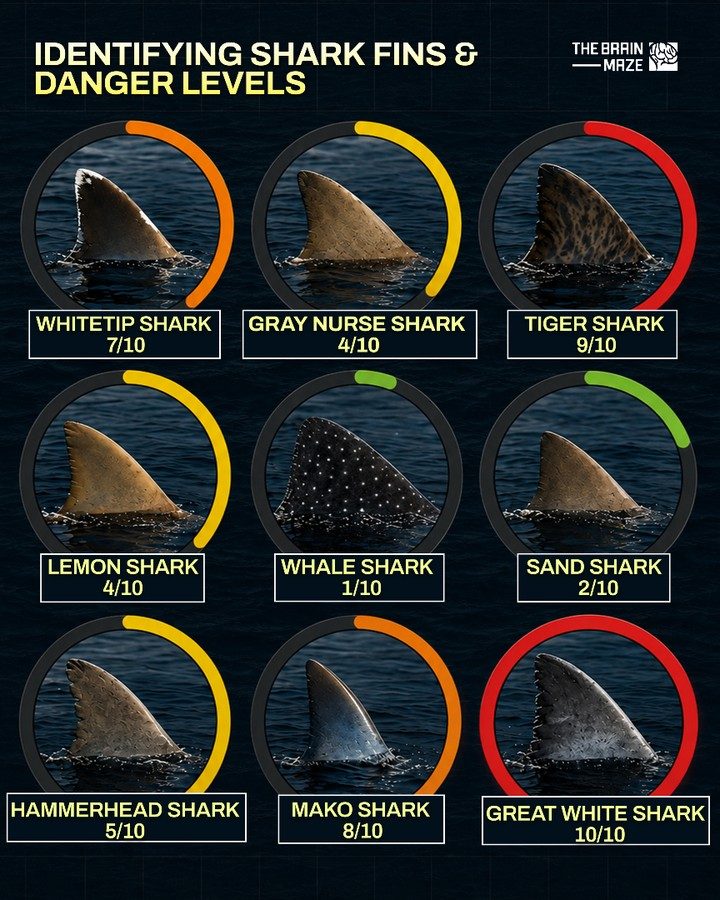
Shark Fin Identification: A Guide to Recognizing Nine Common Species and Their Danger Levels
Sharks are some of the most fascinating and feared creatures in the world's oceans. One of the key features that helps identify different shark species is the shape and size of their dorsal fins. The fin alone, however, doesn't always indicate how dangerous a shark is. This guide will help you identify nine common shark species, their relative danger levels, and the diversity of sharks found in our oceans.
Context / Why this matters
Recognizing different shark species by their fins is crucial for various reasons. For marine biologists and researchers, accurate identification helps in studying shark populations, behaviors, and migration patterns. For divers and swimmers, knowing which shark species you might encounter can enhance safety and awareness. Understanding the diversity of sharks also highlights the importance of marine conservation efforts, as many species face threats from overfishing, habitat loss, and climate change.
Main discussion
Whale Shark (1/10)
The whale shark, the largest fish in the sea, is relatively harmless to humans. With a danger level of 1/10, these gentle giants primarily feed on plankton and small fish. Their fins are large and broad, with a distinct rounded tip, making them easily recognizable. Encounters with whale sharks are often thrilling for divers and snorkelers due to their calm demeanor.
Sand Shark (2/10)
Sand sharks, also known as sand tiger sharks, have a danger level of 2/10. They have a broad, triangular dorsal fin and are known for their aggressive behavior when provoked. Sand sharks are ambush predators, often lying in wait for prey. While they are generally not a significant threat to humans, caution is advised when diving near them.
Gray Nurse Shark (4/10)
Gray nurse sharks have a danger level of 4/10 and are known for their stocky bodies and large, triangular dorsal fins. They are generally docile but can be aggressive if provoked. Gray nurse sharks are often found in coastal areas and are known to exhibit curious behavior around divers, making them a species to observe with care.
Lemon Shark (4/10)
Lemon sharks, with a danger level of 4/10, are named for their yellowish-brown color. Their dorsal fin is relatively high and pointed, making them easy to identify. These sharks are often found in shallow waters and are known to be more active at night. They are generally not aggressive towards humans but should be approached with caution.
Hammerhead Shark (5/10)
Hammerhead sharks are unique due to their distinctive hammer-shaped heads. Their danger level is 5/10, making them moderately dangerous. Hammerhead sharks have high dorsal fins and are known for their schooling behavior. They are often found in warm waters and are known to be curious around divers, but interactions should be handled with care.
Whitetip Shark (7/10)
Whitetip sharks, with a danger level of 7/10, have a relatively high risk associated with them. Their dorsal fin is high and pointed, and they are known for their white-tipped dorsal and tail fins. These sharks are often found in deeper waters and are known to be more active at night. They are generally solitary but can be aggressive if provoked.
Mako Shark (8/10)
Mako sharks, with a danger level of 8/10, are among the fastest and most aggressive sharks in the ocean. Their dorsal fin is tall and pointed, making them easily recognizable. Mako sharks are known for their powerful swimming abilities and are often found in deep waters. They are generally not a significant threat to humans but should be approached with extreme caution.
Tiger Shark (9/10)
Tiger sharks, with a danger level of 9/10, are one of the most dangerous shark species. Their dorsal fin is tall and rounded, and they are known for their aggressive behavior. Tiger sharks are often found in tropical and temperate waters and are known to prey on a wide variety of animals, including other sharks. They should be approached with extreme caution.
Great White Shark (10/10)
The great white shark, with a danger level of 10/10, is the most feared and dangerous shark species. Their dorsal fin is tall, triangular, and distinctive, making them easily recognizable. Great white sharks are known for their powerful and aggressive hunting behavior. They are often found in coastal waters and are known to attack humans, although such incidents are rare.
Practical tips
Identifying fins
To identify shark fins, start by observing the shape, size, and profile of the fin. Remember that the dorsal fin alone does not indicate the shark's danger level. For example, the whale shark has a large, rounded fin, while the great white shark has a tall, triangular fin. Pay attention to the fin's color and pattern, as well as the shark's overall body shape and behavior.
Safety in the water
When diving or swimming in shark-inhabited waters, always be aware of your surroundings. Keep a safe distance from any shark you encounter, and avoid sudden movements. If you encounter a shark, remain calm and avoid making eye contact. Remember that most shark attacks on humans are rare and often due to mistaken identity. Always follow local guidelines and regulations for shark safety.
Conservation efforts
Knowing the diversity of sharks and their habitats can help in conservation efforts. Many shark species are threatened by overfishing, habitat loss, and climate change. Supporting marine conservation organizations and practicing responsible marine behaviors can help protect these vital ocean creatures.
Important takeaways
Diverse species
This guide highlights the diversity of shark species and their unique characteristics. From the gentle whale shark to the powerful great white shark, each species has its own set of behaviors and dangers. Understanding these differences can enhance your knowledge and appreciation of these fascinating creatures.
Identification and safety
Recognizing shark species by their fins can be crucial for safety and conservation. Always approach sharks with caution and respect, and remember that most species are not a significant threat to humans. By following proper safety protocols and supporting marine conservation, you can help protect these essential ocean inhabitants.
Marine conservation
Marine conservation is vital for protecting shark populations and their habitats. By understanding the diversity of sharks and their relative danger levels, you can contribute to conservation efforts and help ensure the survival of these amazing creatures for future generations.
Conclusion
Shark fin identification is a valuable skill for divers, researchers, and anyone interested in marine life. By recognizing the unique shapes and sizes of shark fins, you can better understand the diversity of these amazing creatures and their roles in the ocean ecosystem. Always approach sharks with caution, and remember that most species are not aggressive towards humans. By supporting marine conservation efforts, you can help protect these vital ocean inhabitants and ensure their survival for future generations.
Watch the Reel
Questions readers ask
How do different shark species vary in their fin shapes?
Shark species exhibit a wide range of dorsal fin shapes. For instance, the great white shark has a large, triangular fin, while the whale shark has a small, rounded fin. Other species, like the tiger shark, have a distinctly curved fin. Familiarizing yourself with these variations can help in recognizing different shark species.
What are the most dangerous shark species based on their fin shapes?
While fin shape alone doesn't determine danger, some species known for their aggressive behavior have distinctive fins. The great white shark, with its large, triangular fin, and the bull shark, with its tall, rounded fin, are among the most dangerous. However, it's essential to remember that shark attacks are rare, and most species are not a significant threat to humans.
How can identifying shark species by their fins aid in conservation efforts?
Recognizing shark species by their fins helps researchers track populations and understand migration patterns. This information is vital for implementing effective conservation strategies. By learning to identify different species, you can contribute to broader efforts to protect marine ecosystems and promote responsible interactions with sharks.
What is the significance of the great white shark's fin in identification?
The great white shark's fin is one of the most recognizable, characterized by its large, triangular shape. Identifying this fin can be crucial for both researchers studying these apex predators and for divers or swimmers who may encounter them. However, remember that the great white shark, while powerful, typically does not pose a threat to humans unless provoked.
How can I identify a whale shark by its fin?
The whale shark has a small, rounded dorsal fin, quite different from many other shark species. This fin, combined with the whale shark's massive size and distinctive spotted pattern, makes it relatively easy to identify. Whale sharks are gentle giants and pose no threat to humans, making them a popular sight for divers and marine enthusiasts.
Are there any shark species with similar fin shapes that might be confused with each other?
Yes, some shark species have similar fin shapes, which can make identification challenging. For example, the blue shark and the mako shark both have tall, curved fins. To accurately identify these species, look for additional characteristics such as overall size, coloration, and behavior.
Why is it important to understand the relative danger levels of different shark species?
Understanding the relative danger levels of different shark species can help promote safe interactions with these animals. While most shark species are not aggressive towards humans, knowing which species are more likely to be involved in incidents can aid in taking appropriate precautions. This knowledge also helps in fostering a more informed and respectful approach to shark conservation.
Recent articles
Fresh deep dives from the latest Reels we unpacked.




Comments
Be the first to comment.