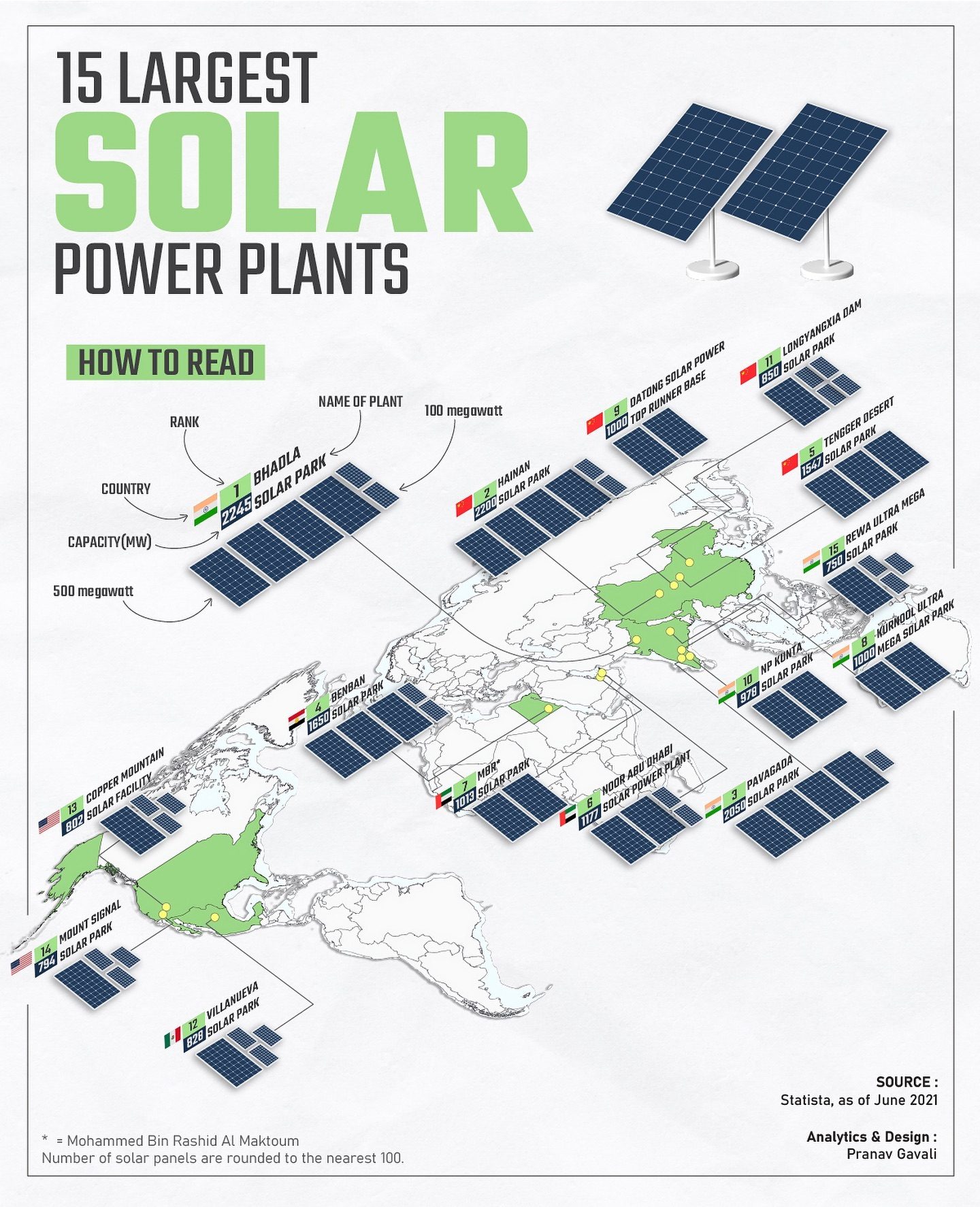
Solar Power Plants Ranking
Solar power has grown rapidly over the last decade, and with it, the size and number of solar power plants have also increased significantly. Two countries, China and India, have been at the forefront of this expansion, housing nine of the 15 largest solar power plants in the world as of 2021.
Context / Why this matters
Solar energy is a cornerstone of the global transition to renewable energy sources. The rapid growth of solar power plants reflects a broader trend towards sustainability and energy independence. Understanding the scale and distribution of these plants provides insights into which regions are leading the way in renewable energy adoption and innovation.
Main discussion
Global Leadership in Solar Power
China and India have emerged as global leaders in solar power production. This is evident from the fact that these two countries collectively account for nine of the top 15 largest solar power plants in the world. This dominance underscores their commitment to renewable energy and their significant investments in solar infrastructure.
Top Solar Power Plants
The ranking of the 15 largest solar power plants globally provides a clear picture of the scale and capacity of these installations. The infographic includes detailed information on each plant, such as its rank, name, country, and capacity in megawatts (MW).
Some of the notable plants include:
- Bhadla Solar Park (India): The largest solar power plant in the world, with a capacity of 2,245 MW. This plant is a testament to India's ambitious renewable energy goals.
- Datong Solar Power Plant (China): With a capacity of 1,100 MW, it showcases China's extensive investment in solar energy.
- Hainan Solar Power Plant (China): Another significant installation with a capacity of 2,000 MW. China's commitment to solar energy is evident in the sheer size of their plants.
- Longyangxia Dam Solar Park (China): This plant, located in the Gansu province, has an 850 MW capacity. It is part of a larger renewable energy complex that includes wind and hydro power.
- Tengger Desert Solar Park (China): With a capacity of 1,547 MW, it is one of the largest solar power plants in the world.
- Rewa Ultra Mega Solar Park (India): Located in Madhya Pradesh, this plant has a 750 MW capacity and is known for its innovative use of solar technology.
- Benban Solar Power Plant (Egypt): This 800 MW plant, located in the desert near Benban, is a major contributor to Egypt's renewable energy goals.
- Copper Mountain Solar Facility (United States): With a capacity of 933 MW, it is a significant player in the U.S. solar market.
Geographical Distribution
The locations of these solar power plants are strategically chosen to maximize solar energy generation. Deserts and other sun-rich regions are ideal for such installations due to their abundant sunlight. The infographic includes a world map that marks the locations of these plants, highlighting the global reach of solar energy initiatives.
Practical tips
When analyzing solar power plants, it's essential to consider several factors:
Capacity and Output
The capacity of a solar power plant, measured in megawatts (MW), indicates its potential to generate electricity. Higher capacity plants can produce more energy, making them crucial for meeting large-scale energy demands.
Location and Infrastructure
The geographical location of a solar power plant is critical. Regions with high solar irradiance, such as deserts, are ideal for maximum energy output. Additionally, the infrastructure around the plant, including grid connectivity and maintenance facilities, plays a significant role in its efficiency.
Technological Advancements
Modern solar power plants often incorporate the latest technological advancements to enhance their efficiency. This includes the use of high-efficiency solar panels, advanced tracking systems, and innovative energy storage solutions. Keeping up with these technological developments can significantly improve the performance and sustainability of solar power plants.
Important takeaways
- Global Dominance: China and India lead the global solar power market, housing nine of the 15 largest solar power plants in the world.
- Scale and Capacity: The largest solar power plants have capacities ranging from 750 MW to 2,245 MW, showcasing the immense scale of these installations.
- Strategic Locations: Solar power plants are strategically located in regions with high solar irradiance to maximize energy generation.
- Technological Innovation: Modern solar power plants incorporate advanced technologies to enhance their efficiency and output.
Conclusion
The ranking of the 15 largest solar power plants globally highlights the rapid growth and significant investments in solar energy. China and India are at the forefront of this energy revolution, with some of the world's largest and most efficient solar power plants. As the world continues to shift towards renewable energy, understanding the scale, distribution, and technological advancements of these plants will be crucial for future developments in the solar energy sector.
Watch the Reel
Questions readers ask
Why are China and India leading in the number of large solar power plants?
China and India have prioritized renewable energy investments, leading to significant growth in solar capacity. They are leading the way in installing large solar power plants, with nine of the 15 largest solar farms worldwide. This growth is driven by a strong commitment to sustainability and energy security.
What is the significance of the Bhadla Solar Park in India?
The Bhadla Solar Park in India is one of the world's largest solar power plants, with a capacity of 2,245 MW. It exemplifies India's rapid progress in solar energy and its role in the global shift towards renewable energy sources. The plant's size and influence make it a key player in the world's solar energy ranking.
How have solar power plants grown over the past decade?
Over the past decade, solar power plants have grown significantly in both size and quantity. This growth is evident in the increasing number of large-scale solar installations, such as those in China and India, which have some of the world's largest solar farms and solar energy capacity.
What is the Hainan Solar Power Plant and why is it notable?
The Hainan Solar Power Plant in China is one of the largest solar power plants in the world, with a capacity of 2,000 MW. It is notable for its massive scale and its contribution to China's leadership in renewable energy. The plant is a key player in the global solar energy world ranking, highlighting China's commitment to solar energy sustainability.
How does the global ranking of solar energy plants reflect regional trends?
The global ranking of solar energy plants reveals which regions are at the forefront of renewable energy adoption and innovation. Countries like China and India, which have multiple large-scale solar power plants, are leading the global transition to renewable energy. The ranking provides insights into where the most substantial investment and development in solar capacity are occurring.
What are some key facts about the world's largest solar farms in 2021?
In 2021, the world's largest solar farms were predominantly located in China and India. These plants, including the Bhadla Solar Park and the Hainan Solar Power Plant, have capacities exceeding 2,000 MW. The size and number of these plants underscore the global trend towards renewable energy and highlight the countries leading in solar energy production.
Related deep dives
Similar reads based on topic and creator.


Recent articles
Fresh deep dives from the latest Reels we unpacked.




Comments
Be the first to comment.