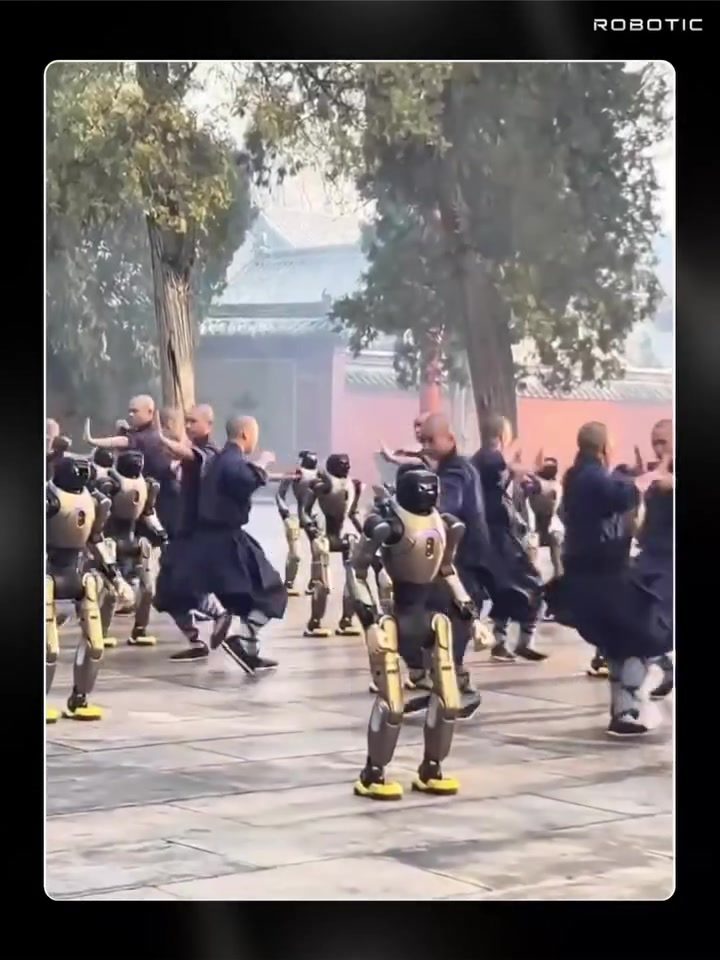
Robotic Kung Fu at Shaolin Temple
At Shaolin Temple in China, a unique fusion of ancient martial arts and advanced robotics is taking place. Monks are integrating traditional kung fu routines with humanoid robots, creating a synchronized performance that highlights the intersection of centuries-old practices and cutting-edge technology.
Context / Why this matters
This initiative at Shaolin Temple is more than just a spectacle; it represents a significant step in the preservation and evolution of cultural heritage. By incorporating robotics into traditional martial arts, the temple is finding new ways to maintain and enhance its techniques while adapting to the modern world. This blend of old and new serves as a model for how technology can support and complement cultural traditions without altering their essence.
Main discussion
The Fusion of Tradition and Technology
The monks at Shaolin Temple are using humanoid robots to practice traditional kung fu routines. These robots are programmed to mimic the monks' movements and stances in real-time, creating a mesmerizing performance that showcases the precision and discipline of both human and machine. The robots act as training partners, assisting the monks in their physical training and movement analysis.
Robots as Training Tools
The primary goal of this experiment is not to replace human practice but to enhance it. The robots serve as learning tools, helping the monks refine their techniques and improve their physical training. By replicating the monks' movements, the robots provide immediate feedback and allow for detailed analysis of each motion. This real-time feedback loop can help the monks identify areas for improvement and perfect their techniques more efficiently.
Preserving Cultural Techniques
One of the most significant benefits of this integration is the preservation of cultural techniques. Kung fu is a discipline that has been passed down for centuries, and the introduction of robotics ensures that these techniques are documented and preserved in a new, interactive format. The robots can record and replicate the movements of the monks, creating a digital archive of traditional kung fu that can be studied and practiced by future generations.
The Role of Synchronization
Synchronization is a key element in this fusion of tradition and technology. The robots are programmed to mimic the monks' movements in real-time, ensuring that every stance and gesture is replicated with precision. This synchronization not only enhances the performance but also provides a deeper understanding of the discipline and precision required in kung fu. The robotic arms move in a coordinated manner, mimicking dance movements and showcasing the beauty and complexity of the art form.
The Future of Cultural Heritage
This experiment at Shaolin Temple is just the beginning of what could be a revolutionary approach to preserving and promoting cultural heritage. By blending ancient practices with modern technology, the temple is finding new ways to engage with its traditions and make them accessible to a wider audience. This fusion of old and new is a testament to the adaptability and resilience of cultural heritage in the face of technological advancements.
Practical tips
1. Embrace Technology in Cultural Practices
For those involved in preserving and promoting cultural heritage, embracing technology can be a game-changer. Whether it's through robotics, digital archiving, or virtual reality, technology can provide new ways to engage with and understand cultural practices.
2. Use Technology as a Learning Tool
Just as the monks at Shaolin Temple use robots as training partners, cultural practitioners can leverage technology to enhance their learning and practice. Digital tools can provide real-time feedback, detailed analysis, and new perspectives on traditional techniques.
3. Foster Collaboration Between Tradition and Technology
Collaboration between traditional practitioners and technology experts can lead to innovative solutions for preserving and promoting cultural heritage. This collaboration can result in new forms of expression and deeper understanding of traditional practices.
4. Document and Archive Cultural Techniques
One of the most effective ways to preserve cultural heritage is through documentation and archiving. By using technology to record and replicate cultural techniques, practitioners can ensure that these practices are preserved for future generations.
5. Engage with a Wider Audience
Technology can help cultural practitioners reach a wider audience and make their practices more accessible. Whether through digital performances, virtual reality experiences, or online courses, technology can bridge the gap between tradition and the modern world.
Important takeaways
- The integration of robotics and traditional kung fu at Shaolin Temple is a groundbreaking example of how technology can support and enhance cultural heritage.
- Robots serve as valuable training tools, providing real-time feedback and assisting with movement analysis and preservation of cultural techniques.
- Synchronization between human movements and robotic replication showcases the precision and discipline required in kung fu.
- Embracing technology in cultural practices can lead to innovative solutions and deeper engagement with traditional techniques.
- Collaboration between tradition and technology is key to preserving cultural heritage and making it accessible to a wider audience.
Conclusion
The fusion of traditional kung fu and robotics at Shaolin Temple is a testament to the adaptability and resilience of cultural heritage. By blending ancient practices with modern technology, the temple is finding new ways to promote and preserve its techniques. This initiative serves as a model for how technology can support and enhance cultural practices, ensuring that they remain relevant and accessible in the modern world. As we continue to embrace technological advancements, it is essential to remember the value of our cultural heritage and find innovative ways to preserve and promote it.
Watch the Reel
Questions readers ask
How are robots being used in kung fu training at Shaolin Temple?
Robots are integrated into traditional kung fu routines at Shaolin Temple to enhance physical training. These humanoid robots perform synchronized movements with the monks, creating a unique blend of ancient martial arts and modern technology. This approach not only assists in maintaining the physical rigor of the training but also adds a new dimension to the practice of kung fu.
What is the significance of combining robotics with traditional kung fu?
The fusion of robotics and traditional kung fu at Shaolin Temple serves several purposes. It helps in preserving cultural heritage by adapting traditional practices to modern times. This blend also provides a new way to engage with kung fu, making it more appealing to a wider audience and encouraging the continuation of these ancient practices.
How do the robots and monks synchronize their movements?
The robots and monks at Shaolin Temple achieve synchronization through advanced programming and extensive training. The robots are designed to mimic the precise movements of kung fu, while the monks practice with the robots to ensure seamless coordination. This collaborative effort results in a mesmerizing performance that highlights the harmony between man and machine.
What kinds of robots are used in these performances?
The performances at Shaolin Temple feature humanoid robots that are specifically designed to mimic human movements. These robots are equipped with advanced sensors and programming to replicate the complex routines of traditional kung fu. The use of such robots allows for a high degree of precision and synchronization with the monks.
Can visitors experience this unique fusion of kung fu and robotics?
While specific details may vary, Shaolin Temple often hosts performances and demonstrations that showcase this unique fusion. Visitors interested in witnessing this blend of ancient and modern practices should check the temple's schedule for events and performances. These experiences offer a rare glimpse into how technology can enhance and preserve cultural traditions.
How does this initiative help in preserving cultural heritage?
By incorporating robotics into traditional kung fu, Shaolin Temple ensures that these ancient practices remain relevant in the modern world. This initiative attracts new audiences and encourages the younger generation to engage with kung fu, thereby safeguarding these cultural traditions for future generations. It also serves as a model for how technology can be used to support and evolve cultural heritage.
What are the benefits of using robotics in martial arts training?
Using robotics in martial arts training offers several benefits. It provides a consistent and precise training partner, allowing practitioners to refine their techniques. Additionally, robotics can enhance the physical demands of training, making it more rigorous and challenging. This innovative approach also makes martial arts more engaging and accessible to a broader audience.
Related deep dives
Similar reads based on topic and creator.



Recent articles
Fresh deep dives from the latest Reels we unpacked.




Comments
Be the first to comment.