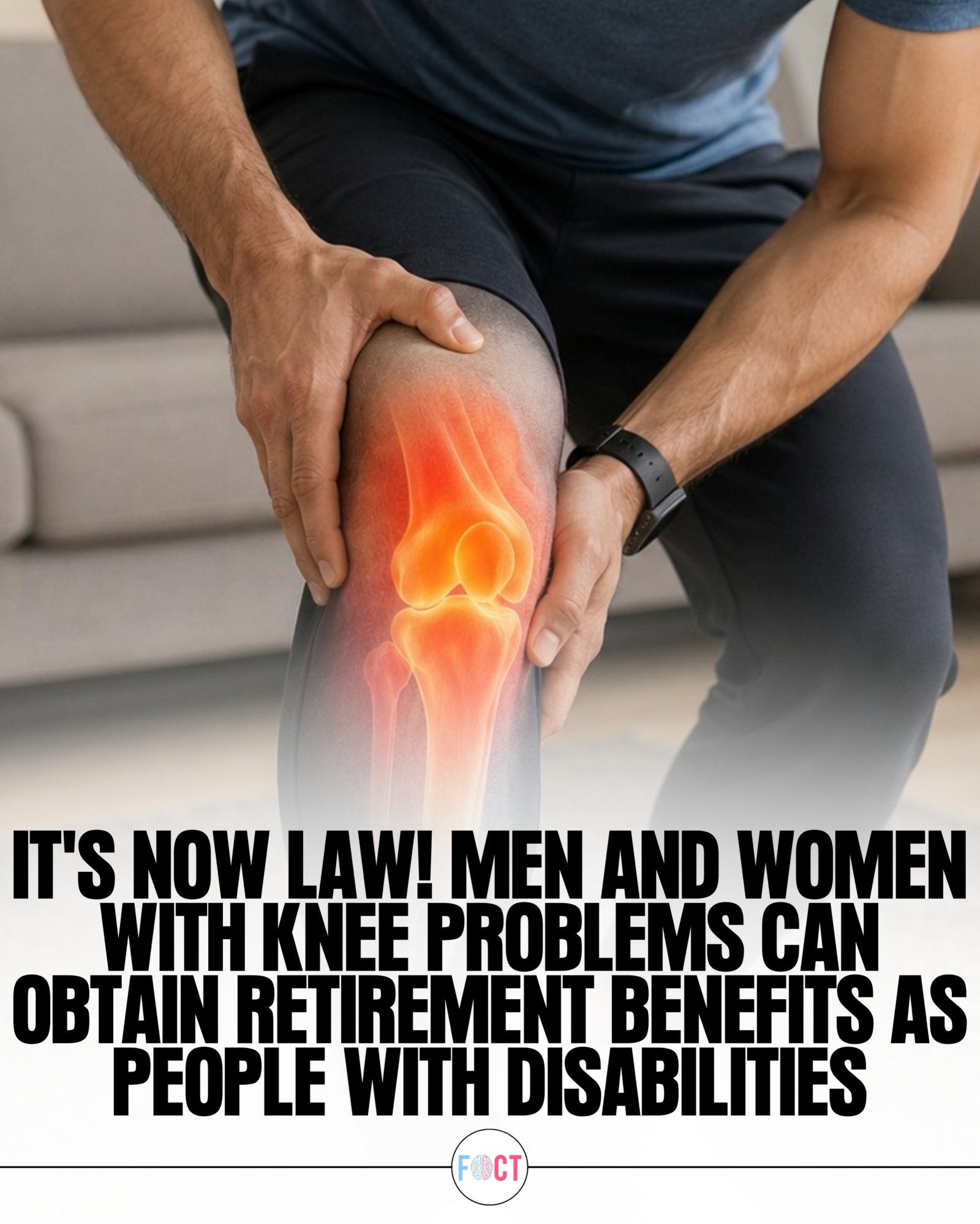
Disability Retirement Benefits for Severe Knee Problems
Severe knee problems can significantly impact an individual's ability to work and perform daily activities. Recent legal changes now allow men and women with such conditions to qualify for disability retirement benefits, depending on their country's laws and the severity of their condition. This shift recognizes serious knee disorders as disabling conditions when they result in long-term functional limitations.
Context / Why this Matters
Knee problems are a common issue that can severely limit mobility and functionality. For those whose knee conditions prevent them from working, the ability to qualify for disability retirement benefits is a significant development. This change means that individuals who have struggled with severe knee issues may now have access to the financial and medical support they need to manage their conditions and maintain a reasonable quality of life.
Main Discussion
Eligibility Criteria
Eligibility for disability retirement benefits based on knee problems is determined by medical evidence. This evidence must show that the knee condition significantly limits an individual's ability to perform their job or carry out daily activities. Simply having knee pain or an injury is not sufficient to qualify for these benefits. The condition must be severe enough to result in long-term functional limitations.
Medical Evidence
Medical evidence is crucial in the application process. This typically includes detailed medical records, diagnostic tests, and evaluations from healthcare professionals. The medical evidence should clearly demonstrate the extent to which the knee condition affects the individual's ability to function. This might include documentation of chronic pain, limited mobility, and the impact on daily activities.
Country-Specific Rules
The rules and criteria for qualifying for disability retirement benefits can vary significantly by country. Each country has its own set of laws and regulations governing disability programs. For example, some countries may have more stringent requirements for medical evidence, while others may offer more lenient criteria. It is essential for individuals to understand the specific rules and requirements in their country to successfully apply for these benefits.
Types of Knee Disorders
Serious knee disorders that may qualify for disability retirement benefits include conditions such as severe osteoarthritis, rheumatoid arthritis, and degenerative joint disease. These conditions can cause significant pain, inflammation, and limited mobility, making it difficult for individuals to perform their jobs or carry out daily activities.
The Role of Medical Professionals
Medical professionals play a crucial role in the evaluation process. They are responsible for providing detailed medical reports and evaluations that document the severity of the knee condition and its impact on the individual's functionality. These evaluations are essential in supporting an application for disability retirement benefits.
Practical Tips
Gathering Medical Evidence
Collecting comprehensive medical evidence is the first step in applying for disability retirement benefits. This includes gathering all medical records, diagnostic test results, and evaluations from healthcare professionals. Keeping a detailed record of all medical appointments, treatments, and medications can also be helpful.
Seeking Legal Advice
Navigating the complexities of disability retirement benefits can be challenging. Seeking legal advice from professionals, such as those at FCBCT, can provide valuable guidance and support throughout the application process. Legal professionals can help ensure that all necessary documentation is in order and that the application meets the specific requirements of the country's laws.
Understanding Local Regulations
Each country has its own set of regulations and criteria for disability retirement benefits. It is essential to understand the specific rules and requirements in your country. Consulting with local disability services or legal advisors can provide clarity on the application process and increase the chances of a successful outcome.
Preparing for Evaluations
Medical evaluations are a key part of the application process. Preparing for these evaluations involves being open and honest about the impact of your knee condition on your daily life. Providing detailed information about your symptoms, limitations, and how they affect your ability to work can strengthen your case.
Important Takeaways
- Severe knee problems that prevent individuals from working may now qualify for disability retirement benefits, based on the severity of the condition and the laws of the country.
- Medical evidence is crucial in demonstrating the impact of the knee condition on the individual's ability to function.
- The rules and criteria for qualifying for these benefits can vary significantly by country.
- Serious knee disorders, such as severe osteoarthritis and rheumatoid arthritis, may be recognized as disabling conditions.
- Gathering comprehensive medical evidence, seeking legal advice, and understanding local regulations are essential for a successful application.
Conclusion
For individuals with severe knee problems, the ability to qualify for disability retirement benefits is a significant development. This change recognizes the impact that serious knee disorders can have on an individual's ability to work and perform daily activities. By understanding the eligibility criteria, gathering comprehensive medical evidence, and seeking legal advice, individuals can successfully navigate the application process and access the support they need.
Watch the Reel
Questions readers ask
What types of knee problems now qualify for disability retirement benefits?
A wide range of severe knee conditions may qualify for disability retirement benefits, including osteoarthritis, rheumatoid arthritis, meniscus tears, ligament injuries, and other issues that result in long-term functional limitations. The specific conditions recognized can vary by location, so it's important to consult local guidelines.
How have the recent legal changes affected disability retirement benefits for knee issues?
Recent legal changes in many places have expanded the criteria for qualifying for disability retirement benefits to include severe knee problems. These changes acknowledge the significant impact that such conditions can have on an individual's ability to work and perform daily tasks, providing much-needed financial and medical support.
Do men and women have the same criteria for qualifying for disability retirement benefits due to knee problems?
Yes, in many jurisdictions, the criteria for men and women to qualify for disability retirement benefits due to severe knee problems are the same. Both can receive benefits if their knee conditions result in long-term functional limitations that prevent them from working. However, it's essential to check specific local regulations, as criteria may vary.
What steps should I take if I believe my knee condition qualifies me for disability retirement benefits?
If you believe your knee condition qualifies you for disability retirement benefits, you should first consult with a healthcare provider to document your condition. Then, gather relevant medical records and contact your local disability benefits office or a legal professional to understand the application process and specific requirements in your area.
Are there any resources available to help me understand the new disability laws regarding knee problems?
To understand the new disability laws regarding knee problems, you can start by visiting your local disability benefits office website or contacting them directly. Additionally, consulting with a legal professional who specializes in disability law can provide valuable insights and guidance tailored to your specific situation.
Can I qualify for disability retirement benefits if I have a knee condition that was caused by an injury or an accident?
Yes, you may qualify for disability retirement benefits if you have a knee condition resulting from an injury or accident, as long as it results in long-term functional limitations. The cause of the knee condition is less important than the current impact on your ability to work. Be sure to document your condition thoroughly and provide all relevant medical records when applying for benefits.
What if my knee condition is not severe enough to qualify for disability retirement benefits, but still affects my ability to work?
If your knee condition is not severe enough to qualify for disability retirement benefits, you may still be eligible for other forms of support, such as partial disability benefits, vocational rehabilitation, or other assistance programs. Consult with a disability benefits professional or your local benefits office to explore all available options.
Recent articles
Fresh deep dives from the latest Reels we unpacked.




Comments
Be the first to comment.