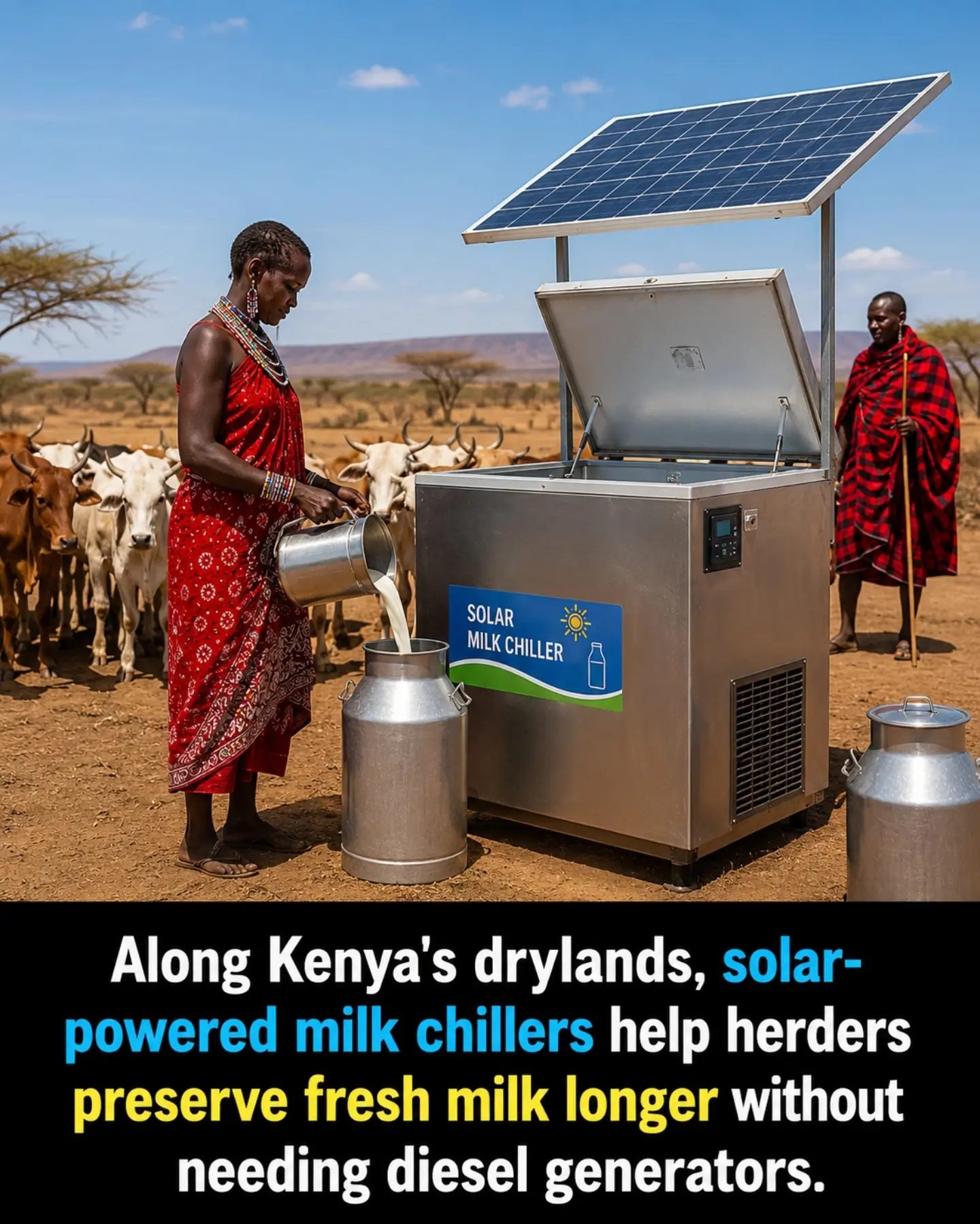
Solar Milk Chillers: Preserving Freshness in Kenya's Drylands
In the heart of Kenya's drylands, solar milk chillers are revolutionizing the way herders preserve fresh milk. These innovative devices harness the power of the sun to keep milk at safe temperatures, eliminating the need for diesel generators and significantly enhancing the quality and viability of dairy products in remote, off-grid areas.
Context: Why This Matters
For herders in Kenya's drylands, preserving fresh milk is a significant challenge. Traditionally, herders rely on diesel generators to power refrigeration units, but these generators are costly to operate and maintain, and fuel can be hard to come by in remote areas. Additionally, the use of diesel generators contributes to air pollution and climate change, further straining an already fragile ecosystem. Solar milk chillers offer a sustainable solution to these issues, providing a reliable and eco-friendly way to preserve milk.
Main Discussion
The Technology Behind Solar Milk Chillers
Solar milk chillers work by converting sunlight into electrical energy, which is then used to power a refrigeration system. These devices typically consist of a solar panel, a battery for energy storage, and a cooling unit. The solar panel generates electricity during the day, which is stored in the battery. This stored energy is then used to power the cooling unit, keeping the milk at a consistent, safe temperature. The chillers are designed to be durable and low-maintenance, making them ideal for use in remote, rugged environments.
The Benefits of Solar Milk Chillers
The benefits of using solar milk chillers are vast. By eliminating the need for diesel generators, these devices reduce operational costs and environmental impact. They also provide a reliable and consistent source of refrigeration, which is crucial for maintaining the quality and safety of dairy products.
Extended Shelf Life: One of the most significant advantages of solar milk chillers is their ability to extend the shelf life of fresh milk. By keeping the milk at a consistent, low temperature, these devices slow down the growth of bacteria, which can spoil milk and cause illness. This means that herders can store and transport milk for longer periods without compromising its quality or safety.
Economic Empowerment: Solar milk chillers also contribute to the economic empowerment of herders. By preserving fresh milk, they can sell their products at higher prices and in larger quantities, improving their income and livelihoods.
The Design and Implementation
The design of solar milk chillers is tailored to the unique needs and challenges of Kenya's drylands. These devices are typically made from durable, weather-resistant materials and are designed to withstand the harsh conditions of the region. They are also compact and portable, making them easy to transport and set up in remote locations.
Installation and Operation
Installing a solar milk chiller is relatively straightforward. The device is typically placed in a location that receives ample sunlight, and the solar panel is connected to the cooling unit and battery. Once installed, the chiller requires minimal maintenance and can operate autonomously, providing a reliable source of refrigeration for months or even years.
Community Impact
The impact of solar milk chillers extends beyond individual herders. These devices contribute to the overall development and sustainability of rural communities. By providing a reliable source of refrigeration, they help to improve food security and support local economies. They also promote environmental stewardship by reducing air pollution and conserving natural resources.
Overview of SOLAR Milk Chillers
The SOLAR milk chiller model highlighted in the visuals represents a significant advancement in this technology. Designed specifically for use in Kenya's drylands, the SOLAR milk chiller is built to withstand the region's harsh conditions while providing reliable, eco-friendly refrigeration. Its design includes the essential components of a solar panel, a battery, and a cooling unit, all crafted to be durable and efficient. The SOLAR milk chiller stands out for its ability to extend the shelf life of fresh milk, allowing herders to store and transport their products more effectively.
Practical Tips
For those looking to implement solar milk chillers in their operations, there are several practical tips to consider:
Assess Your Needs
Before purchasing a solar milk chiller, it's essential to assess your specific needs. Consider factors such as the amount of milk you produce, the length of time you need to store it, and the environmental conditions in your area. This will help you choose a chiller that is appropriately sized and designed for your needs.
Evaluate Your Solar Resources
Ensure that you have access to sufficient sunlight to power the solar panel. While solar milk chillers are designed to operate in various conditions, their efficiency can be affected by cloud cover and other factors. Evaluate your solar resources to ensure that your chiller will receive enough sunlight to operate effectively.
Consider Maintenance Requirements
While solar milk chillers are generally low-maintenance, it's still important to consider the maintenance requirements. Regularly inspect your device to ensure that all components are functioning correctly, and address any issues promptly to avoid downtime.
Important Takeaways
Solar milk chillers offer a sustainable and cost-effective solution for preserving fresh milk in Kenya's drylands. By harnessing the power of the sun, these devices provide a reliable source of refrigeration, extending the shelf life of dairy products and contributing to the economic empowerment of herders. SOLAR milk chillers, in particular, have proven to be a reliable and efficient option for preserving milk in these regions.
Conclusion
The adoption of solar milk chillers in Kenya's drylands represents a significant step forward in sustainable agriculture and food preservation. These devices not only help herders preserve fresh milk but also contribute to environmental conservation and economic development. As more communities embrace this technology, the future of dairy production in Kenya's drylands looks increasingly bright and sustainable.
Watch the Reel
Questions readers ask
What are solar milk chillers and how do they work?
Solar milk chillers are innovative devices designed to preserve fresh milk using solar energy. They operate by harnessing the sun's heat and converting it into electricity which then powers a refrigeration system to keep milk at safe temperatures. This process eliminates the need for diesel generators and ensures that dairy products remain fresh for longer periods in remote, off-grid areas.
What are the primary benefits of using solar milk chillers in Kenya's drylands?
Solar milk chillers provide several key benefits in Kenya's drylands. Firstly, they reduce the dependency on diesel generators, which significantly lowers operational costs and minimizes environmental pollution. Additionally, they ensure that dairy products remain fresh even in remote areas where access to reliable electricity is limited. This enhances the overall quality and viability of dairy products, supporting local dairy farming communities.
How do solar milk chillers reduce environmental impact compared to diesel generators?
Solar milk chillers reduce environmental impact by eliminating the use of diesel fuel, which is a major contributor to air pollution and greenhouse gas emissions. By harnessing clean, renewable solar energy, these devices lower carbon footprint and mitigate climate change effects. They also reduce the noise and air pollution caused by diesel generators, making them a more sustainable solution for milk preservation in rural Kenya.
Can solar milk chillers be installed in any location in Kenya?
Solar milk chillers are designed specifically for off-grid, remote areas, making them suitable for many locations in Kenya. However, their efficiency depends on the availability of sunlight. Areas with abundant sunshine are ideal for these devices. It's recommended to consult with local experts to assess the specific solar potential of a given location before installation.
What challenges might be faced when implementing solar milk chillers in rural Kenya?
While solar milk chillers offer many benefits, there are some challenges to consider. Initial investment costs can be high, and maintenance may require specialized knowledge. Additionally, the efficacy of the chillers is dependent on consistent sunlight, which can be an issue in some regions. Community training and technical support are essential to ensure the long-term success of these installations.
How do solar milk chillers support dairy farming communities in Kenya?
Solar milk chillers support dairy farming communities by providing a reliable way to preserve fresh milk, thereby reducing post-harvest losses. This ensures that dairy products reach markets in better condition, potentially increasing farmers' income. Additionally, the reduced reliance on diesel generators helps alleviate financial burdens, and the sustainability aspect aligns with environmental conservation efforts.
Related deep dives
Similar reads based on topic and creator.



Recent articles
Fresh deep dives from the latest Reels we unpacked.




Comments
Be the first to comment.