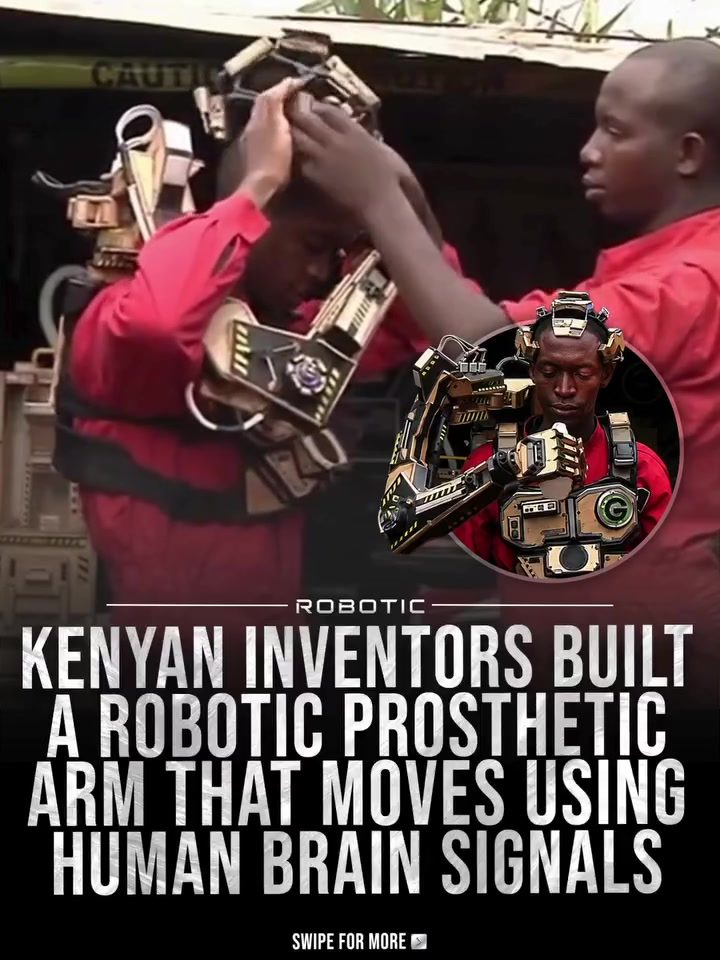
Robotic Prosthetic Arms: The Future of Assistive Technology
Robotic prosthetic arms represent a groundbreaking advancement in assistive technology, offering new levels of precision and control for users. These devices leverage brain-generated electrical signals to interpret a user’s intended movements, making daily tasks more intuitive and accessible. This technology combines neuroscience, artificial intelligence, and robotics to create a more seamless connection between the user and the prosthetic.
Context / Why This Matters
Assistive technology has come a long way, but the integration of brain-controlled prosthetics is a significant leap forward. These devices do more than replicate basic limb functions; they allow users to perform complex tasks with greater accuracy and ease. For individuals with limb differences, this innovation can restore independence and enhance quality of life. The development of such technology in Kenya highlights the global reach and potential of advanced engineering in healthcare.
Main Discussion
The Science Behind Brain-Controlled Prosthetics
Brain-controlled prosthetics operate on the principle of interpreting electrical signals generated by the brain. This process involves several key components:
- Electrodes: These are placed on the scalp or implanted in the brain to detect neural activity.
- Signal Processing: The detected signals are processed through algorithms designed to recognize specific patterns corresponding to intended movements.
- Actuators: These are the mechanical parts of the prosthetic that translate the processed signals into physical actions.
The integration of AI allows for continual learning and improvement, making the prosthetic more responsive over time. This adaptive capability is crucial for users, as it enables the device to better understand and execute their commands.
The Development in Kenya
Kenyans have made significant strides in this field, developing a prosthetic arm that utilizes brain signals for movement. This advancement not only showcases Kenya's growing expertise in medical technology but also demonstrates the potential for innovation in developing countries. The prosthetic arm showcases the country's commitment to leveraging advanced engineering for practical and life-changing applications. The development of such a device is a testament to the global collaboration and innovation in the field of robotics and healthcare.
Demonstrating the Technology
The robotic prosthetic arm can perform a wide range of tasks, from simple actions like grasping a bottle to more complex movements like pouring water. This is achieved through a combination of brain signals and intuitive control mechanisms. For instance, the user can think about reaching for a bottle, and the arm will execute the movement accurately. This level of control is a significant improvement over traditional prosthetics, which often require manual adjustments and lack the same degree of precision.
Practical Applications
The practical applications of brain-controlled prosthetic arms are vast. They can assist individuals in various daily activities, from eating and drinking to more complex tasks like writing or operating machinery. The technology's adaptability means it can be tailored to meet the specific needs of different users, making it a versatile solution for a wide range of limb differences.
Practical Tips
While the technology behind brain-controlled prosthetics is impressive, there are several practical considerations to keep in mind:
Training and Adaptation
Users may need to undergo training to effectively control the prosthetic. This involves learning how to generate the correct brain signals and understanding the device's feedback mechanisms. Patience and practice are key to mastering the technology.
Maintenance and Care
Regular maintenance is essential to ensure the prosthetic functions properly. This includes checking the electrodes, updating the software, and maintaining the mechanical components. Users should follow a maintenance schedule and seek professional assistance when needed.
Psychological Adjustment
Adapting to a prosthetic arm can be a significant psychological adjustment. Users may need support in coping with the changes and learning to integrate the device into their daily lives. Seeking support from healthcare professionals and peer groups can be beneficial.
Important Takeaways
Brain-controlled prosthetic arms represent a significant advancement in assistive technology, offering users greater precision, control, and independence. The development of such technology in Kenya underscores the global potential of advanced engineering in healthcare. As the technology continues to evolve, it holds the promise of transforming the lives of individuals with limb differences.
Future Directions
The future of brain-controlled prosthetics is bright, with ongoing research and development aimed at enhancing their capabilities. Areas of focus include improving signal processing, increasing the range of movements, and integrating more advanced AI algorithms. These advancements will make the technology even more intuitive and responsive, further enhancing its potential to assist users.
Global Impact
The development of brain-controlled prosthetic arms in Kenya highlights the global impact of such technology. It demonstrates the potential for innovation in developing countries and the importance of international collaboration in advancing medical technology. As more countries invest in this field, we can expect to see further breakthroughs and increased accessibility to these life-changing devices.
Ethical Considerations
While the benefits of brain-controlled prosthetics are clear, there are also ethical considerations to address. These include ensuring access to the technology for all who need it, protecting user privacy, and addressing potential misuse. Ethical guidelines and regulations will be essential to governing the development and use of this technology.
Conclusion
Brain-controlled prosthetic arms are at the forefront of assistive technology, offering users a new level of independence and control. The development of such devices in Kenya underscores the global potential of advanced engineering in healthcare. As technology continues to evolve, the future of brain-controlled prosthetics looks promising, with the potential to transform the lives of individuals with limb differences around the world.
Watch the Reel
Questions readers ask
How does the brain-controlled robotic arm developed by Kenyan innovators work?
The brain-controlled robotic arm interprets brain-generated electrical signals to understand the user's intended movements. This allows the prosthetic to mimic natural limb functions, providing users with precise and intuitive control over daily tasks.
What makes the Kenyan robotic arm a significant advancement in assistive devices?
Unlike traditional prosthetics, the Kenyan robotic arm uses AI robotics and neuroscience innovations to offer greater precision and control. This advancement enables users to perform complex tasks with ease, significantly enhancing their independence and quality of life.
What role does artificial intelligence play in the Kenyan brain-controlled robotic arm?
Artificial intelligence is crucial in processing and interpreting the brain signals that control the robotic arm. By integrating AI, the prosthetic can better understand and respond to the user's intentions, reducing the learning curve and improving usability.
Who are the key contributors to the development of the Kenyan brain-controlled robotic arm?
The development of the Kenyan brain-controlled robotic arm is a result of innovative efforts within Kenya. These innovators have merged neuroscience, AI, and robotic engineering to create a unique and effective solution for users with limb differences.
Can the Kenyan brain-controlled robotic arm be customized for individual users?
While the article does not provide specific details on customization, brain-controlled prosthetics like the Kenyan robotic arm often involve a calibration process to adapt to each user's unique brain signals and physical needs. This ensures optimal performance and comfort for daily use.
What are the potential benefits of using a brain-controlled robotic arm in daily life?
For users with limb differences, the brain-controlled robotic arm promises to restore a degree of independence. By enabling more intuitive and precise control, users can perform daily tasks more effectively, leading to an improved quality of life.
How does the integration of neuroscience and AI improve robotic arm prosthetics?
By combining neuroscience and AI, robotic arm prosthetics can interpret complex brain signals more accurately. This integration allows the prosthetic to respond more naturally to the user's thoughts, making the device more intuitive and easier to control in various situations.
Related deep dives
Similar reads based on topic and creator.



Recent articles
Fresh deep dives from the latest Reels we unpacked.




Comments
Be the first to comment.