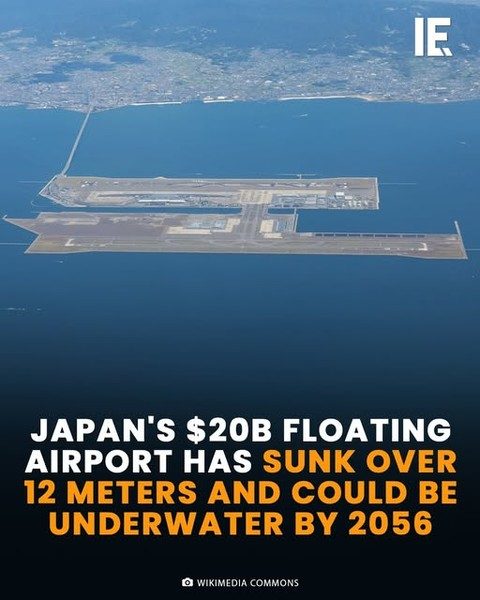
Kansai Airport's Sinking: A Look at the Engineering and Environmental Challenges
Kansai Airport is a significant engineering achievement in Osaka Bay, Japan. Built off the coast of Osaka, this floating airport is sinking faster than initially predicted, presenting a complex set of technical and environmental issues.
Why This Matters
The fate of Kansai Airport is not just a local concern. As an engineering marvel, it is a critical infrastructure component for international travel and commerce in the region. Understanding the challenges it faces offers valuable insights into the resilience of modern infrastructure and the impacts of environmental changes.
Environmental Factors and Subsidence
Kansai Airport, designed to withstand natural forces, is experiencing unanticipated subsidence. The airport rests on a complex system of concrete and steel structures, engineered to float on the water. However, the surrounding sediment is shifting, causing the airport to sink deeper into the bay. Over 12 meters of subsidence has already occurred, and experts predict it could be completely underwater by 2056.
Engineering Challenges
The primary engineering challenge is addressing the subsidence. The airport’s foundation was designed with advanced geotechnical engineering, but the dynamic nature of the bay's soil and water conditions has proven more challenging than anticipated. Engineers are exploring various solutions, including reinforcing the existing structure, installing additional piling, and possibly relocating some of the airport’s facilities.
Economic Implications
Kansai Airport is pivotal for the regional economy. It handles millions of passengers annually and serves as a hub for both domestic and international flights. The potential for the airport to be submerged would have far-reaching economic consequences, affecting not only air travel but also the surrounding industrial and commercial activities. The economic impact of such a closure would be substantial, with significant costs associated with relocation, reconstruction, and disruption of services.
Environmental Concerns
Beyond the engineering and economic challenges, the environmental implications are equally concerning. Kansai Airport is located in a region prone to earthquakes and typhoons. Rising sea levels, exacerbated by climate change, add another layer of complexity. These environmental factors increase the risk of further subsidence and flooding, making it crucial to develop sustainable solutions to mitigate these risks.
Technological Innovations
Recent advancements in geotechnical and structural engineering could offer potential solutions. Techniques such as ground improvement, deep piling, and the use of advanced materials can help reinforce the airport’s foundation and mitigate further subsidence. Additionally, environmental monitoring systems can provide real-time data on soil movement and water conditions, allowing for more proactive maintenance and adjustments.
Mitigation Strategies
Several mitigation strategies are being explored to address the sinking issue. One approach involves reinforcing the existing structure with additional piling and concrete. This would help stabilize the airport and slow down the subsidence process. Another strategy is the development of a floating runway system, which could adapt to changing water levels and reduce the risk of complete submersion. These solutions require significant investment but could extend the airport’s operational lifespan and protect the surrounding ecosystem.
Practical Tips
For Airline Passengers
For travelers who frequently use Kansai Airport, it is essential to stay informed about any updates or changes in flight schedules. Keep an eye on official announcements from the airport and your airline to avoid any disruptions in your travel plans.
For Engineers and Researchers
Engineers and researchers working on similar offshore structures can learn from the challenges faced by Kansai Airport. By studying the geotechnical and structural aspects, they can develop more resilient designs that account for long-term subsidence and environmental changes.
Important Takeaways
The sinking of Kansai Airport highlights the complex interplay between engineering, environmental, and economic factors. It underscores the need for continuous monitoring, adaptive solutions, and proactive maintenance to ensure the longevity of such critical infrastructure.
Conclusion
Kansai Airport’s sinking is a multifaceted issue that requires a comprehensive approach to address its engineering, economic, and environmental challenges. By leveraging technological innovations and sustainable practices, it is possible to mitigate the risks and extend the airport’s operational lifespan. This case serves as a reminder of the dynamic nature of infrastructure and the importance of adaptability in the face of changing environmental conditions.
Watch the Reel
Questions readers ask
What is the primary cause of Kansai Airport's accelerating sinkage?
Kansai Airport's sinking is primarily caused by a combination of factors, including the soft soil and clay foundation of Osaka Bay, and the continuous compression of the airport’s massive structure. Additionally, the natural consolidation of the seabed and the ongoing tectonic activities in the region contribute to the airport's subsidence.
Why is the subsidence of Kansai Airport a concern for the region's commerce and travel?
Kansai Airport serves as a vital hub for international travel and commerce in the Osaka Bay region, with the subsidence issues posing a significant threat to its operational capacity. The sinking could lead to the airport becoming unusable by 2056, severely impacting regional trade, tourism, and economic stability.
What makes Kansai Airport's engineering challenges unique?
Kansai Airport's unique engineering challenges stem from its status as a floating airport built on a reclaimed island in a seismic zone. The combination of soil liquefaction, structural compression, and environmental factors like typhoons and earthquakes makes it a complex case study in engineering problems.
What are the potential environmental impacts of Kansai Airport's subsidence?
The subsidence of Kansai Airport could result in severe environmental consequences, including increased vulnerability to flooding and storm surges, disruption of local marine ecosystems, and contamination from buried waste and pollutants due to the disturbance of the seabed.
What solutions are being explored to mitigate Kansai Airport's sinking?
Engineers are exploring various solutions, such as improving the foundation stability by injecting cement and other materials, constructing additional support structures, and developing innovative drainage systems to reduce water pressure on the seabed. Additionally, long-term strategies include planning for a possible relocation or expansion of the airport.
What can other floating infrastructure projects learn from Kansai Airport's issues?
Other floating infrastructure projects can learn the importance of thorough soil and environmental assessments, the need for robust designs that account for long-term subsidence, and the implementation of adaptive maintenance strategies. The experience of Kansai Airport highlights the necessity of ongoing monitoring and proactive measures to address subsidence and environmental changes.
Related deep dives
Similar reads based on topic and creator.



Recent articles
Fresh deep dives from the latest Reels we unpacked.




Comments
Be the first to comment.