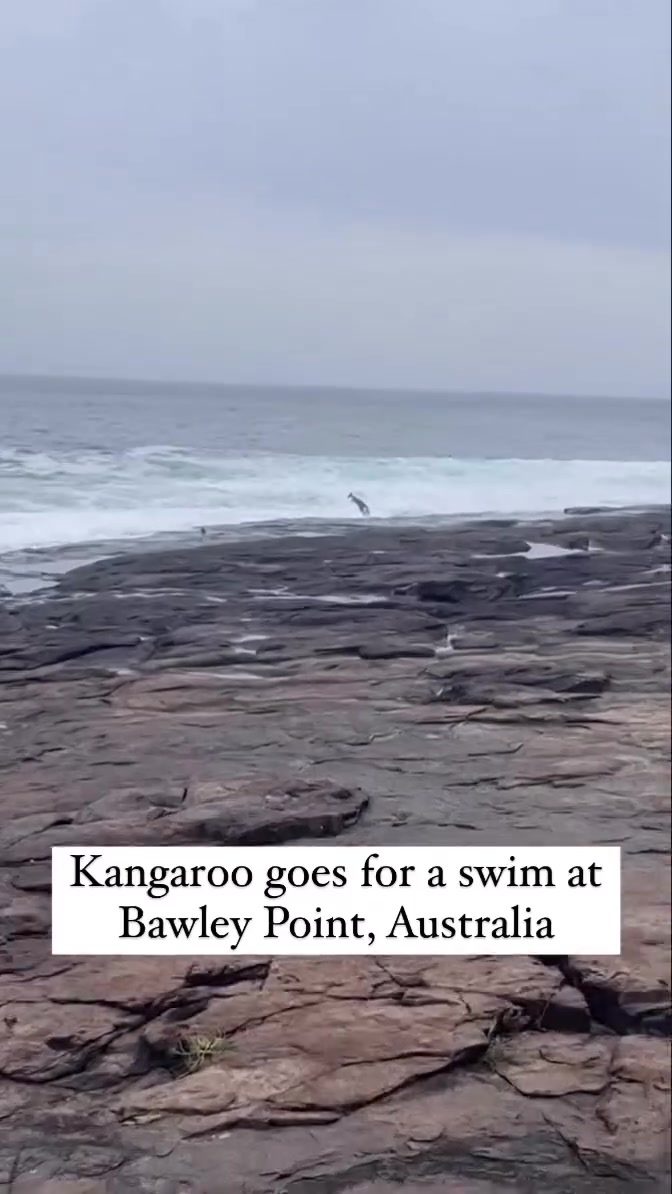
Kangaroo Swimming
Kangaroos are iconic Australian marsupials known for their powerful hind legs and distinctive hopping motion. However, few people realize that these creatures are also strong swimmers. A recent sighting at Bawley Point, Australia, showcased a kangaroo gracefully swimming in the ocean, challenging the stereotypical image of kangaroos as land-dwelling animals.
Why This Matters
Understanding the varied behaviors of wildlife, such as kangaroos, is crucial for conservation efforts and ecological studies. While kangaroos are primarily known for their terrestrial habitats, their ability to swim opens up new avenues of exploration for researchers and wildlife enthusiasts alike. This behavior not only highlights the adaptability of these animals but also underscores the importance of preserving their natural habitats, which support such varied and essential behaviors.
Main Discussion
The Surprising Behavior of Kangaroos
Kangaroos are often seen as symbols of the Australian outback, with their powerful legs and distinct hopping gait. However, they are also adept swimmers, as evidenced by the sighting at Bawley Point, Australia. This behavior is not as uncommon as it may seem, as kangaroos have been observed swimming across rivers and even venturing into the ocean under certain conditions.
One of the primary reasons kangaroos swim is to escape predators or to access food sources that may be on the other side of a water body. Their strong hind legs and streamlined bodies make them efficient swimmers, capable of traversing significant distances in water. Additionally, their natural habitat often includes regions with rivers and estuaries, which can be navigated more easily by swimming.
The Adaptability of Kangaroos
The adaptability of kangaroos is one of the key factors contributing to their success as a species. Their ability to switch between hopping on land and swimming in water demonstrates their versatility and resilience. This adaptability is crucial in an environment where resources and threats can change rapidly. By being able to navigate both land and water, kangaroos have a broader range of habitats and food sources, increasing their chances of survival.
The Role of Environment in Kangaroo Behavior
The environment plays a significant role in shaping the behavior of kangaroos. Bawley Point, with its rocky coastline and ocean access, provides a unique setting for this unexpected sighting. The presence of water bodies in their natural habitat influences kangaroos' behavior, encouraging them to develop swimming skills. This adaptability is a testament to their resilience and ability to thrive in diverse ecological niches.
The rocky landscape and the oceanic backdrop at Bawley Point offer a picturesque setting for kangaroos to exhibit their swimming abilities. The combination of water and rugged terrain creates a dynamic environment that supports the varied behaviors of these marsupials. Understanding such ecological interactions is vital for conservation efforts and wildlife management.
Practical Tips
Observing Wildlife Ethically
If you are lucky enough to encounter a kangaroo swimming, it's essential to observe them ethically. Maintain a safe distance to avoid disturbing the animal and its natural behavior. Respect their habitat and follow local guidelines for wildlife observation. This ensures that both you and the kangaroo have a positive and respectful experience.
Documenting Wildlife Behavior
Documenting wildlife behavior, such as kangaroos swimming, can contribute to scientific research and conservation efforts. If you capture such moments, consider sharing them with local wildlife organizations or researchers. This can help gather valuable data on the behavior and habits of kangaroos, aiding in their conservation and ecological management.
Supporting Conservation Efforts
Supporting conservation efforts is crucial for the preservation of kangaroos and their natural habitats. This can include donating to wildlife organizations, participating in volunteer programs, or simply being an informed and responsible observer of wildlife. Every effort counts in ensuring that these iconic animals continue to thrive in their natural environments.
Important Takeaways
Kangaroos are not just land-dwelling hoppers; they are versatile creatures capable of swimming and adapting to various environments. Observing and understanding these behaviors can provide valuable insights into their ecological roles and conservation needs. Supporting wildlife conservation and ethical observation practices are essential for preserving these unique behaviors and ensuring the survival of kangaroos in their natural habitats.
Conclusion
The sighting of a kangaroo swimming at Bawley Point, Australia, highlights the adaptability and resilience of these iconic marsupials. Their ability to traverse both land and water underscores the importance of preserving their natural habitats and supporting conservation efforts. By understanding and appreciating these behaviors, we contribute to the broader ecological knowledge and ensure the well-being of kangaroos for future generations.
Watch the Reel
Questions readers ask
Why did the kangaroo at Bawley Point swim in the ocean?
Kangaroos are known to swim for various reasons, including crossing water bodies to access food, escaping predators, or simply exploring their surroundings. The kangaroo at Bawley Point may have been driven by these instincts or curiosity, showcasing their natural adaptability.
Is it common for kangaroos to swim in the ocean?
While kangaroos are strong swimmers and can navigate water bodies, it is not a common behavior for them to swim in the ocean frequently. This sighting at Bawley Point is notable because it highlights the rare and unexpected capabilities of these animals in a marine environment.
What are the implications of this behavior for wildlife conservation?
Observing kangaroos in diverse environments, like the ocean, provides insights into their behavior and resilience. This information can be crucial for conservation strategies and understanding the broader ecological roles of kangaroos in Australia.
What do kangaroos typically use their swimming abilities for?
Kangaroos' swimming abilities are generally used for crossing rivers, lakes, and other water bodies to access new territories, food sources, or mates. This shows that their agility is not limited to land, and they can adapt to different environments when necessary.
Are there any known risks to kangaroos swimming in the ocean?
Swimming in the ocean can expose kangaroos to various risks, such as strong currents, marine predators, and human activities. Understanding these risks is important for conservation efforts, as it helps in protecting these animals from potential hazards in their natural habitats.
How did the sighting at Bawley Point challenge our understanding of kangaroos?
The sighting challenged the conventional image of kangaroos as purely land-dwelling animals. It revealed their versatility and adaptability, encouraging further exploration into their behaviors and capabilities in different environments, and fostering a deeper appreciation for these iconic Australian marsupials.
Related deep dives
Similar reads based on topic and creator.



Recent articles
Fresh deep dives from the latest Reels we unpacked.




Comments
Be the first to comment.