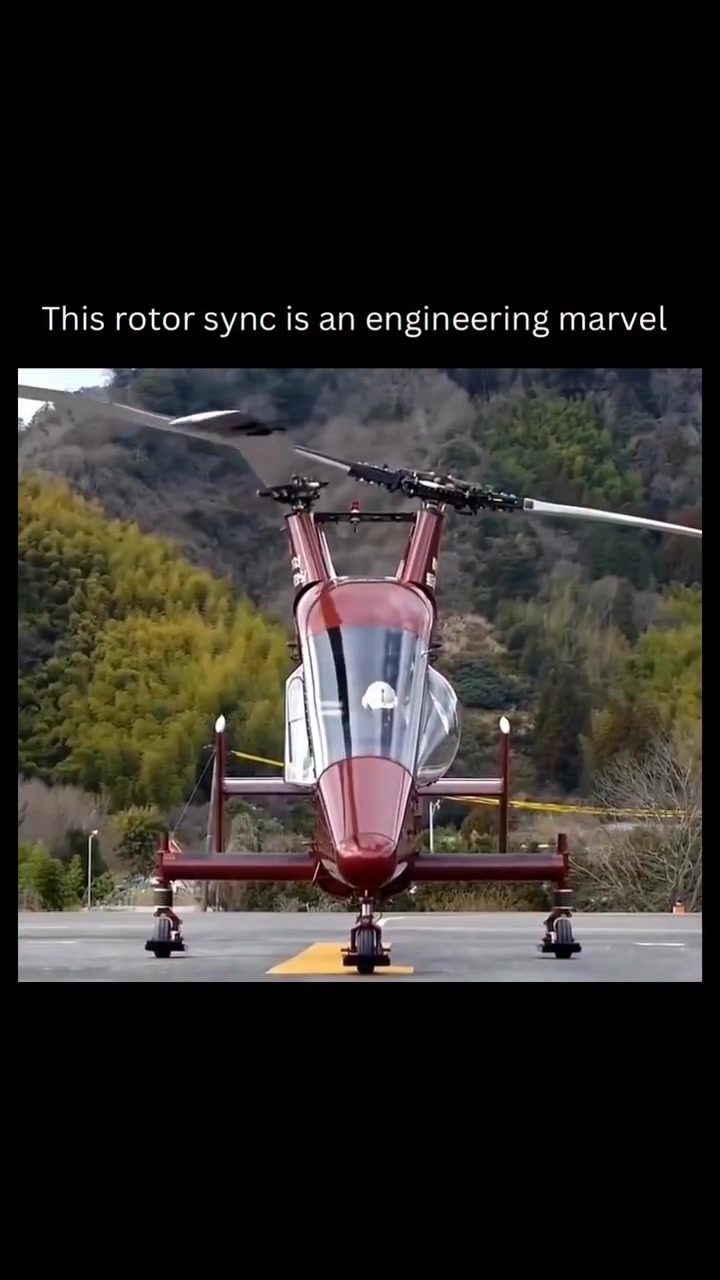
The Engineering Marvel of Helicopter Rotor Synchronization
Helicopter rotor synchronization is a sophisticated engineering feat that allows two sets of rotors to operate in close proximity without colliding. This design is exemplified by the Kaman K-MAX, a helicopter known for its unique dual-rotor system. The engineering behind this system is not just impressive; it serves a practical purpose—efficiency.
Context / Why this matters
In traditional helicopters, a significant portion of the engine's power is used to counteract torque through a tail rotor. This tail rotor stabilizes the aircraft but does not contribute to lifting. The Kaman K-MAX, however, eliminates this inefficiency. Its dual rotors are designed to cancel out torque, ensuring that all engine power is directed toward lifting the aircraft. This makes the K-MAX one of the most efficient helicopter designs available.
Main discussion
The Mechanics of Rotor Synchronization
The Kaman K-MAX operates with two rotors that rotate in opposite directions. Each rotor is controlled by its own swash plate and linkage system, which continually adjusts the pitch of the blades in real time. This precise control is synchronized through a shared gearbox, ensuring that the blades are mechanically timed to avoid collision. The result is a system where the blades pass within inches of each other without ever touching.
Efficiency and Power Utilization
The dual-rotor system of the KAMAX offers a significant advantage in terms of power utilization. Traditional helicopters often waste up to 25 percent of their engine power on the tail rotor, which is solely responsible for stabilizing the aircraft. In contrast, the KAMAX's counter-rotating rotors neutralize torque, allowing every bit of engine power to contribute to lift. This design not only simplifies the aircraft's structure but also boosts its lifting capacity.
The Practical Advantages
The efficiency gained from this design translates into practical advantages in the field. Despite using an engine comparable to a Bell 205, the KAMAX can lift up to 6,000 pounds externally, significantly more than its own weight of just over 5,000 pounds. This capability makes the KAMAX exceptional for heavy lifting tasks, such as logging or construction, where efficiency and power are critical.
Practical Tips
Understanding Rotor Systems
To appreciate the ingenuity of the dual-rotor system, it's helpful to understand the basic mechanics of a single-rotor helicopter. The main rotor generates lift, but it also creates torque, which causes the fuselage to rotate in the opposite direction. This is why traditional helicopters require a tail rotor to counteract this effect. By eliminating the need for a tail rotor, the dual-rotor design simplifies the system and increases efficiency.
Maintenance and Upkeep
Helicopters with dual-rotor systems, like the KAMAX, require meticulous maintenance to ensure the synchronization of the rotors. Regular checks and adjustments of the swash plates, linkage systems, and gearboxes are essential. Proper maintenance not only ensures the safety of the aircraft but also maintains its efficiency.
Important takeaways
Engineering Innovation
The KAMAX helicopter demonstrates how engineering innovation can lead to more efficient and practical solutions. The dual-rotor system not only solves the problem of torque but also maximizes the use of available power, making the aircraft more efficient.
The Future of Helicopter Design
The design principles used in the KAMAX could inspire future developments in helicopter technology. The focus on efficiency and practicality could lead to more innovative designs that push the boundaries of what is possible in aviation.
Conclusion
The rotor synchronization in the KAMAX helicopter is a remarkable engineering achievement. It illustrates how complex systems can be designed to maximize efficiency and capability. By eliminating the need for a tail rotor and synchronizing the dual rotors, the KAMAX achieves unparalleled lifting power, making it an invaluable tool for various industries. The principles behind this design could pave the way for future advancements in helicopter technology, driving innovation and practicality in aviation.
Watch the Reel
Questions readers ask
What makes the Kaman K-MAX helicopter unique compared to traditional helicopters?
The Kaman K-MAX helicopter stands out due to its innovative dual-rotor system, which synchronizes two sets of rotors to counteract torque. This design eliminates the need for a tail rotor, a common feature in traditional helicopters, making the K-MAX more efficient and effective.
How does the synchronized rotor system in the Kaman K-MAX improve engine power usage?
In the Kaman K-MAX, the synchronized rotor system cancels out torque by design, allowing all of the engine's power to be used for lifting. This is unlike traditional helicopters, which use a significant amount of engine power for torque counteraction via a tail rotor.
What are the benefits of the Kaman K-MAX's torque-free design?
The torque-free design of the Kaman K-MAX leads to several benefits. It enhances the helicopter's lifting capacity, improves engine efficiency, and reduces mechanical complexity by eliminating the need for a tail rotor. This makes the K-MAX highly efficient and capable.
How does the Kaman K-MAX's rotor design contribute to its efficiency?
The Kaman K-MAX's rotor design contributes to its efficiency by synchronizing two sets of rotors to cancel out torque. This design allows the helicopter to maximize the use of engine power for lifting, resulting in a more efficient and powerful flight performance.
Why is the Kaman K-MAX considered one of the most efficient helicopters?
The Kaman K-MAX is considered one of the most efficient helicopters because its dual-rotor system eliminates the need for a tail rotor, which is used in traditional helicopters to counteract torque. This allows the K-MAX to direct all of its engine power towards lifting, enhancing its overall performance.
Related deep dives
Similar reads based on topic and creator.


Recent articles
Fresh deep dives from the latest Reels we unpacked.




Comments
Be the first to comment.