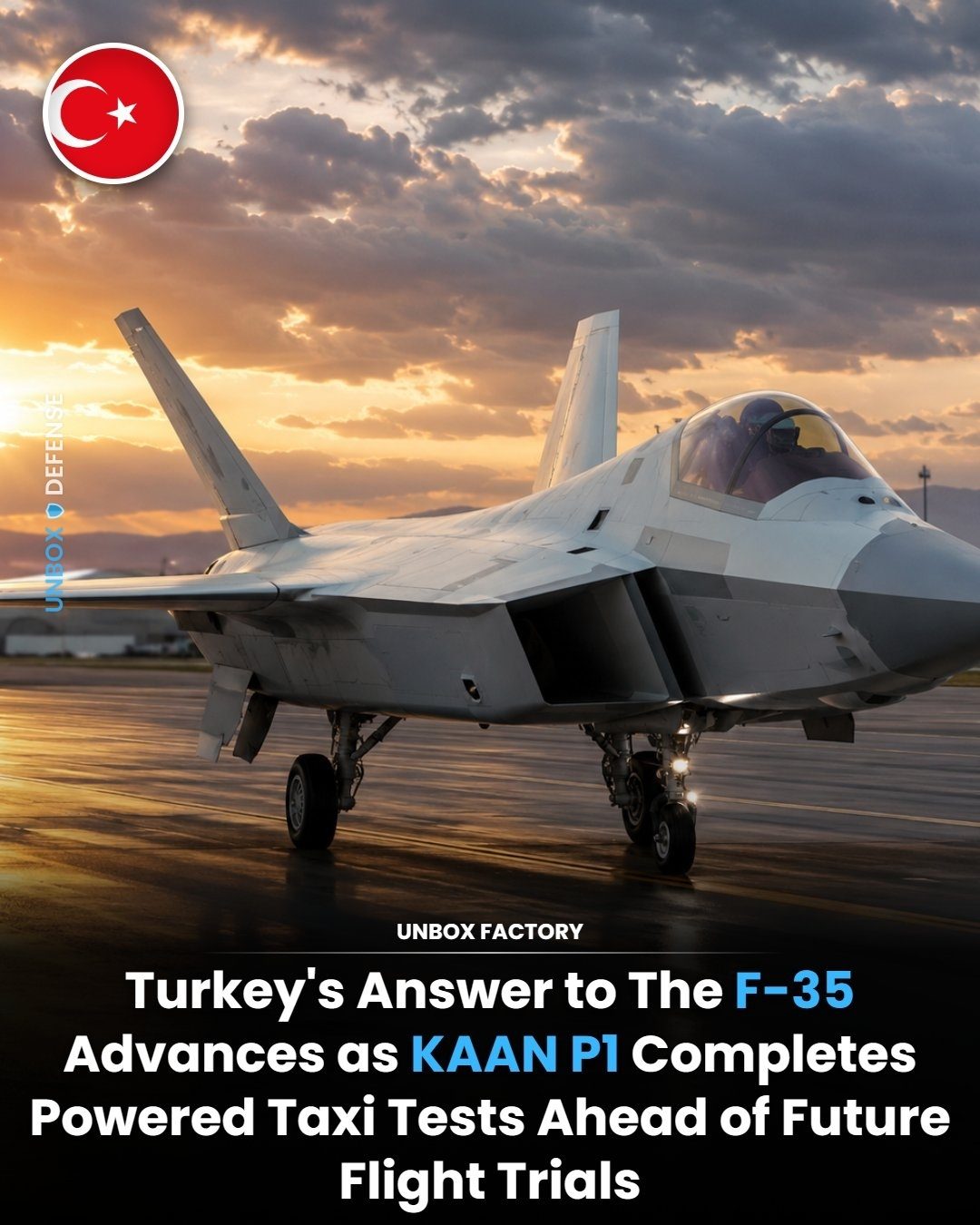
Turkey's KAAN P1 Fighter Jet: A New Era in Military Aviation
Turkey's indigenous KAAN fifth-generation fighter jet program has achieved a significant milestone with the successful completion of powered taxi tests by the P1 prototype. This advancement brings the aircraft one step closer to expanded flight testing, marking a pivotal moment in Turkey's domestic aerospace industry. Turkey's fifth-generation fighter jet, the KAAN P1, is designed to challenge the capabilities of the F-35 while strengthening Turkey's defense capabilities.
Context / Why This Matters
The development of the KAAN P1 is a strategic move for Turkey to reduce its reliance on foreign defense suppliers and bolster its domestic aerospace industry. The fighter jet is envisioned to replace portions of Turkey's aging F-16 fleet, ensuring that the country maintains a strong and modern defense capability.
Main Discussion
Design and Capabilities
The KAAN P1 is designed with several advanced features that set it apart in the military aviation landscape. Stealth shaping is a critical design element, allowing the aircraft to evade detection by radar systems. This feature is essential for modern combat operations, where stealth can provide a tactical advantage. Additionally, the aircraft is equipped with advanced sensors that enhance its situational awareness and targeting capabilities. Internal weapons bays further contribute to its stealth capabilities by allowing weapons to be carried internally, reducing the aircraft's radar signature when compared to fighters that carry their weapons externally.
Network-Centric Combat
One of the standout features of the KAAN P1 is its network-centric combat capability. This advanced system enables the aircraft to seamlessly integrate with other military assets, creating a cohesive and interconnected defense network. Network-centric combat allows for real-time data sharing and collaboration, enhancing the overall effectiveness of military operations. This capability is crucial for modern warfare, where coordination and information sharing can mean the difference between success and failure.
Powered Taxi Tests
The recent powered taxi tests represent a crucial phase in the development of the KAAN P1. During these tests, the aircraft demonstrated its ability to maneuver under its own power, showcasing its propulsion system and handling characteristics. This milestone is a significant step toward the aircraft's first flight, which is eagerly anticipated as it will provide valuable data on the aircraft's performance and stability.
Future Flight Trials
With the successful completion of the powered taxi tests, the next phase involves future flight trials. These trials will be essential for evaluating the aircraft's performance in various flight conditions and will provide insights into its readiness for operational deployment. The data gathered from these trials will be vital for fine-tuning the aircraft's design and ensuring it meets the required performance standards. This meticulous testing process ensures that the KAAN P1 will be a reliable and effective addition to Turkey's military arsenal.
Practical Tips
For those involved in the development and testing of advanced military aircraft, several practical tips can be derived from the KAAN P1's development process:
- Focus on Stealth Design: Ensuring that the aircraft has a low radar signature is crucial for modern combat operations. Investing in stealth shaping and internal weapons bays can significantly enhance the aircraft's survivability.
- Integrate Advanced Sensors: Equipping the aircraft with state-of-the-art sensors can improve its situational awareness and targeting capabilities, giving it a significant advantage in combat scenarios.
- Emphasize Network-Centric Combat: Integrating the aircraft into a network-centric combat system allows for real-time data sharing and coordination with other military assets, enhancing overall operational effectiveness.
- Conduct Thorough Testing: Rigorous testing phases, such as powered taxi tests and future flight trials, are essential for evaluating the aircraft's performance and readiness for operational deployment.
Important Takeaways
The successful completion of powered taxi tests by the KAAN P1 prototype marks a significant milestone in Turkey's indigenous fighter jet program. The aircraft's advanced design features, including stealth shaping, advanced sensors, and network-centric combat capabilities, position it as a formidable addition to Turkey's military arsenal. The future flight trials will be critical in evaluating the aircraft's performance and ensuring it meets the required standards for operational deployment. The development of the KAAN P1 demonstrates Turkey's commitment to strengthening its domestic aerospace industry and reducing reliance on foreign defense suppliers.
Conclusion
The KAAN P1 fighter jet represents a new era in military aviation, showcasing Turkey's advancements in domestic aerospace technology. With its stealth capabilities, advanced sensors, and network-centric combat features, the KAAN P1 is poised to replace portions of Turkey's aging F-16 fleet and enhance the country's defense capabilities. As the aircraft progresses through future flight trials, it will undoubtedly contribute to strengthening Turkey's military aviation and domestic aerospace industry.
Watch the Reel
Questions readers ask
What are the key features that make the KAAN P1 a rival to the F-35?
The KAAN P1 is designed with stealth shaping for reduced detectability and network-centric combat for enhanced situational awareness. These features, combined with its advanced avionics, positioning it as a strong competitor to the F-35.
Why are the taxi tests significant for the KAAN P1 program?
The successful taxi tests indicate that the KAAN P1's engines, brakes, and other critical systems are functioning properly. These tests are a crucial step before the aircraft can proceed to more extensive flight trials and eventually operational testing.
What does the development of the KAAN P1 mean for Turkey's aerospace industry?
The development of the KAAN P1 signifies a major advancement in Turkey's domestic aerospace capabilities. By producing a fifth-generation fighter jet, Turkey can reduce its reliance on foreign suppliers and establish itself as a more prominent player in the global aerospace market.
How does the KAAN P1 contribute to Turkey's defense capabilities?
The KAAN P1 enhances Turkey's defense capabilities by providing a advanced, domestically produced fighter jet. This will strengthen Turkey's military aviation capabilities and provide a more independent solution for Turkey's defense needs.
What are the potential benefits of network-centric combat in the KAAN P1?
The network-centric combat capabilities of the KAAN P1 will allow it to gather, share, and act on information in real-time. This will enable more effective coordination with other aircraft and ground forces, as well as improve situational awareness for the pilot.
What is the significance of the KAAN P1's stealth shaping?
The stealth shaping of the KAAN P1 is designed to reduce the aircraft's radar cross-section, making it less detectable by enemy forces. This feature will enhance the KAAN P1's survivability and effectiveness in modern combat environments.
Related deep dives
Similar reads based on topic and creator.



Recent articles
Fresh deep dives from the latest Reels we unpacked.




Comments
Be the first to comment.