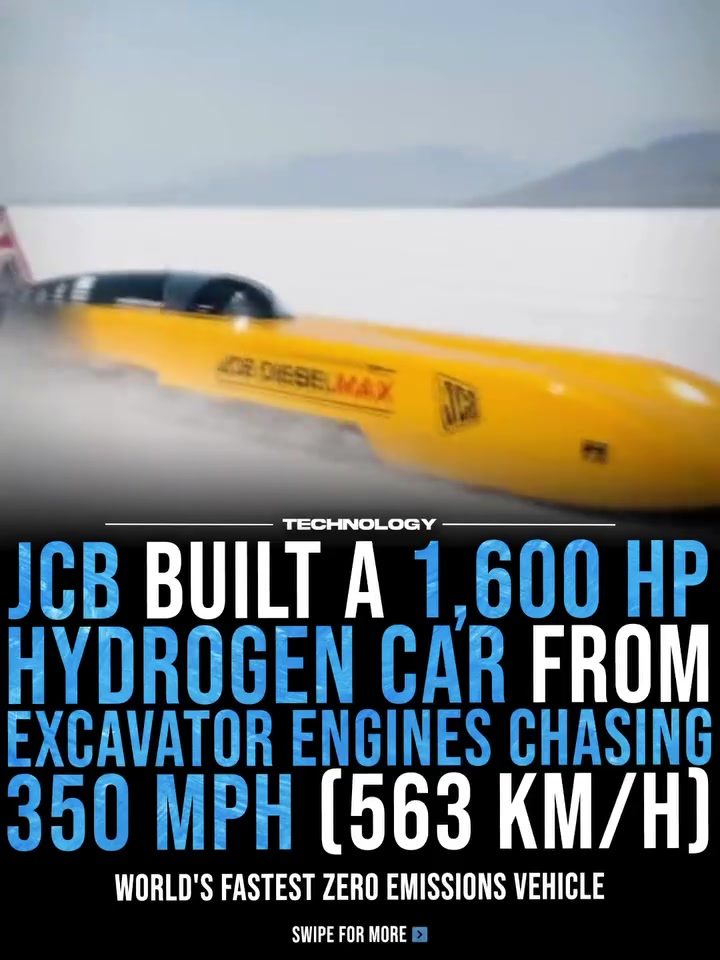
JCB HydroMax: The Hydrogen-Powered Land Speed Record Challenger
The JCB HydroMax is a groundbreaking hydrogen-powered racing vehicle designed to shatter land speed records. Built from excavator engines, this 32-foot beast boasts an impressive 1,600 horsepower and aims to surpass 350 mph, making it the world's fastest zero-emissions vehicle. This project marks a significant milestone in engineering and environmental innovation, demonstrating the potential of hydrogen combustion engines.
Context / Why this matters
The HydroMax isn't just about speed; it's about proving the capabilities of hydrogen combustion technology. By using two 800 hp hydrogen combustion engines derived from JCB's construction machinery, the vehicle aims to show that extreme power can be achieved without releasing carbon dioxide at the tailpipe.
Twenty years after JCB's Dieselmax reached 350.092 mph at Bonneville, the HydroMax is set to redefine the boundaries of land speed records. This isn't just a test of speed; it's a major engineering challenge that highlights the advancements in hydrogen technology and its potential for high-performance applications.
Main discussion
The Evolution of Land Speed Records
Land speed records have long been a testing ground for cutting-edge technology. From the early days of gasoline-powered vehicles to the more recent advancements in electric and hydrogen power, each new record pushes the limits of what is possible. JCB's HydroMax is the latest addition to this legacy, combining the power of excavator engines with the clean energy of hydrogen combustion.
The Hydrogen Advantage
Hydrogen combustion engines offer a unique advantage over traditional fossil fuels. They release no carbon dioxide at the tailpipe, making them a cleaner alternative for high-performance applications. The HydroMax's engines, derived from JCB's construction machinery, are a testament to the versatility and power of hydrogen technology.
The Engineering Challenge
Building a vehicle capable of speeds over 350 mph is no small feat. The HydroMax faces several engineering challenges, including aerodynamic design, engine performance, and structural integrity. JCB's expertise in construction machinery has been instrumental in developing the vehicle's powerful engines and robust frame.
The Role of Andy Green
Veteran driver Andy Green is at the helm of the HydroMax. Holding the outright land speed record at 763.035 mph, Green brings a wealth of experience and skill to the project. His involvement is crucial in pushing the vehicle's limits and achieving the desired speed records.
Practical tips
Understanding Hydrogen Combustion
Hydrogen combustion engines work by burning hydrogen in the presence of oxygen, producing water vapor as a byproduct. Unlike traditional combustion engines, they do not release carbon dioxide, making them a cleaner alternative. This technology is crucial in reducing the carbon footprint of high-performance vehicles.
Maintenance and Sustainability
Hydrogen-powered vehicles require specific maintenance considerations. Regular checks on the hydrogen storage system, fuel cells, and combustion chambers are essential. Additionally, sourcing hydrogen from renewable energy sources can further enhance the sustainability of these vehicles.
Safety Measures
High-speed racing vehicles like the HydroMax demand rigorous safety protocols. This includes protective gear for the driver, advanced braking systems, and robust vehicle design. Safety is paramount in ensuring the success and longevity of such projects.
Important takeaways
- Innovation in Hydrogen Technology: The HydroMax showcases the potential of hydrogen combustion engines in high-performance applications.
- Environmental Impact: Hydrogen vehicles offer a cleaner alternative to traditional fossil fuel-powered vehicles, reducing carbon emissions.
- Engineering Feat: The HydroMax represents a significant engineering achievement, leveraging JCB's expertise in construction machinery.
- Land Speed Record Potential: With a target speed of over 350 mph, the HydroMax aims to set new land speed records.
Conclusion
The JCB HydroMax is more than just a racing vehicle; it's a testament to the advancements in hydrogen technology and its potential for high-performance applications. By pushing the boundaries of what is possible, the HydroMax demonstrates the capabilities of hydrogen combustion engines and paves the way for a cleaner, more sustainable future in racing and beyond. As the project continues to develop, it will undoubtedly continue to inspire and drive innovation in the automotive and engineering sectors.
Watch the Reel
Questions readers ask
What is the target speed for the JCB HydroMax?
The JCB HydroMax aims to reach a top speed exceeding 350 mph, making it one of the fastest hydrogen-powered vehicles in the world.
How does the JCB HydroMax generate power?
The JCB HydroMax utilizes two 800 horsepower hydrogen combustion engines derived from JCB's construction machinery. The engines burn hydrogen to produce extreme power.
What makes the JCB HydroMax unique compared to other racing cars?
The JCB HydroMax is unique because it is a hydrogen-powered racing car designed to break land speed records without producing emissions, making it the fastest zero-emissions vehicle to go over 350 mph.
What is the significance of the JCB HydroMax project?
The JCB HydroMax project aims to demonstrate the potential of hydrogen combustion technology, showcasing that high power and speed can be achieved with zero emissions. The project is about proving the capabilities of hydrogen combustion engines.
How does the JCB HydroMax compare to the JCB DieselMax?
Unlike the JCB DieselMax, which uses diesel engines, the JCB HydroMax uses hydrogen combustion engines. This makes the HydroMax a clean, emissions-free alternative for land speed record attempts.
Related deep dives
Similar reads based on topic and creator.


Recent articles
Fresh deep dives from the latest Reels we unpacked.




Comments
Be the first to comment.