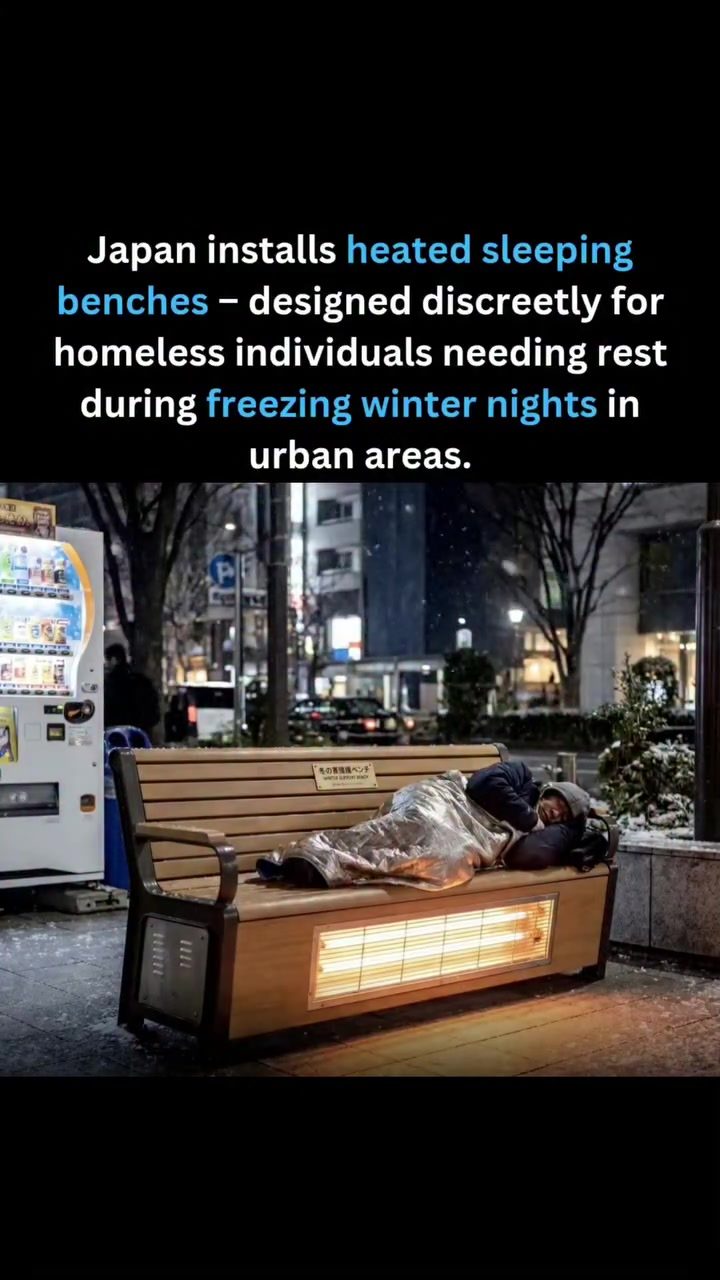
Heated sleeping benches have become an innovative urban design feature in Japan, specifically aimed at providing a crucial service for homeless individuals during the harsh winter nights. These benches, discreetly integrated into urban areas, offer a vital source of warmth and shelter.
Why this matters
Urban homelessness is a global challenge, and cities face the constant pressure of finding both short and long-term solutions. During winter, the urgency for immediate relief becomes even greater. The issue is starkly highlighted in Japan, where harsh winters bring freezing temperatures that can lead to severe health risks and even fatalities for those without adequate shelter.
The heated sleeping benches represent a proactive approach to addressing this issue. They serve as a reminder of the essential role of urban design in improving public welfare and safety, especially when it comes to our most vulnerable populations.
Urban design innovations for public welfare
The heated sleeping benches in Japan are part of a growing trend in urban design, where cities worldwide are innovating to enhance public welfare and safety. These designs go beyond conventional infrastructure to address specific needs, such as providing shelter and warmth for homeless individuals.
This approach underscores the importance of compassionate urban planning. Including features like heated benches can make a city more inclusive and supportive of its residents, regardless of their circumstances. These benches are a practical, immediate solution to a pressing issue, showcasing how urban design can play a critical role in addressing social challenges.
How heated sleeping benches work
The design of these benches is deceptively simple yet highly effective. Discreetly placed in urban areas, the benches are fitted with heating elements to provide warmth during freezing nights. They are often covered with a plastic sheet to keep the heat in and create a more comfortable sleeping environment. This design ensures that homeless individuals can gain respite from the cold without drawing unwanted attention.
The heating elements are generally powered by electricity, making them both efficient and cost-effective. The discreet placement is crucial, as it minimizes any potential stigma associated with using such facilities. This ensures that the benches are used by those who genuinely need them, without causing discomfort for users or passersby.
The effectiveness of these benches is evident in the scenes where individuals can be seen sleeping peacefully, despite the harsh weather conditions. These visuals highlight the immediate impact of such interventions in providing comfort and safety for the most vulnerable.
The broader impact
Beyond their practical benefits, heated sleeping benches also serve as a symbol of community support and empathy. They represent a tangible effort by the city to care for its most disadvantaged citizens. This gesture can foster a sense of belonging and community, reinforcing the idea that everyone has a place in the city, regardless of their living situation.
In addition, these initiatives can inspire similar projects in other cities, promoting a global dialogue on how urban design can address social issues. The success of heated sleeping benches in Japan could pave the way for similar innovations in other parts of the world facing similar challenges.
Practical tips
For cities looking to implement similar solutions, several practical steps can be considered. First, it's essential to identify the specific needs of the homeless population. Conducting surveys or engaging with local organizations that support the homeless can provide valuable insights into what interventions would be most effective.
Second, consultants in urban design and social welfare should collaborate to create solutions that are both practical and empathetic. This interdisciplinary approach ensures that the design meets the immediate needs of the homeless while also integrating seamlessly into the urban landscape.
Lastly, public awareness and support are crucial. Educating the public about the purpose and benefits of such initiatives can help gain their support, ensuring that these interventions are well-received and effectively utilized.
Important takeaways
Heated sleeping benches in Japan highlight the critical role of urban design in addressing social issues. These benches provide immediate relief for homeless individuals during harsh winter nights, offering warmth, comfort, and a sense of security.
The design and placement of these benches underscore the importance of practical, empathetic solutions in urban planning. The discreet, efficient design ensures that they are both effective and unobtrusive, making them a valuable addition to urban infrastructure.
The initiative also serves as a model for other cities looking to implement similar solutions. By addressing the immediate needs of their most vulnerable residents, cities can create more inclusive and supportive urban environments.
Conclusion
Heated sleeping benches in Japan represent a powerful example of how urban design can be leveraged to improve public welfare and safety. By providing warmth and shelter for homeless individuals, these benches demonstrate the potential of innovative design solutions to address critical social challenges.
The success of this initiative underscores the importance of compassionate urban planning and the role it can play in fostering a more inclusive society. As cities worldwide continue to grapple with the challenges of urban homelessness, the example set by Japan offers a valuable model for how effective, empathetic solutions can make a significant difference in the lives of the most vulnerable.
Watch the Reel
Questions readers ask
What are heated benches and where can they be found in Japan?
Heated benches are urban design innovations integrated into public spaces in Japan. They are designed to provide immediate warmth and shelter to homeless individuals during the harsh winter months. These benches are strategically placed in urban areas to offer a discreet and accessible source of relief from the cold.
How do heated benches help homeless people in winter?
Heated benches provide a crucial source of warmth, helping to prevent hypothermia and other health risks associated with extreme cold. By offering a place to rest and warm up, these benches can significantly improve the well-being of homeless individuals during freezing nights, helping them to avoid severe health consequences and even fatalities.
What is the role of compassionate city planning in addressing homelessness?
Compassionate city planning involves designing public spaces with the needs of vulnerable populations in mind. In the case of heated benches, this approach acknowledges the urgent public welfare issues faced by homeless individuals and provides practical, immediate solutions to support them during harsh winter conditions.
What are some of the benefits of integrating heated benches into urban design?
Integrating heated benches into urban design offers several benefits. These include providing immediate relief to homeless individuals, encouraging a more compassionate public attitude towards homelessness, and serving as a model for other cities looking to implement innovative solutions to support their vulnerable populations. Additionally, these design features can contribute to a more humane and inclusive urban environment.
What are the key features of heated bench design?
Heated benches are designed to be discreet and integrated into urban landscapes, ensuring they blend seamlessly with their surroundings. Key features include heating elements that provide warmth, a sturdy and durable structure to withstand outdoor conditions, and easy accessibility for those in need. Some designs may also include additional comfort features, such as backrests or armrests.
Recent articles
Fresh deep dives from the latest Reels we unpacked.




Comments
Be the first to comment.