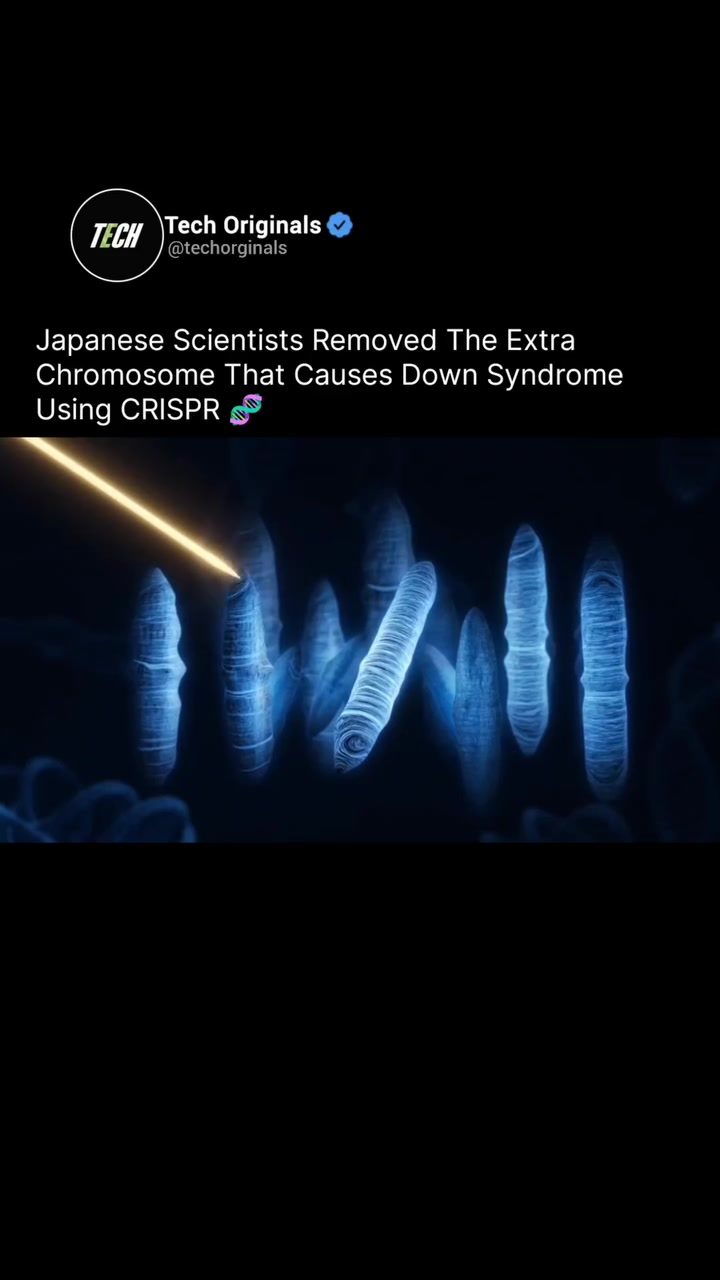
Japanese Scientists' Breakthrough: Editing Chromosomes with CRISPR
In a significant advancement for genetic medicine, Japanese researchers have leveraged CRISPR technology to selectively remove the extra chromosome that causes Down syndrome. This breakthrough, achieved in laboratory-grown human cells, involves targeting chromosome 21, which plays a crucial role in the disorder. By doing so, the team restored more typical cellular function and gene activity, offering a promising new avenue in the realm of genetic engineering and biotechnology.
Context / Why this matters
Chromosomal disorders, such as Down syndrome, are caused by anomalies in the number or structure of chromosomes. Down syndrome, specifically, is characterized by the presence of an extra copy of chromosome 21. This additional chromosome leads to a variety of physical and developmental challenges. CRISPR technology, an advanced gene-editing tool, has been at the forefront of biological research, enabling scientists to make precise modifications to DNA. The use of CRISPR in this breakthrough represents a significant stride in the field of genetic medicine and chromosomal disorders.
Main discussion
The CRISPR Revolution
CRISPR, or Clustered Regularly Interspaced Short Palindromic Repeats, is a powerful tool for editing genomes. It works by using a specific sequence of RNA to target and cut DNA at a precise location. This precision makes it an invaluable tool for genetic research and potential therapies. The recent development by Japanese scientists showcases CRISPR’s ability to address chromosomal anomalies, specifically the extra copy of chromosome 21 that causes Down syndrome.
Understanding Chromosome 21
Chromosome 21 is one of the 23 pairs of chromosomes found in human cells. In individuals with Down syndrome, there is an extra copy of this chromosome, leading to the condition. This extra genetic material alters the gene expression and cellular function, resulting in the characteristic features and developmental issues associated with Down syndrome. The ability to selectively remove this extra chromosome is a landmark achievement. Scientists have been studying chromosome 21 for decades to understand the genetic mechanisms behind the disorder.
The CRISPR Technique
The technique developed by the Japanese researchers involves using CRISPR to target and remove the extra chromosome 21. This process is delicate and complex. The scientists developed a method that selectively destroys the additional chromosome without affecting the healthy copies. This precision is crucial for maintaining the integrity of the cell and preventing adverse side effects. CRISPR is a tool with incredible precision, allowing geneticists to manipulate DNA in ways that were previously unimaginable.
Implications for Genetic Medicine
This breakthrough has far-reaching implications for genetic medicine. The ability to correct chromosomal abnormalities could revolutionize the treatment of various genetic disorders. The research is still in its early stages and needs further development before it can be applied clinically. However, it represents a significant step forward in our understanding of chromosomal disorders and the potential for genetic therapies. The research by Japanese scientists underscores the potential of genetic engineering and biotechnology in addressing complex health issues.
Practical Tips
For those interested in understanding more about this breakthrough and its implications, several key points are important to consider:
- Stay Informed: Keep up with the latest developments in CRISPR technology and genetic medicine. The field is rapidly evolving, and new discoveries are made regularly.
- Engage with the Research: Read scientific papers and articles to stay informed about the advancements in genetic engineering and biotechnology. This can provide deeper insights into the potential applications and challenges of these technologies.
- Understand the Limitations: While this breakthrough is promising, it is essential to recognize that it is still early-stage research. Much more work is needed before it can be translated into clinical treatments.
- Consider the Ethical Implications: The use of gene editing raises important ethical questions. Reflect on the broader implications of this technology and consider the potential impact on society.
Important takeaways
- Precision is Key: The ability to target and remove the extra chromosome 21 without affecting the healthy copies is a significant achievement.
- Potential for Treatment: This research represents a major step forward in the potential treatment of Down syndrome and other chromosomal disorders.
- Early-Stage Research: While promising, this is still early-stage research and needs further development before it can be applied clinically.
Conclusion
This breakthrough by Japanese scientists using CRISPR technology to remove the extra chromosome that causes Down syndrome is a remarkable achievement in the field of genetic medicine. The research highlights the potential of genetic engineering and biotechnology in addressing complex health issues. While this development is still in its early stages, it offers a beacon of hope for the future treatment of chromosomal disorders. It underscores the importance of continued research and investment in genetic medicine to unlock its full potential.
Watch the Reel
Questions readers ask
How does the CRISPR technology target the extra chromosome in Down syndrome?
CRISPR technology uses a guide RNA to locate and target specific DNA sequences. In the case of Down syndrome, the technology is programmed to identify and remove the extra copy of chromosome 21, which is the cause of the condition.
What are the potential implications of this breakthrough for genetic medicine in Japan?
This breakthrough opens up new possibilities for therapeutic interventions in genetic medicine. It demonstrates the potential of CRISPR technology to address chromosomal disorders, particularly Down syndrome, paving the way for future research and applications in the field of biotechnology.
What makes chromosome 21 significant in the context of Down syndrome?
Chromosome 21 is significant because an extra copy of this chromosome is the genetic cause of Down syndrome. By targeting and removing this extra chromosome, scientists aim to restore normal cellular function and gene activity, which could potentially alleviate the symptoms associated with the condition.
Can this CRISPR-based approach be applied to other chromosomal disorders?
While the current research focuses on Down syndrome, the principles of CRISPR technology can potentially be applied to other chromosomal disorders. The technique could be adapted to target different chromosomes or specific genetic sequences responsible for other conditions, expanding its potential applications.
What are the next steps in the research following this breakthrough?
The next steps involve further testing and validation in more complex biological systems, such as animal models and eventually human trials. Researchers will also focus on refining the technology to ensure precision, safety, and effectiveness before it can be considered for clinical use.
Related deep dives
Similar reads based on topic and creator.



Recent articles
Fresh deep dives from the latest Reels we unpacked.




Comments
Be the first to comment.