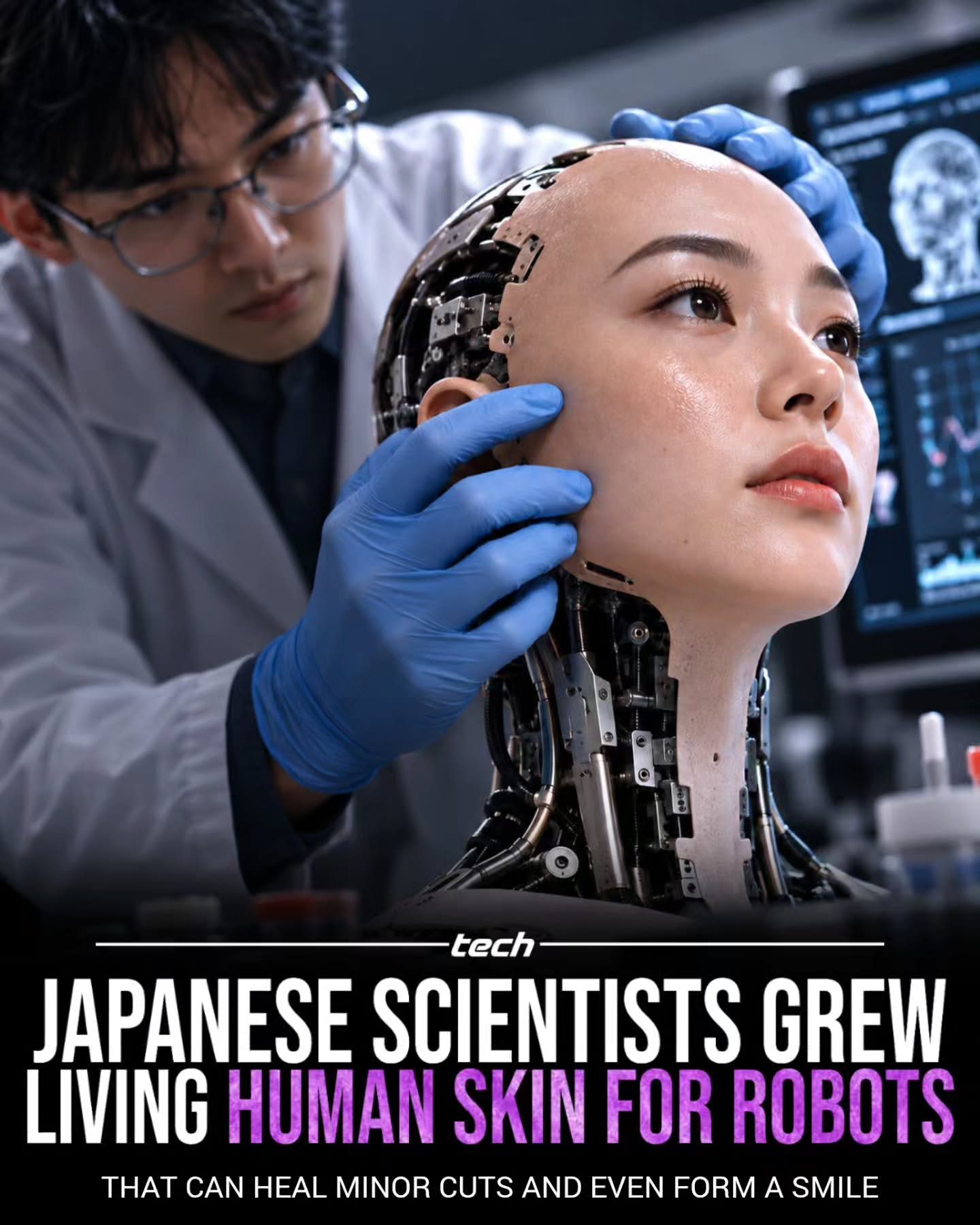
Japanese scientists have made a groundbreaking advancement by developing living human skin that can be directly attached to robotic faces. This innovation, spearheaded by researchers at the University of Tokyo, marks a significant step toward creating more lifelike humanoid robots. The development was detailed in the journal Cell Reports Physical Science, highlighting the potential for robots to display natural facial expressions and even repair minor damage.
Why this matters
This breakthrough is not just about making robots more lifelike; it has broader implications for various fields. The ability to create living skin for robots could revolutionize how we interact with artificial intelligence, making robots more capable of natural human-like interactions. Beyond robotics, this technology has potential applications in cosmetic testing, wound healing research, reconstructive surgery, and drug development. By providing more realistic models of human skin, these advancements could lead to significant developments in medical and cosmetic fields.
Main discussion
Innovative Skin Technology
The new skin is a departure from the silicone coverings commonly used on today’s humanoid robots. Instead, it is made from cultured human skin cells grown in a laboratory. This living skin can heal minor cuts, similar to how human skin repairs itself, and can form realistic expressions, such as a smile. This is achieved through the use of "perforation-type anchors" that mimic the ligaments connecting human skin to underlying tissue, allowing the skin to stretch and move naturally with the robot’s face.
Method and Process
The process involves growing skin cells in a laboratory and then attaching them to the robotic surface. The tiny anchors used are crucial for keeping the skin firmly attached while allowing it to flex and move with the robot’s expressions. This method not only enhances the natural appearance of the robot but also enables it to exhibit more human-like behaviors.
Current Limitations
While this development is impressive, it is still in an early research stage. The living skin requires careful laboratory conditions and nutrients to remain alive. It currently lacks blood vessels, sweat glands, nerves, and hair follicles, which are essential for fully functional human skin. This means that while the skin can heal minor cuts and form natural expressions, it is not yet a complete replacement for human skin.
Future Prospects
Professor Shoji Takeuchi, the lead researcher, envisions a future where biohybrid robots have skin capable of self-healing, sensing the environment, and interacting more naturally with people. This would involve integrating more biological components into the skin, making it more robust and functional. The long-term goal is to create robots that can truly mimic human behavior and interactions.
Practical Tips
Potential Applications
For robotic engineers and developers, this breakthrough offers several practical applications:
- Enhanced Robot Interactions: Robots with living skin can interact more naturally with humans, making them more effective in roles that require human interaction, such as customer service, healthcare, and education.
- Medical Research: The living skin can serve as a more realistic model for studying human skin diseases, wound healing, and drug interactions. This could lead to more effective treatments and therapies.
- Cosmetic Testing: In the cosmetic industry, this technology could provide a more ethical and accurate way to test the effectiveness and safety of new products.
Considerations for Implementation
- Maintenance: Living skin requires careful maintenance and nutrients to stay alive, which could be a challenge in practical applications.
- Ethical Considerations: Using living human skin on robots raises ethical questions. It’s important for researchers and developers to address these concerns and ensure that the technology is used responsibly.
Long-term Planning
For those involved in robotics and biohybrid technologies, planning for future developments is crucial. As the technology advances, integrating more biological components into robots will become increasingly important. This will require interdisciplinary collaboration and a deep understanding of both robotics and human biology.
Important Takeaways
- Living Human Skin on Robots: Japanese scientists have developed living human skin that can be attached to robotic faces, allowing for more natural facial expressions and minor damage repair.
- Perforation-Type Anchors: The skin uses tiny anchors to mimic human ligaments, allowing it to stretch and move naturally with the robot’s face.
- Broader Applications: This technology has potential applications in medical research, cosmetic testing, and more realistic robot-human interactions.
Conclusion
The development of living human skin for robots represents a major advancement in the field of robotics. By enabling robots to display more natural facial expressions and even repair minor damage, this technology brings us one step closer to creating more lifelike and interactive humanoid robots. While there are still challenges to overcome, the potential applications are vast and promising. As research continues, we can expect to see even more innovative developments in this field, paving the way for a future where robots can interact with humans in more natural and meaningful ways.
Watch the Reel
Questions readers ask
How does the living skin developed by Japanese scientists heal?
The living skin developed by Japanese scientists has the natural ability to repair minor damage. This self-healing property mimics human skin, allowing robots to maintain their appearance and functionality over time.
Which university is behind this major breakthrough in robotics?
The University of Tokyo is responsible for this significant advancement in robotics. The researchers there have successfully created living human skin that can be attached to robotic faces.
In what ways can this technology benefit fields beyond robotics?
This technology has implications for cosmetics, reconstructive surgery, and drug development. The ability to create and study living skin on robots could lead to new cosmetic treatments, surgical techniques, and medical advancements.
What are the implications of this technology for human-robot interactions?
This breakthrough could make robots more capable of natural human-like interactions. By displaying natural facial expressions and healing from minor damage, robots become more lifelike and approachable.
Why is the ability to display natural facial expressions important for robots?
The ability of robots to display natural facial expressions is crucial for enhancing their lifelike appearance and functionality. This makes human-robot interactions more intuitive and engaging, as robots can better mimic human emotions and reactions.
How can this technology enhance the functionality of robots?
This technology enhances the functionality of robots by allowing them to heal from minor damage and move naturally. It enables robots to maintain their appearance and performance, making them more reliable and durable in various applications.
What is the significance of this research for the field of robotics?
This research marks a significant step toward creating more lifelike humanoid robots. It opens new possibilities for advancements in robotics, particularly in areas like cosmetic robotics and medical research. Moreover, it paves the way for robots with living skin.
Related deep dives
Similar reads based on topic and creator.



Recent articles
Fresh deep dives from the latest Reels we unpacked.




Comments
Be the first to comment.