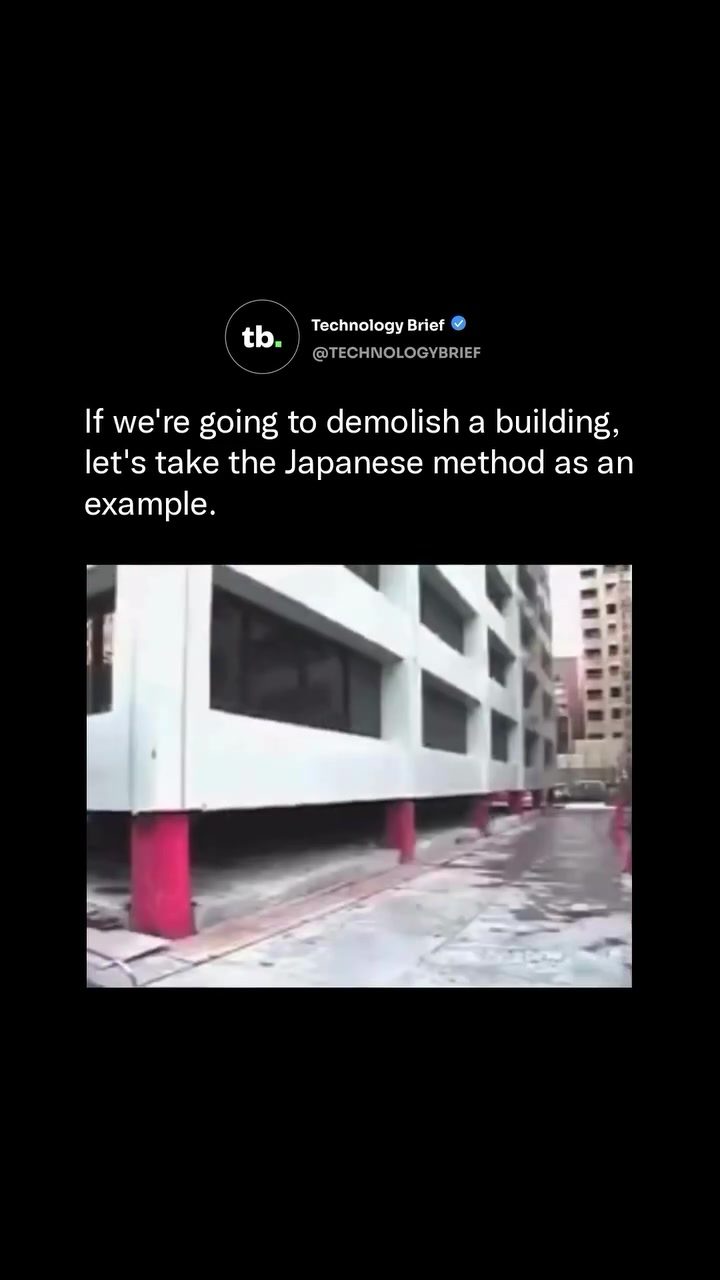
Building Demolition: The Japanese "Cut and Take Down" Method
Japan has pioneered some of the most innovative building demolition techniques worldwide. Among these, the “Cut and Take Down” method, developed by Kajima Corporation, stands out for its precision and controlled approach. This method involves dismantling a building from the ground up, offering numerous benefits over traditional demolition techniques.
Context: Why Japan is Leading the Way
In Japan, the demand for efficient and safe building demolition has driven the development of advanced techniques. The “Cut and Take Down” method is a prime example of how Japanese engineering excellence is applied to urban infrastructure. This method addresses critical issues such as worker safety, environmental impact, and waste management, making it a standout solution in the global demolition industry.
The "Cut and Take Down" Method
How It Works
The “Cut and Take Down” method is a meticulous process that begins with the dismantling of the ground floor of a building. Crews use hydraulic jacks to carefully lower the entire structure one story at a time. This bottom-up approach ensures that all heavy work is carried out at ground level, significantly reducing the risks associated with traditional top-down demolition methods.
Advantages Over Traditional Demolition
Safety
One of the most significant advantages of the “Cut and Take Down” method is enhanced safety for workers. By keeping all heavy lifting and dismantling at ground level, the risk of accidents and injuries is drastically reduced. Workers are not exposed to the hazards of working at height, which is a common issue in traditional demolition methods.
Noise and Dust Pollution
This method also significantly cuts down on noise and dust pollution. Traditional demolition techniques, which often involve explosives or heavy machinery, can generate considerable noise and dust. The “Cut and Take Down” method, by contrast, is much quieter and produces up to 90 percent less dust, making it a more environmentally friendly option.
Waste Management
Japanese regulations require that demolition materials be sorted on-site for recycling. The ground-level approach of the “Cut and Take Down” method makes this process more efficient. As materials are dismantled, they can be immediately sorted and prepared for recycling, reducing the amount of waste that ends up in landfills.
The Economic Impact
While the “Cut and Take Down” method may take longer and cost 5 to 10 percent more than traditional demolition, it offers significant economic benefits in the long run. Despite the higher initial cost, crews can complete the job up to 15 percent faster in total project time. This efficiency, combined with reduced waste and environmental impact, makes the method a cost-effective choice for large-scale demolition projects.
Practical Tips for Implementation
Implementing the “Cut and Take Down” method requires careful planning and the right equipment. By following these practical tips, you can ensure a successful and efficient demolition project:
Planning and Preparation
- Site Assessment: Conduct a thorough assessment of the building and its surroundings to identify any potential hazards or challenges.
- Equipment Selection: Choose the appropriate hydraulic jacks and other necessary equipment to ensure a smooth and safe dismantling process.
- Worker Training: Ensure that all workers are well-trained in the “Cut and Take Down” method and are familiar with the equipment and safety protocols.
Execution
- Gradual Dismantling: Begin by dismantling the ground floor and gradually move up, using hydraulic jacks to lower the building one story at a time.
- Sorting and Recycling: Implement a system for sorting and recycling materials on-site to comply with regulations and reduce waste.
- Regular Inspections: Conduct regular inspections to ensure the structural integrity of the building during the dismantling process and to make any necessary adjustments.
Important Takeaways
Building demolition doesn’t have to be chaotic and destructive. The “Cut and Take Down” method showcases how precision and control can transform the demolition process. Here are the key takeaways:
- Safety First: Keeping heavy work at ground level minimizes worker risks.
- Efficiency: While the method may initially seem slower, it often completes projects faster overall.
- Environmental Benefits: Reduced noise and dust pollution, along with efficient waste management, make it an eco-friendly choice.
- Economic Efficiency: Despite higher initial costs, the method's efficiency and reduced waste contribute to long-term savings.
Conclusion
The “Cut and Take Down” method represents a significant advancement in building demolition techniques. By prioritizing safety, efficiency, and environmental sustainability, this Japanese method sets a new standard for demolition projects worldwide. Whether you're planning a large-scale demolition or looking to update your methods, considering this approach could lead to a safer, cleaner, and more efficient process.
Watch the Reel
Questions readers ask
What makes the Japanese 'Cut and Take Down' method unique compared to traditional demolition techniques?
The 'Cut and Take Down' method is unique because it involves dismantling a building from the ground up, unlike traditional top-down approaches. This method offers enhanced precision and control, reducing risks to workers and minimizing environmental pollution.
Who developed the 'Cut and Take Down' demolition technique?
The 'Cut and Take Down' method was developed by Kajima Corporation, a leading Japanese company known for its innovative engineering solutions.
How does the 'Cut and Take Down' method address worker safety during building demolition?
This method enhances worker safety by allowing for a controlled dismantling process. Workers can focus on specific sections of the building at a time and the method does not require the use of heavy machinery in close proximity to workers.
What are the environmental benefits of using the 'Cut and Take Down' method for building demolition?
The 'Cut and Take Down' method minimizes environmental pollution by allowing for more controlled and precise extraction of materials, which can be sorted and recycled. This results in less waste and contamination.
Why is Japan a leader in advanced building demolition techniques?
Japan's leadership in advanced building demolition techniques can be attributed to the country's demand for efficient and safe urban infrastructure solutions. The country's population density and rapid urbanization have driven the development of innovative methods like the 'Cut and Take Down' technique.
What are the key benefits of using the 'Cut and Take Down' method in urban infrastructure projects?
The key benefits include enhanced worker safety, reduced environmental pollution, and more efficient waste management. These advantages make it a favorable choice for urban infrastructure projects where space is limited and precision is crucial.
Related deep dives
Similar reads based on topic and creator.



Recent articles
Fresh deep dives from the latest Reels we unpacked.




Comments
Be the first to comment.