Robotic Exoskeletons and Workplace Safety
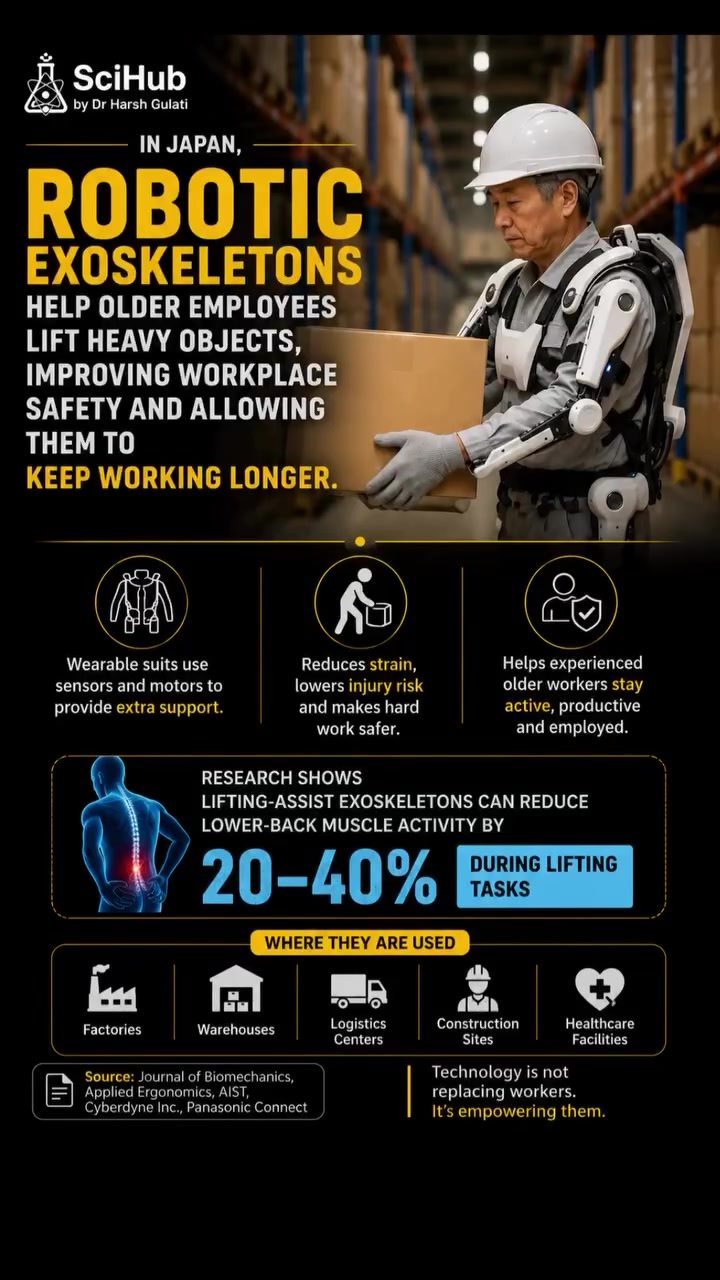
Japan is leading the way in integrating robotic exoskeletons into the workplace to support older employees in physically demanding jobs. These wearable robotic suits are designed to reduce strain and lower the risk of workplace injuries, making it easier for workers to handle heavy objects and continue contributing to their roles.
Context / Why this matters
As Japan's population ages and the workforce shrinks, many industries are facing labor shortages. Instead of replacing experienced workers with machines, companies are turning to exoskeleton technology to help these workers stay active, productive, and safe for longer. These devices use sensors, motors, and battery-powered actuators to detect the wearer's movements and provide assistance with lifting tasks, making it easier on the body.
Main discussion
The Benefits of Exoskeletons in the Workplace
Exoskeletons are designed to reduce strain on the back, shoulders, arms, and legs during lifting tasks. This reduction in physical strain can lead to a significant decrease in workplace injuries. Research has shown that lifting-assist exoskeletons can reduce lower-back muscle activity by 20–40% during manual lifting tasks, making them a promising tool for injury prevention.
Industries Using Exoskeletons
Exoskeletons are being used across various industries, including:
- Factories: In manufacturing settings, exoskeletons can help workers handle heavy materials and equipment, reducing the risk of strain and injury.
- Warehouses: Workers in warehouses often need to lift and move heavy boxes and pallets. Exoskeletons can provide the necessary support to make these tasks safer and more manageable.
- Logistics Centers: In logistics, where workers frequently lift and transport goods, exoskeletons can help prevent injuries and keep workers productive.
- Construction Sites: Construction work often involves heavy lifting and manual labor. Exoskeletons can support workers in these demanding conditions, reducing the risk of injuries.
- Healthcare Facilities: In healthcare, exoskeletons can assist workers in lifting and moving patients, reducing the physical strain on caregivers.
How Exoskeletons Work
Exoskeletons use advanced technology to detect the wearer's movements and provide assistance only when needed. The suits are equipped with sensors, motors, and battery-powered actuators that work together to support the wearer during lifting tasks. This targeted assistance helps reduce physical strain and lowers the risk of injury, making it easier for older workers to continue their roles.
Practical Tips
If you're considering implementing exoskeletons in your workplace, here are some practical tips:
- Assess the Need: Identify tasks that involve heavy lifting or physical strain and determine where exoskeletons could be most beneficial.
- Choose the Right Exoskeleton: Different exoskeletons are designed for different tasks. Choose a model that fits the specific needs of your workplace.
- Training: Ensure that workers are properly trained on how to use the exoskeletons and that they understand the benefits and limitations of the technology.
- Maintenance: Regularly maintain and inspect the exoskeletons to ensure they are functioning properly and safely.
Important Takeaways
- Reduced Strain: Exoskeletons can significantly reduce strain on the back, shoulders, arms, and legs, making it easier for workers to handle heavy objects.
- Injury Prevention: By lowering the risk of workplace injuries, exoskeletons can help keep workers safe and productive.
- Versatility: Exoskeletons are being used across various industries, including factories, warehouses, logistics centers, construction sites, and healthcare facilities.
Conclusion
Robotic exoskeletons are revolutionizing workplace safety, especially in physically demanding industries. By reducing strain and lowering the risk of injuries, exoskeletons allow older workers to stay active, productive, and safe for longer. As more countries face aging populations, the use of exoskeletons could become an increasingly common part of the future workplace.
Watch the Reel
Questions readers ask
What are the primary benefits of using robotic exoskeletons in the workplace?
Robotic exoskeletons help workers by reducing physical strain and lowering the risk of injuries. They enable employees to perform heavy lifting tasks more safely and efficiently, which is particularly beneficial for an aging workforce. Additionally, they support companies in retaining experienced workers for longer periods.
How do exoskeletons support an aging workforce in Japan?
Exoskeletons in Japan are specifically designed to assist older workers in physically demanding jobs. By providing support for heavy lifting and reducing strain, these devices help older employees continue working safely and productively, addressing the challenges posed by an aging population and labor shortages.
What technologies are integrated into these wearable robotic suits?
These wearable robotic suits use advanced technologies such as sensors, motors, and battery-powered actuators. These components work together to detect the wearer's movements and provide the necessary assistance, ensuring seamless integration with the user's actions.
How do exoskeletons help in preventing workplace injuries?
Exoskeletons significantly lower the risk of workplace injuries by assisting with heavy lifting and reducing the physical strain on workers. By supporting the body during strenuous tasks, they minimize the likelihood of accidents and injuries, promoting a safer work environment.
What industries in Japan are most likely to benefit from exoskeleton technology?
Industries with physically demanding tasks, such as manufacturing, construction, and logistics, are likely to benefit most from exoskeleton technology. These sectors often involve heavy lifting and repetitive motions, making them ideal for implementing exoskeletons to enhance worker safety and productivity.
Are exoskeletons a viable solution to Japan's labor shortages?
Yes, exoskeletons offer a practical solution to Japan's labor shortages by enabling older workers to remain active and productive in the workforce. This helps to mitigate the impact of a shrinking workforce and ensures that experienced employees can continue contributing to their roles.
How do companies in Japan implement exoskeleton technology in the workplace?
Companies in Japan implement exoskeleton technology by equipping workers with these wearable robotic suits, which are designed to integrate seamlessly with the user's movements. This involves training workers on how to use the technology effectively and ensuring that the exoskeletons are properly maintained and adapted to the specific needs of the tasks they are performing.
Related deep dives
Similar reads based on topic and creator.


Recent articles
Fresh deep dives from the latest Reels we unpacked.




Comments
Be the first to comment.