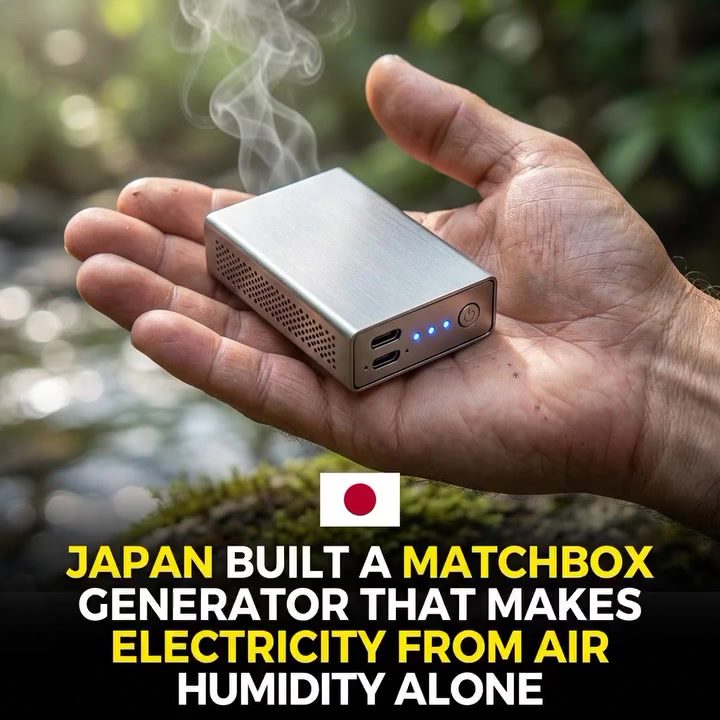
Humidity-Powered Generators
Matchbox-sized generators from Japan have taken a leap forward in sustainable energy, turning moisture in the air into electricity. This innovative technology, called hygroscopic energy harvesting, relies on engineered materials that absorb water molecules from humid air and generate a small electrical charge. This process is continuous as long as humidity is present, making it a reliable power source in most environments.
Why This Matters
The significance of humidity-powered generators lies in their potential to address energy needs in areas with limited infrastructure. Approximately 770 million people worldwide lack reliable access to electricity, many of them in tropical and coastal regions with high and consistent humidity. This technology offers a passive solution that pulls power from the air with no infrastructure, maintenance, or consumables, providing a unique answer to energy challenges in underserved areas.
How It Works
The process, known as hygroscopic energy harvesting, involves materials that absorb water molecules from the air and generate electricity. Materials such as nanoscale porous substances can produce a small electrical charge from atmospheric moisture. Originally explored by scientists at the University of Massachusetts Amherst in 2023, this concept has since been miniaturized and stabilized by Japanese researchers.
Key Components
The generator's design is compact and portable, roughly the size of a matchbox. It operates without fuel, solar input, or moving parts, relying solely on the moisture in the air. This makes it a versatile and environmentally friendly power source.
Potential Applications
Currently, the output of these generators ranges from microwatts to milliwatts, which is insufficient for charging larger devices like smartphones but ideal for running small, low-power devices. Potential applications include environmental sensors, small wireless transmitters, and wearable devices. The continuous and reliable power supply from these generators eliminates the need for battery replacements or recharging.
The Impact of Miniaturization
The Japanese team has successfully miniaturized the concept, making the generator portable and easy to deploy. This advancement is crucial for various applications, particularly in areas where access to traditional power sources is limited, and infrastructure is lacking.
Environmental Benefits
One of the most striking aspects of this technology is its environmental impact. By harnessing moisture from the air, it generates power without fuel, solar input, or moving parts. This means no greenhouse gas emissions, no noise, and minimal environmental disruption. It's a truly sustainable solution.
Practical Tips
- Deployment in Remote Areas: Consider using these generators in remote or rural areas where traditional power infrastructure is unavailable. They can power environmental sensors, small wireless transmitters, and other low-power devices.
- Monitoring and Maintenance: Although these generators are low-maintenance, regular checks can ensure they continue to operate efficiently. Ensure the device is placed in an area with consistent humidity for optimal performance.
- Innovative Applications: Explore creative applications, such as powering wearable devices or small sensors in agricultural settings. The continuous power supply makes it an ideal solution for these uses.
Important Takeaways
- Scalability and Efficiency: The generators are in the microwatt to milliwatt range, making them suitable for low-power devices. This efficiency is a significant step forward in miniaturized power solutions.
- Environmental and Social Impact: A passive device that pulls power from the air without any infrastructure, maintenance, or consumables has the potential to significantly improve access to electricity in underserved areas.
Conclusion
Japanese researchers have created a groundbreaking technology by developing a matchbox-sized generator that produces electricity from air humidity. Although current applications are limited to low-power devices, the future potential is immense. This technology points towards a new direction in sustainable energy solutions, offering a passive and reliable power source that could transform lives in regions without reliable electricity.
Watch the Reel
Questions readers ask
How do Japan's humidity-powered generators function?
These generators use a process called hygroscopic energy harvesting. They absorb water molecules from humid air using specialized materials, which then generate a small electrical charge. This process continues as long as there is humidity in the air, providing a steady power source.
What are the key benefits of matchbox-sized generators?
These small electricity generators offer a sustainable and passive power solution. They are particularly useful in humid environments and can provide reliable energy in areas where traditional power sources may not be accessible. Their compact size makes them easy to deploy and maintain.
Can humidity-powered generators provide enough energy for daily use?
While these generators provide a continuous output of small amounts of electricity, they are best suited for low-power applications. They can be ideal for powering small devices, sensors, or remote monitoring equipment, particularly in areas with high humidity levels.
What regions can benefit most from these air humidity generators?
Humidity-powered generators are particularly beneficial in tropical and coastal regions where humidity is consistently high. These areas, often underserved by traditional power infrastructure, can leverage this technology to address daily electricity needs.
Are there any environmental considerations for using these generators?
These generators are environmentally friendly as they harness energy from the air humidity, a renewable resource. They do not produce emissions or require fuel, making them a sustainable energy solution. Additionally, their passive nature means they operate without significant human intervention.
What makes Japan's matchbox energy generators a significant innovation?
Japan’s matchbox-sized generators represent a significant leap in sustainable energy by providing a reliable, passive power solution. They address energy needs in areas with limited infrastructure, offering a continuous power source in humid environments, which is crucial for regions with high humidity levels.
How do these generators compare to other small electricity generators?
Unlike other small electricity generators that might rely on solar, wind, or fuel, humidity-powered generators offer a unique advantage by harnessing energy from the ever-present moisture in the air. This makes them a more consistent and reliable source of power in humid environments, especially where other renewable sources may be intermittent.
Related deep dives
Similar reads based on topic and creator.


Recent articles
Fresh deep dives from the latest Reels we unpacked.




Comments
Be the first to comment.