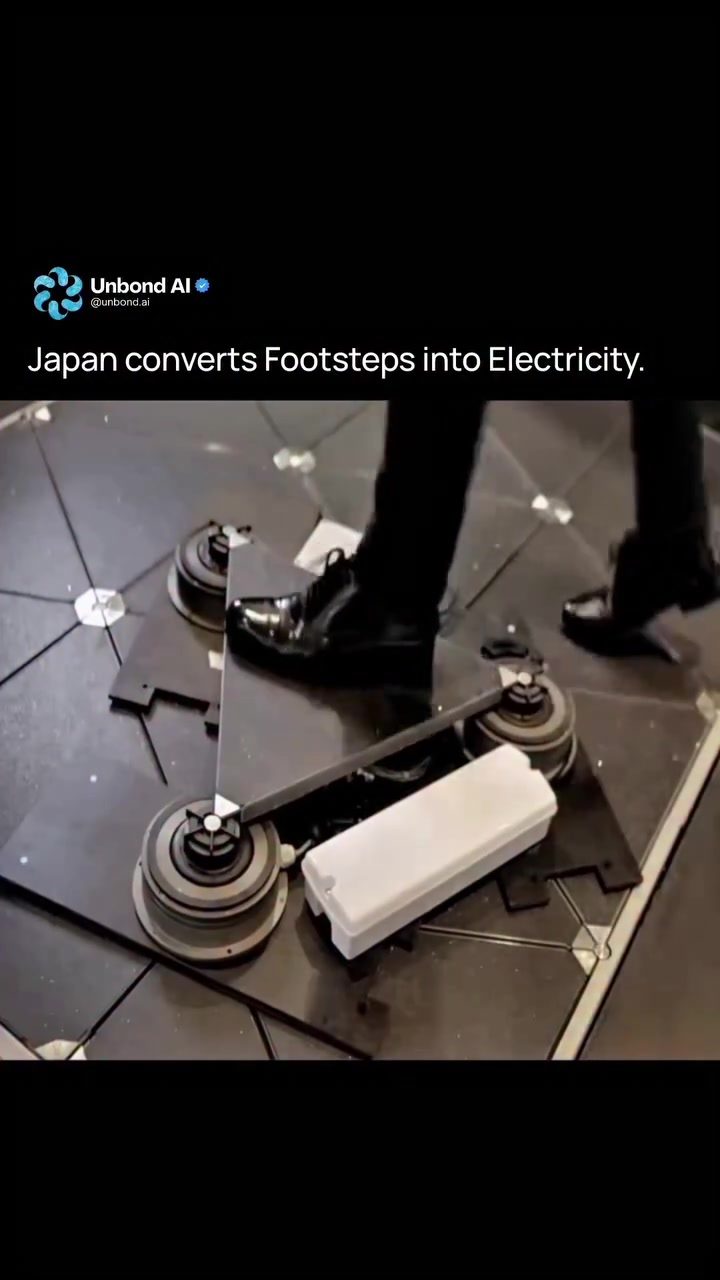
Kinetic Energy Floor Tiles
In Japan, a cutting-edge technology transforms everyday footsteps into a renewable energy source. Specialized floor tiles, installed in busy train stations and public spaces, generate electricity with each step. This innovative approach not only harnesses the power of human movement but also offers a sustainable solution to energy consumption in crowded areas.
Why This Matters
The conversion of footsteps into electricity is significant for several reasons:
-
Renewable Energy: By turning human movement into electricity, these tiles contribute to a more sustainable energy landscape. The energy generated is a form of renewable energy, reducing reliance on non-renewable sources.
-
Efficiency in Public Spaces: In crowded public areas, much energy is wasted. These kinetic energy floor tiles help reduce this waste by utilizing the kinetic energy of foot traffic to power lights, sensors, and digital displays. This minimizes the need for traditional power sources, which can be costly and environmentally taxing.
-
Smarter Infrastructure: The technology showcases a forward-thinking approach to city planning. It encourages the integration of sustainable solutions into everyday infrastructure, setting a precedent for future advancements in urban energy management.
A Surprising Insight
Individual actions, when multiplied, can have a significant impact. While a single footstep generates only a minuscule amount of electricity, the cumulative effect of thousands of footsteps throughout the day can generate a meaningful amount of power. This concept underscores the potential of small, collective efforts in achieving sustainable energy goals.
Main Discussion
How Kinetic Energy Floor Tiles Work
Kinetic energy floor tiles operate on the principle of converting mechanical energy from human movement into electrical energy. Here’s how it works:
-
Mechanical Energy Conversion: When someone walks on the tiles, the mechanical energy from their footsteps is captured by piezoelectric materials embedded within the tiles. Piezoelectricity refers to the ability of certain materials to generate an electric charge in response to applied mechanical stress.
-
Electrical Charge Generation: The mechanical stress from the footsteps causes the piezoelectric materials to deform slightly. This deformation generates a small electric charge. Each footstep, therefore, contributes a small amount of electrical energy.
-
Power Storage and Utilization: The generated electrical energy is collected and stored in capacitors within the tiles. Over time, the accumulated energy can power various applications, such as lighting, sensors, and digital displays in public spaces.
Applications in Public Spaces
The versatility of kinetic energy floor tiles makes them suitable for various public settings:
-
Train Stations: High-traffic areas like train stations are ideal for installing these tiles. The constant flow of passengers ensures a steady supply of kinetic energy, which can be used to power station lighting and other electrical needs.
-
Airports: Similar to train stations, airports experience high foot traffic, making them another prime location for kinetic energy floor tiles. The tiles can help power airport signs, information kiosks, and other digital displays.
-
Shopping Malls: Major shopping centers see a large number of visitors daily, providing ample opportunity to harness kinetic energy. This energy can be used to power mall lighting, digital signage, and other electrical systems.
Environmental Impact
One of the most compelling aspects of kinetic energy floor tiles is their potential environmental impact. By converting human movement into electricity, these tiles contribute to a cleaner, more sustainable energy landscape. They reduce the need for traditional power sources, thereby lowering greenhouse gas emissions and carbon footprints.
Economic Benefits
The economic advantages of kinetic energy floor tiles are also noteworthy:
-
Cost Savings: By utilizing energy generated from human movement, public spaces can save on electricity costs. This is especially beneficial for large-scale facilities like airports and shopping malls, which have substantial energy needs.
-
Increased Efficiency: The tiles enable a more efficient use of energy, ensuring that no energy is wasted. This increased efficiency can result in both short-term and long-term cost savings.
Practical Tips
To maximize the benefits of kinetic energy floor tiles, consider the following tips:
-
High-Traffic Areas: Place tiles in areas with high foot traffic, such as train stations, airports, and shopping centers. This ensures a steady supply of kinetic energy.
-
Energy Management: Use the generated energy to power essential electrical needs like lighting and digital displays. This approach minimizes dependence on traditional power sources.
-
Regular Maintenance: Ensure regular maintenance of the tiles to keep them in optimal working condition. This includes cleaning the tiles and checking the electrical components for any faults.
-
Integration with Renewable Sources: Combine the use of kinetic energy floor tiles with other renewable energy sources like solar and wind power for a comprehensive energy management strategy.
Implementation Tips
-
Initial Investment: While the initial cost of installing these tiles can be high, the long-term benefits (cost savings, reduced carbon footprint) often justify the investment.
-
Technology Updates: Stay updated with technological advancements in kinetic energy harvesting. Newer technologies may offer more efficient and cost-effective solutions.
Important Takeaways
- Kinetic energy floor tiles are a promising technology that converts human movement into electricity, offering a renewable energy solution.
- These tiles are particularly effective in high-traffic public spaces, where they can power essential electrical needs and reduce reliance on traditional power sources.
- The technology not only provides environmental benefits but also offers economic advantages through cost savings and increased energy efficiency.
Conclusion
By turning everyday footsteps into a source of electricity, kinetic energy floor tiles are transforming urban infrastructure. They offer a sustainable approach to energy management, proving that small, collective actions can have a significant impact. As technology continues to evolve, these tiles hold the potential to become a key component in future sustainable cities.
Watch the Reel
Questions readers ask
How do Japan's Kinetic Floor Tiles generate electricity from footsteps?
The Kinetic Floor Tiles in Japan are designed to convert mechanical energy from footsteps into electrical energy. Each tile contains a system that captures the force exerted by a person stepping on it, which is then transformed into usable electricity.
Where can these Kinetic Floor Tiles be typically found in Japan?
Kinetic Floor Tiles are commonly installed in high-traffic public spaces such as train stations, shopping malls, and other frequently visited areas. These locations are ideal because they ensure a constant flow of people, maximizing the energy output.
What are the environmental benefits of using Kinetic Floor Tiles?
By harnessing the energy from human movement, Kinetic Floor Tiles provide a sustainable and renewable energy source. This reduces the need for traditional power sources, helping to lower carbon emissions and promote a greener environment.
How do Kinetic Floor Tiles contribute to smarter infrastructure in urban areas?
These tiles are part of a broader initiative to create smarter, more efficient public spaces. By generating electricity from footsteps, they reduce the strain on traditional power grids and provide a practical example of how technology can be integrated into daily life to enhance sustainability.
Can Kinetic Floor Tiles be used in residential areas?
While primarily deployed in public spaces, the concept of Kinetic Floor Tiles could potentially be adapted for residential use. Homes with high foot traffic, such as entryways or hallways, might benefit from this technology, though current implementations are more focused on public infrastructure.
How reliable is the energy produced by Kinetic Floor Tiles?
The energy produced by Kinetic Floor Tiles is reliable in high-traffic areas. The continuous flow of people ensures a steady supply of energy, making them a dependable source of power for public spaces. However, in low-traffic areas, the energy output may not be as consistent.
What challenges might be faced when implementing Kinetic Floor Tiles?
Challenges include the initial installation cost and the need for maintenance to ensure the tiles remain effective over time. Additionally, the energy generated may not be sufficient to power large-scale operations, but it can significantly supplement existing power sources in public spaces.
Related deep dives
Similar reads based on topic and creator.


Recent articles
Fresh deep dives from the latest Reels we unpacked.




Comments
Be the first to comment.