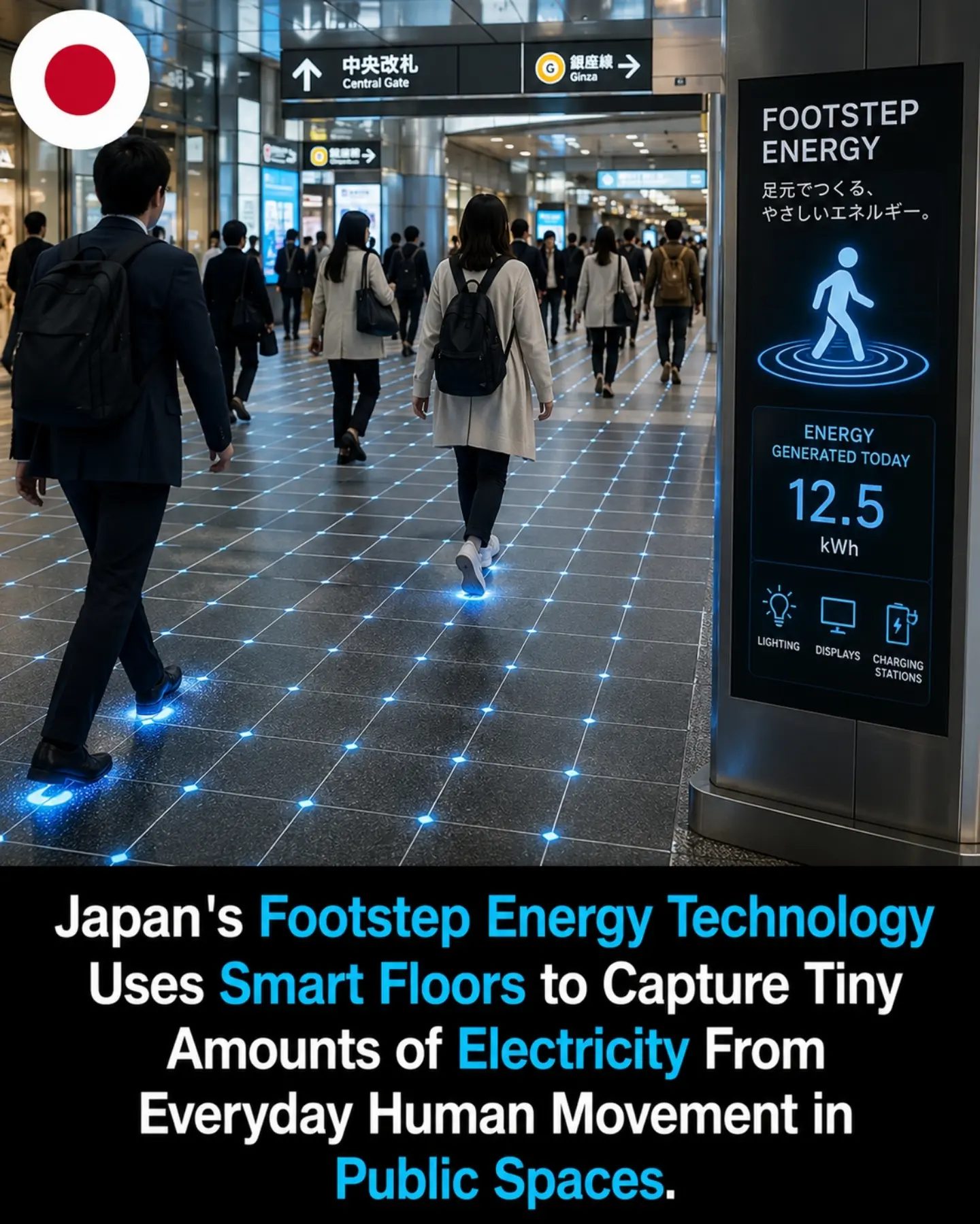
Kinetic Energy Floors
Kinetic energy floors are an innovative technology that harnesses the power of human movement to generate electricity. This technology is particularly notable in public spaces, where foot traffic is high. In Japan, these floors are being implemented to capture and utilize energy from everyday movements, turning human activity into a sustainable power source.
Context / Why This Matters
As the world moves towards more sustainable energy solutions, the demand for renewable and efficient power sources is increasing. Kinetic energy floors offer a unique approach to meeting this demand by converting human movement into usable energy. This technology has significant implications for public spaces, such as train stations, airports, and shopping malls, where large numbers of people walk daily. By integrating kinetic energy floors, these environments can reduce their carbon footprints and contribute to a more sustainable future.
Main Discussion
How Kinetic Energy Floors Work
Kinetic energy floors operate on the principle of converting mechanical energy from footsteps into electrical energy. This process involves specialized flooring materials that contain piezoelectric or electromagnetic components. When a person steps on the floor, the pressure from their footfall is converted into kinetic energy, which is then transformed into electrical energy. This energy can be stored in batteries or used immediately to power various applications.
Applications in Public Spaces
Kinetic energy floors are particularly effective in high-traffic public spaces. In Japan, these floors are being implemented in locations such as the "Central Gate", where the foot traffic is substantial. The energy generated from these floors can be used to power lighting, displays, and charging stations, making public spaces more efficient and sustainable.
Energy Generation and Utilization
The amount of energy generated by kinetic energy floors can vary depending on the number of people and the frequency of their movements. In a demonstration at the Central Gate, the floor was able to generate 12.5 kWh of energy. This energy was used to illuminate the floor with blue lights and power a display that showed the amount of energy generated. The energy can also be utilized to power other applications, such as lighting, displays, and charging stations, making public spaces more energy-efficient.
Benefits and Challenges
One of the primary benefits of kinetic energy floors is their ability to generate clean, renewable energy from everyday activities. This technology can significantly reduce the carbon footprint of public spaces by lowering their reliance on traditional energy sources. However, there are also challenges to consider. The efficiency of energy generation can be limited by the number of people walking on the floor and the frequency of their movements. Additionally, the initial cost of installing kinetic energy floors can be high, which may be a barrier to widespread adoption.
Future Prospects
Despite the challenges, the future of kinetic energy floors looks promising. As technology advances, the efficiency and cost-effectiveness of these floors are likely to improve, making them a more practical solution for sustainable energy generation in public spaces. With ongoing research and development, kinetic energy floors could become a common feature in many public places, contributing to a more sustainable and energy-efficient future.
Practical Tips
If you're considering implementing kinetic energy floors in your public space, here are some practical tips to get you started:
-
Assess the Traffic Volume: Ensure that the location has sufficient foot traffic to generate a meaningful amount of energy. High-traffic areas like train stations, airports, and shopping malls are ideal.
-
Choose the Right Technology: Select the appropriate type of kinetic energy floor that best fits your needs. Piezoelectric and electromagnetic technologies are the most common, and each has its advantages and limitations.
-
Integrate with Existing Systems: Plan how the generated energy will be used. Consider integrating it with existing lighting, display, and charging systems to maximize efficiency.
-
Monitor and Maintain: Regularly monitor the performance of the kinetic energy floor to ensure it is operating efficiently. Periodic maintenance will also help keep the system in good working condition.
-
Engage the Public: Inform the public about the benefits of kinetic energy floors and encourage participation. Awareness and support from the community can enhance the overall effectiveness and acceptance of the technology.
Important Takeaways
The implementation of kinetic energy floors represents a significant step towards sustainable energy solutions in public spaces. By harnessing the power of human movement, these floors can generate clean, renewable energy that can be used to power various applications, such as lighting, displays, and charging stations. While challenges exist, the benefits of kinetic energy floors make them a promising technology for a more sustainable future.
Conclusion
Kinetic energy floors are a groundbreaking innovation that offers a unique solution to sustainable energy generation. By capturing the energy from human movement in public spaces, these floors can reduce carbon footprints and contribute to a more energy-efficient world. As technology continues to advance, kinetic energy floors may become a common feature in public spaces, transforming everyday movements into a valuable resource. With careful planning and implementation, kinetic energy floors can play a crucial role in creating a more sustainable future.
Watch the Reel
Questions readers ask
How do kinetic energy floors in Japan convert footsteps into electricity?
Kinetic energy floors in Japan use specialized materials and mechanisms to capture the mechanical energy generated by each footstep. This energy is then converted into electrical energy, which can be used to power various systems and devices within public spaces. The process involves piezoelectric, electromechanical, or electromagnetic conversion methods to harness energy from footsteps.
What are the primary benefits of implementing kinetic energy floors in public spaces like train stations and shopping malls?
The primary benefits include reduced reliance on traditional power sources, lower carbon emissions, and a more sustainable approach to energy management. Additionally, these floors can help offset energy costs and contribute to the overall energy efficiency of the space, while also providing a unique and engaging experience for visitors.
Can kinetic energy floors power entire buildings or only specific features within them?
Kinetic energy floors can be designed to power both specific features and contribute to the overall power needs of a building. However, their primary role is to supplement energy usage by powering things like illuminated paths, digital signage, and other low-energy features within public spaces. Their capacity to power an entire building would depend on the volume of foot traffic and the specific design of the system.
Are there any downsides or limitations to using kinetic energy floors in public spaces?
While kinetic energy floors offer a promising sustainable energy solution, they also have some limitations. The amount of energy generated is relatively small and can vary significantly based on foot traffic. Additionally, the initial installation costs can be high, and the technology may not be suitable for all types of public spaces, particularly those with low foot traffic.
What makes Japan a leader in the implementation of kinetic energy floors?
Japan's leadership in this area is driven by a strong commitment to renewable energy, advanced technological infrastructure, and a high volume of foot traffic in urban areas. The country has been at the forefront of developing and deploying these innovative energy solutions, with successful installations in busy public spaces like train stations and shopping malls.
How do illuminated energy floors work, and what makes them unique?
Illuminated energy floors function by converting the kinetic energy from footsteps into electrical energy, which is then used to light up the floor itself. These floors are unique because they not only generate power but also create an interactive and visually engaging experience for visitors, making them a standout feature in public spaces.
Related deep dives
Similar reads based on topic and creator.

Recent articles
Fresh deep dives from the latest Reels we unpacked.




Comments
Be the first to comment.