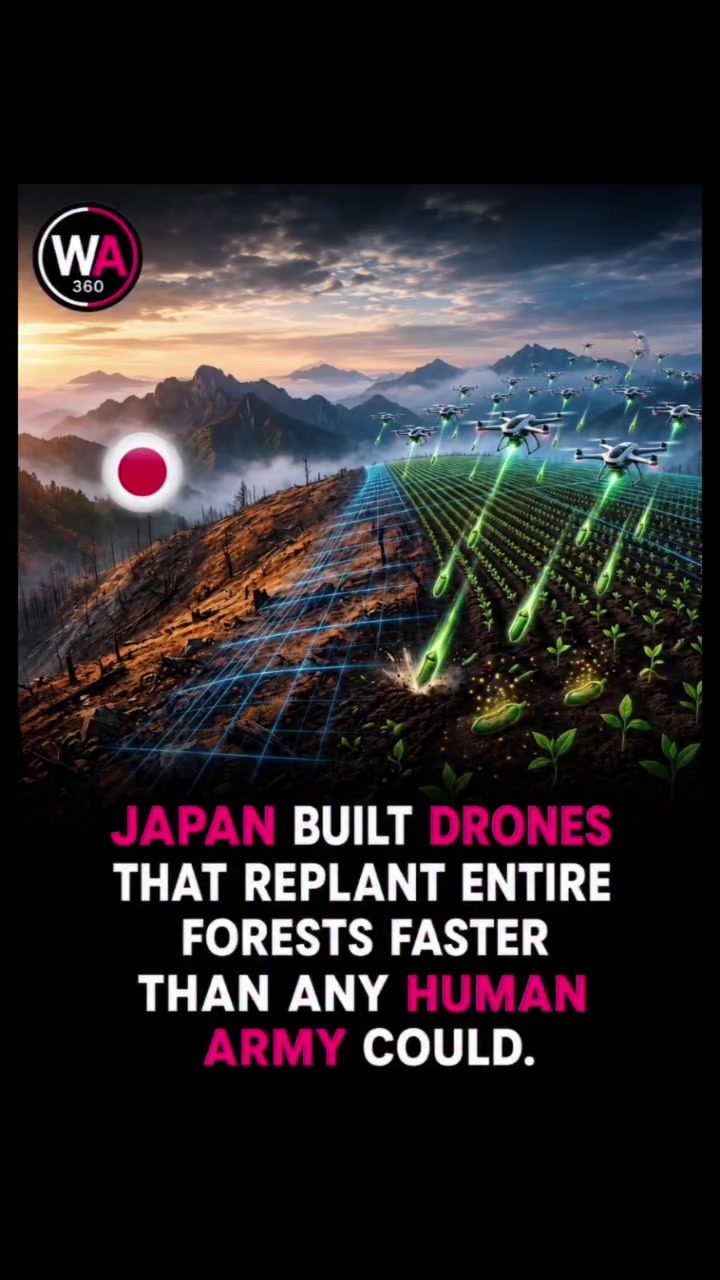
Drone Reforestation in Japan
Japan is at the forefront of a technological revolution that is transforming the way we approach reforestation. By leveraging advanced drone technology, the country is making significant strides in restoring forests damaged by wildfires, deforestation, and climate change. This innovative approach not only accelerates the reforestation process but also reaches areas that are challenging for human teams to access.
Why This Matters
The importance of reforestation cannot be overstated. Forests play a crucial role in maintaining ecological balance, absorbing carbon dioxide, and providing habitats for countless species. However, traditional reforestation methods are often time-consuming and labor-intensive. Japan's adoption of drone technology addresses these challenges, offering a more efficient and scalable solution.
Main Discussion
The Technology Behind Drone Reforestation
Japan's drone reforestation initiative combines several cutting-edge technologies:
- AI and Precision Mapping: Drones equipped with AI and precision mapping capabilities can navigate complex terrains and identify the optimal locations for seed planting. This ensures that seeds are dispersed in areas where they have the highest chance of germination and survival.
- Autonomous Flight: Autonomous flight technology allows drones to operate independently, covering large areas without the need for constant human intervention. This not only speeds up the reforestation process but also reduces the risks associated with human involvement in hazardous environments.
- Seed Dispersal: The drones are designed to disperse seeds with precision, ensuring that each seed has the best possible conditions for growth. This targeted approach maximizes the success rate of reforestation efforts.
Efficiency and Speed
One of the most striking aspects of drone reforestation is its speed and efficiency. Tasks that once required thousands of people and months or even years of work can now be accomplished in a fraction of the time. This rapid deployment is particularly beneficial in areas affected by wildfires or deforestation, where quick action is crucial for preventing further ecological damage.
The Role of AI in Precision Planting
Artificial Intelligence (AI) plays a pivotal role in making drone reforestation possible. By analyzing satellite imagery and other data sources, AI algorithms can create detailed maps of the terrain, identifying suitable areas for reforestation. These maps guide the drones, ensuring that seeds are planted in the most effective locations. Additionally, AI can monitor the growth of the newly planted seeds, providing valuable data for future reforestation efforts.
Addressing Remote and Hazardous Areas
Drone technology is particularly useful in reaching remote and hazardous areas that are difficult for human teams to access. Forests in mountainous regions, flood-prone areas, and areas with steep slopes are some of the challenging terrains where drones can make a significant impact. By deploying drones in these hard-to-reach locations, Japan is able to accelerate the reforestation process and support environmental recovery more effectively.
Combining Technology and Nature
While drones are a powerful tool, they are not a complete replacement for traditional forestry efforts. Instead, they complement and enhance existing methods. The combination of advanced technology and traditional forestry practices offers a comprehensive approach to reforestation. This synergy is key to creating a greener and more sustainable future, as it allows for more efficient use of resources and greater environmental impact.
The Future of Reforestation
Looking ahead, the potential for drone technology in reforestation is vast. As climate challenges continue to grow, innovations like these will become increasingly important. The ability to rapidly and efficiently restore damaged ecosystems is crucial for mitigating the effects of climate change and preserving biodiversity. Japan's pioneering efforts in drone reforestation serve as a model for other countries to follow, demonstrating how technology can work hand in hand with nature to create a more sustainable future.
Practical Tips
For those interested in implementing drone reforestation or similar technologies, here are some practical tips:
- Invest in High-Quality Drones: Ensure that the drones used for reforestation are equipped with the latest technology, including AI, precision mapping, and autonomous flight capabilities. High-quality drones will enhance the efficiency and effectiveness of the reforestation process.
- Partner with Experts: Collaborate with experts in drones, AI, and forestry to develop a comprehensive reforestation plan. This collaboration will ensure that the technology is used to its fullest potential and that best practices are followed.
- Monitor and Evaluate: Continuously monitor the growth of the newly planted seeds and evaluate the success of the reforestation efforts. Use this data to refine and improve future reforestation strategies.
Important Takeaways
- Drone technology is transforming the way reforestation is approached, offering a faster and more efficient solution.
- Japan's use of AI, precision mapping, and autonomous flight in drones is setting a new standard for reforestation efforts.
- Combining technology and traditional forestry practices provides a comprehensive approach to creating a greener and more sustainable future.
Conclusion
Japan's pioneering use of drone technology for reforestation is a game-changer in the field of environmental conservation. By leveraging advanced technologies, Japan is not only accelerating the reforestation process but also addressing challenges that have long hindered traditional forestry efforts. As the world continues to face environmental challenges, innovations like these will play a crucial role in protecting our planet for future generations.
Watch the Reel
Questions readers ask
How do drones contribute to forest restoration in Japan?
Drones in Japan are used for precision mapping and planting seeds in hard-to-reach areas, making the reforestation process more efficient and effective. They can cover large areas quickly and plant seeds with high accuracy, which speeds up the restoration of damaged forests.
What role do drones play in preventing wildfires in Japan?
Drones equipped with advanced sensors and cameras can monitor forest conditions in real-time, detecting early signs of wildfires. This allows for prompt intervention, helping to prevent the spread of fires and protect forests from extensive damage.
How does autonomous flight technology benefit reforestation efforts?
Autonomous flight technology enables drones to operate without constant human intervention, covering vast and remote areas efficiently. This means drones can plant seeds, monitor forest health, and gather data continuously, even in challenging terrains.
What advantages do drones offer over traditional reforestation methods?
Drones can access hard-to-reach areas where human teams cannot go, ensuring that even the most remote parts of the forest are restored. They also reduce the amount of labor required and can complete tasks more quickly, making the entire process more efficient and cost-effective.
How does Japan's use of drone technology address climate change?
By using drones to restore forests rapidly and efficiently, Japan is enhancing the natural carbon absorption capacity of the Earth. More trees mean more carbon dioxide is absorbed, which helps mitigate the effects of climate change by reducing the amount of greenhouse gases in the atmosphere.
What kinds of drones are used in reforestation efforts in Japan?
Japan employs various types of drones for reforestation, including those equipped with precision planting mechanisms, high-resolution cameras, and infrared sensors. These drones are specifically designed to carry out tasks such as planting seeds, monitoring forest health, and mapping out areas that need restoration.
What is the future of drone technology in forest restoration?
The future of drone technology in forest restoration is promising, with advancements expected in areas such as battery life, navigation systems, and planting mechanisms. As technology evolves, drones are likely to become even more integral to forest restoration efforts, helping to maintain ecological balance and combat climate change more effectively.
Related deep dives
Similar reads based on topic and creator.



Recent articles
Fresh deep dives from the latest Reels we unpacked.




Comments
Be the first to comment.