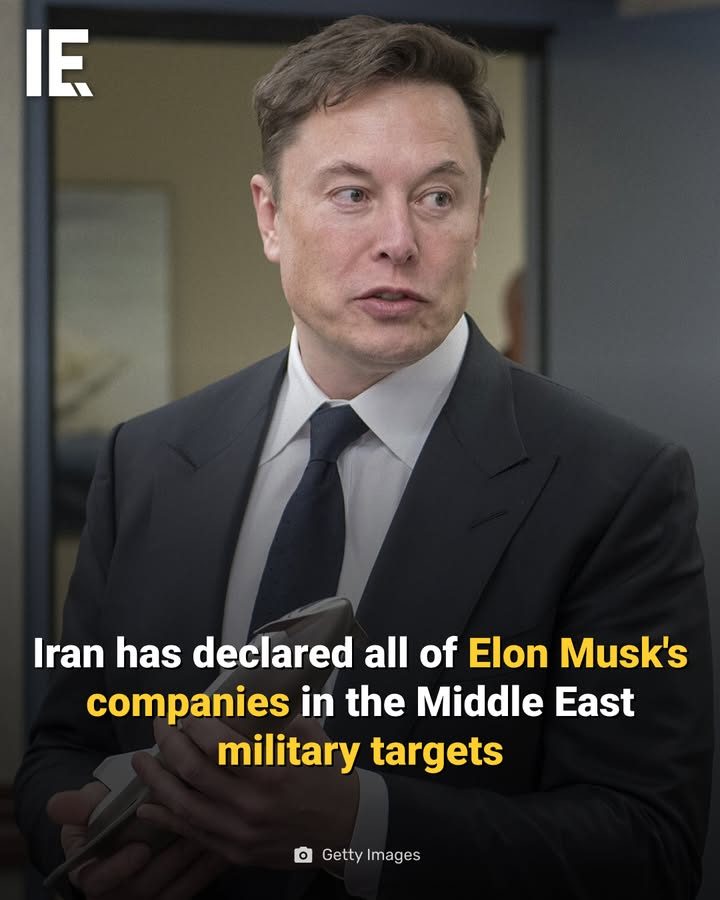
Middle East Tensions: Iran's Threat to Elon Musk's Companies
Iran's recent reports stating that Elon Musk's companies in the Middle East are considered military targets have sparked significant attention. This move comes amidst a backdrop of escalating tensions, underscoring the complex geopolitical dynamics at play in the region. Let's delve into the details of this situation, its context, and its implications.
Context: The Duality of Tech and Military in the Middle East
Elon Musk’s Companies in the Middle East
Elon Musk's ventures, particularly Starlink, have become integral to both civilian and military operations in the Middle East. Starlink, a constellation of satellites designed to provide global internet access, has been utilized in various military and communications projects in the region. This dual-purpose capability has made it a valuable asset, but it also places it squarely in the crosshairs of geopolitical tensions.
The regional Starlink ground station is one of the specific targets mentioned in the report. This ground station is crucial for satellite communication, enabling both military and civilian use. The potential disruption or destruction of such infrastructure could have far-reaching consequences, affecting everything from regional military operations to civilian internet connectivity.
Iran's Revolutionary Guard and Previous Threats
Iran's Revolutionary Guard, a powerful military and political force within the country, has a history of making threats against US tech infrastructure. Previous targets have included major tech companies like Nvidia, Apple, Microsoft, and Google. These threats reflect a broader strategy of targeting US technological assets as part of a larger geopolitical conflict.
The current threat against Elon Musk's companies is part of this ongoing strategy. The Revolutionary Guard's previous actions, coupled with the current geopolitical climate, suggest that this threat should be taken seriously. Iran’s targeting of US tech infrastructure is part of a broader geopolitical strategy, where technology is seen as a vital component of military and economic power.
Main Discussion
The Fars Report and Its Implications
The report by the Iranian state media outlet Fars, which cited an "informed source," stated that Iran might treat all of Elon Musk's companies in the Middle East as military targets. The specifics of the targets, including a regional Starlink ground station, have not been independently verified. However, the report underscores the growing tensions between Iran and the United States, particularly during this period of heightened military exchanges.
Escalation and Military Exchanges
The Fars report came at a time of intense military exchanges between the US and Iran. President Trump's post on social media announcing plans to attack Iran and seize Kharg Island, Iran's central oil export hub, added fuel to the fire. The rapid series of military exchanges, including allegations of a US Army helicopter being shot down, retaliatory strikes, and subsequent responses, have created a highly volatile situation.
Starlink's Role in Military and Communications Operations
Starlink's unique capabilities make it a valuable asset for both military and civilian operations. The constellation of satellites provides high-speed, low-latency internet connectivity, making it ideal for military communications and strategic planning. However, this very capability makes it a potential target in times of conflict.
The US has previously utilized Starlink for various military and communications operations in the Middle East. While the specific operational details cited in some reports have not been independently verified, the potential disruption of these operations could have significant consequences. This dual-use nature of Starlink highlights the intricate relationship between technology and geopolitics.
Practical Tips for Understanding the Impact
Given the complex nature of this situation, it's essential to stay informed and understand the implications of these developments. Here are some practical tips for navigating this geopolitical landscape:
-
Stay Updated on Military Exchanges: Follow reliable news sources to stay updated on the latest developments in the military exchanges between the US and Iran. Understanding the context and timeline of events can provide valuable insights into the broader geopolitical dynamics.
-
Monitor Tech Industry Responses: Keep an eye on how major tech companies, including those mentioned as potential targets, respond to these threats. Their actions and statements can provide additional context and clarity on the situation.
-
Assess the Impact on Regional Operations: Evaluate how these threats might impact regional military and communications operations. Understanding the potential disruptions can help in planning and preparedness.
-
Stay Informed About Iran's Geopolitical Strategy: Recognize that Iran's targeting of US tech infrastructure is part of a broader geopolitical strategy. Learning more about Iran's motivations and strategies can provide a deeper understanding of the situation.
-
Be Mindful of Disinformation: In times of heightened tensions, there is often an increase in misinformation and disinformation. Be mindful of the sources you trust and verify information from multiple reliable sources.
Important Takeaways
The recent threats against Elon Musk's companies in the Middle East highlight the complex interplay between technology and geopolitics. Key takeaways from this situation include:
-
Technology as a Geopolitical Tool: Technology, particularly advanced communication infrastructure like Starlink, has become a vital component of military and economic power. Understanding the role of technology in geopolitics can provide valuable insights into current and future conflicts.
-
Escalating Tensions: The situation underscores the escalating tensions between the US and Iran, with potential for further military exchanges. Staying informed about these developments is crucial for understanding the broader geopolitical dynamics.
Conclusion
The threats against Elon Musk’s companies in the Middle East are part of a larger geopolitical strategy by Iran. The dual-use nature of technology like Starlink, combined with the escalating tensions, makes this a critical time for understanding the relationship between technology and military strategy. By staying informed and assessing the potential impact, we can better navigate the complexities of this situation.
Watch the Reel
Questions readers ask
Why has Iran specifically targeted Elon Musk's companies in the Middle East?
Iran has targeted Elon Musk's companies, particularly Starlink, due to their significant role in both civilian and military communications in the Middle East. Starlink's satellite infrastructure is seen as a crucial component of regional military strategies, making it a high-profile target amidst escalating geopolitical tensions.
What is the geopolitical significance of Iran's threats against Starlink?
Iran's threats against Starlink underscore the broader geopolitical tensions in the Middle East and the increasing intersection of technology and military strategy. By targeting Starlink, Iran is sending a message about its influence and control over critical infrastructure in the region.
How do Elon Musk's companies contribute to the complexities of Middle East geopolitics?
Elon Musk's companies, particularly Starlink, have become pivotal in the Middle East's technological landscape, providing essential communication services. This makes them a prominent factor in the region's geopolitical dynamics, as various nations and groups vie for control and influence over these critical resources.
What are the potential implications of Iran's threats for Starlink operations in the Middle East?
Iran's threats could disrupt Starlink's operations in the Middle East, affecting both civilian internet access and military communications. This disruption could have far-reaching consequences for regional stability and the broader technology sector, as other nations may reassess their reliance on similar satellite services.
How might Elon Musk and his companies respond to these threats?
Elon Musk and his companies might respond by increasing security measures, seeking diplomatic interventions, or even scaling back operations in high-risk areas. This could involve collaborating with local governments, implementing advanced cybersecurity protocols, and adapting their infrastructure to better withstand potential threats.
What role do satellite communications play in the Middle East's military strategies?
Satellite communications, like those provided by Starlink, are vital for real-time information exchange, command and control operations, and intelligence gathering. This makes them a key asset in military planning and execution, particularly in a region where reliable communication can be a matter of life and death.
How might this situation influence the broader relationship between technology and geopolitics?
This situation highlights how technological advancements, such as satellite communications, are increasingly intertwined with geopolitical strategies. It serves as a reminder that as technology evolves, it becomes more deeply embedded in global power dynamics, affecting not just individual companies, but international relations as a whole.
Related deep dives
Similar reads based on topic and creator.


Recent articles
Fresh deep dives from the latest Reels we unpacked.




Comments
Be the first to comment.