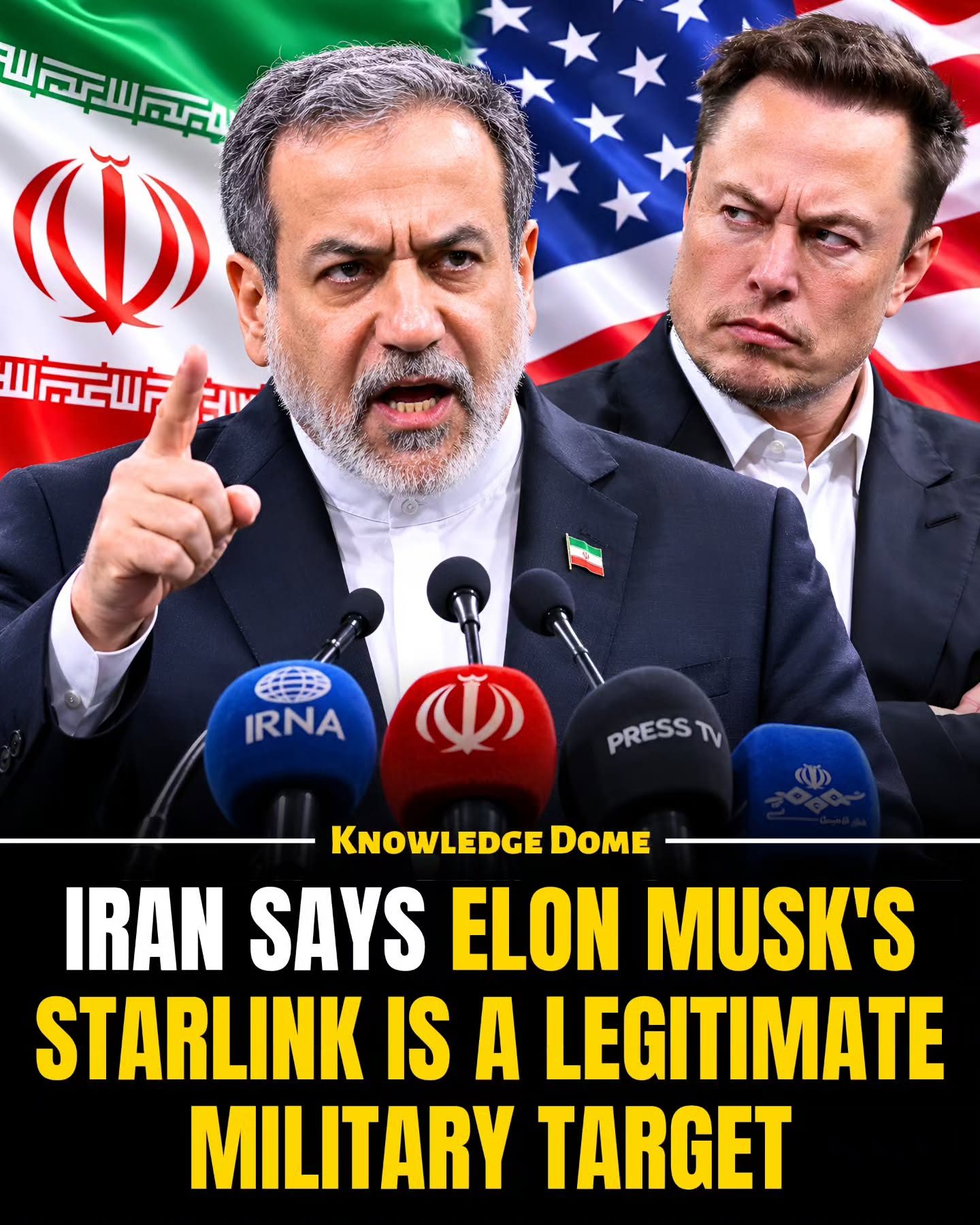
Iran has declared SpaceX's Starlink and associated projects legitimate military targets, marking a significant escalation in the geopolitical tensions in the Middle East. This decision, announced by Iranian state media, alleges that these satellite systems are being used by the United States and Israel to support military operations against Iran.
Context / Why this matters
The designation of Starlink as a military target has far-reaching implications for the region and for companies linked to Elon Musk. Elon Musk is a well-known figure in the tech world, and his projects have often been at the center of both innovation and controversy. The move by Iran not only places Starlink but also other related infrastructure and projects across West Asia and the Middle East under scrutiny.
This includes ground stations in several countries
The warning issued by Iran extends beyond just the Starlink satellites. It covers a wide range of infrastructure, including ground stations in countries like Israel, Qatar, Jordan, the UAE, Kuwait, Bahrain, and Oman. These ground stations are critical for the functioning of the Starlink network, as they facilitate the communication between the satellites and end-users. By targeting these stations, Iran aims to disrupt the support that Starlink provides to what they perceive as enemy operations.
Infrastructure and other Musk-linked projects
In addition to ground stations, the warning also encompasses SpaceX investments and other Musk-linked projects. This includes regional holding companies and initiatives such as X and Starshield. These projects are part of a broader network that supports various aspects of communication and data transfer, all of which are now under threat due to Iran's declaration.
Earth observation, encrypted data transfer, and battlefield support
Iranian officials have asserted that the Starlink-supported networks are aiding in earth observation, encrypted data transfer, and battlefield support. These capabilities are critical in modern warfare, providing real-time intelligence, secure communication, and strategic planning. The alleged use of Starlink in military operations underscores its strategic importance and the potential risks it poses to Iran's national security.
Starlink-supported networks and alleged attacks
The Iranian government has made specific claims that Starlink-supported networks were involved in attacks on Iranian infrastructure. One such allegation involves an attack on water infrastructure in southern Iran. The use of satellite-based communication and surveillance systems in such attacks highlights the dual-use nature of these technologies, which can be employed for both civilian and military purposes.
Ban on Starlink use and illegal terminals
In response to these perceived threats, Iran has implemented a ban on the use of Starlink within the country. The ban is enforced strictly, with individuals caught owning or using Starlink terminals facing criminal penalties. Despite these measures, activists claim that many illegal Starlink terminals are still operational within Iran, enabling users to bypass internet censorship and transmit footage from protests.
Police actions and international requests
Iranian authorities have taken aggressive measures to curb the use of illegal Starlink terminals. These actions include:
- Raiding supply routes: Police have conducted raids on suspected supply routes to disrupt the distribution of Starlink terminals.
- Seizing equipment: Authorities have confiscated equipment from individuals and groups found to be in possession of illegal Starlink terminals.
- Freezing bank accounts: Those involved in the illegal distribution or use of Starlink terminals have had their bank accounts frozen.
- Requesting international intervention: Iran has called upon the International Telecommunication Union (ITU) to block the unauthorized signals from these terminals, seeking external support to enforce the ban.
Practical tips
For those interested in the geopolitical landscape and the use of satellite technology in conflict zones, here are some practical steps to stay informed:
Stay Updated on Policy Changes
Track official statements and policy updates from Iranian state media and other reliable news sources. Understanding the evolving stance on Starlink and related technologies can provide insights into the geopolitical tensions in the region.
Monitor Regional Developments
Keep an eye on developments in West Asia and the Middle East, as these regions are directly affected by the bans and targeting of Starlink infrastructure. Pay attention to reports of raids, seizures, and other enforcement actions to understand the practical impact of these policies.
Understand the Dual-Use Nature of Technology
Recognize that technologies like Starlink can have both civilian and military applications. This dual-use nature makes them strategic assets in conflict zones, and their control and use are often hotly debated.
Important takeaways
- Widespread Impact: Iran's declaration targets not only Starlink but also related infrastructure and projects across several countries, impacting a broad network of support and communication.
- Dual-Use Technology: The dual-use nature of Starlink and similar technologies makes them critical assets in both civilian and military contexts, highlighting their strategic importance.
- Legal and Enforcement Measures: Strict bans and aggressive enforcement actions by Iranian authorities aim to disrupt the use of Starlink for unauthorized activities, reflecting the seriousness of the perceived threat.
- Geopolitical Implications: The targeting of Starlink and related projects underscores the broader geopolitical tensions in the region, with Iran perceiving these technologies as tools for military actions against it.
Conclusion
Iran's declaration of SpaceX's Starlink and associated projects as military targets is a significant geopolitical move with far-reaching implications. The targeting of these satellite systems and related infrastructure highlights the strategic importance of such technologies in modern warfare. As Iran enforces strict bans and takes aggressive measures to disrupt their use, the situation underscores the dual-use nature of these technologies and the complex interplay between civilian and military applications. Understanding these developments is crucial for navigating the evolving geopolitical landscape in the Middle East and beyond.
Watch the Reel
Questions readers ask
What specific actions has Iran taken against Starlink and related projects?
Iran has declared Starlink and related projects, including their associated infrastructure, as legitimate military targets, suggesting that they may be subject to potential military actions. This includes targeting not only the satellites themselves but also ground stations and other related infrastructure across multiple countries. Iran's state media has announced this decision,.
Why has Iran designated Starlink as a military target?
Iranian officials claim that Starlink is being used by the United States and Israel to support military operations against Iran. This allegation forms the basis for Iran's designation of Starlink as a military threat, escalating tensions in the Middle East and placing Musk-linked initiatives under scrutiny.
How does this escalation impact Elon Musk's initiatives?
The designation of Starlink as a military target places not only Starlink but also other projects linked to Elon Musk under scrutiny. This includes ground stations and infrastructure in West Asia and the Middle East, potentially affecting the broader operations and activities of Musk-linked initiatives in the region.
What are the implications of Iran's declaration for the Middle East?
Iran's declaration has far-reaching implications for the region, as it escalates geopolitical tensions and could lead to further confrontations. The designation of Starlink as a military target may also impact international relations, particularly between Iran and countries where Starlink infrastructure is located.
What role do Starlink's ground stations play in this conflict?
Starlink's ground stations are a critical component of the satellite network, facilitating communication and data transmission. By targeting these stations, Iran aims to disrupt the overall functionality of the Starlink system, potentially hindering its perceived military use and impact in the region.
How has the international community responded to Iran's declaration?
The international response to Iran's declaration is still evolving, but it has drawn attention from various countries and organizations. The move has sparked concerns about the potential for increased conflict and the broader implications for satellite technology and its use in military operations.
What are the potential consequences of targeting Starlink and related projects for Iran?
Targeting Starlink and its associated infrastructure could lead to several consequences for Iran, including potential retaliation from the United States and Israel, further international condemnation, and possible disruption of its own satellite and communication systems. Additionally, Iran may face technological and logistical challenges in executing its plans against Starlink.
Related deep dives
Similar reads based on topic and creator.

Recent articles
Fresh deep dives from the latest Reels we unpacked.




Comments
Be the first to comment.