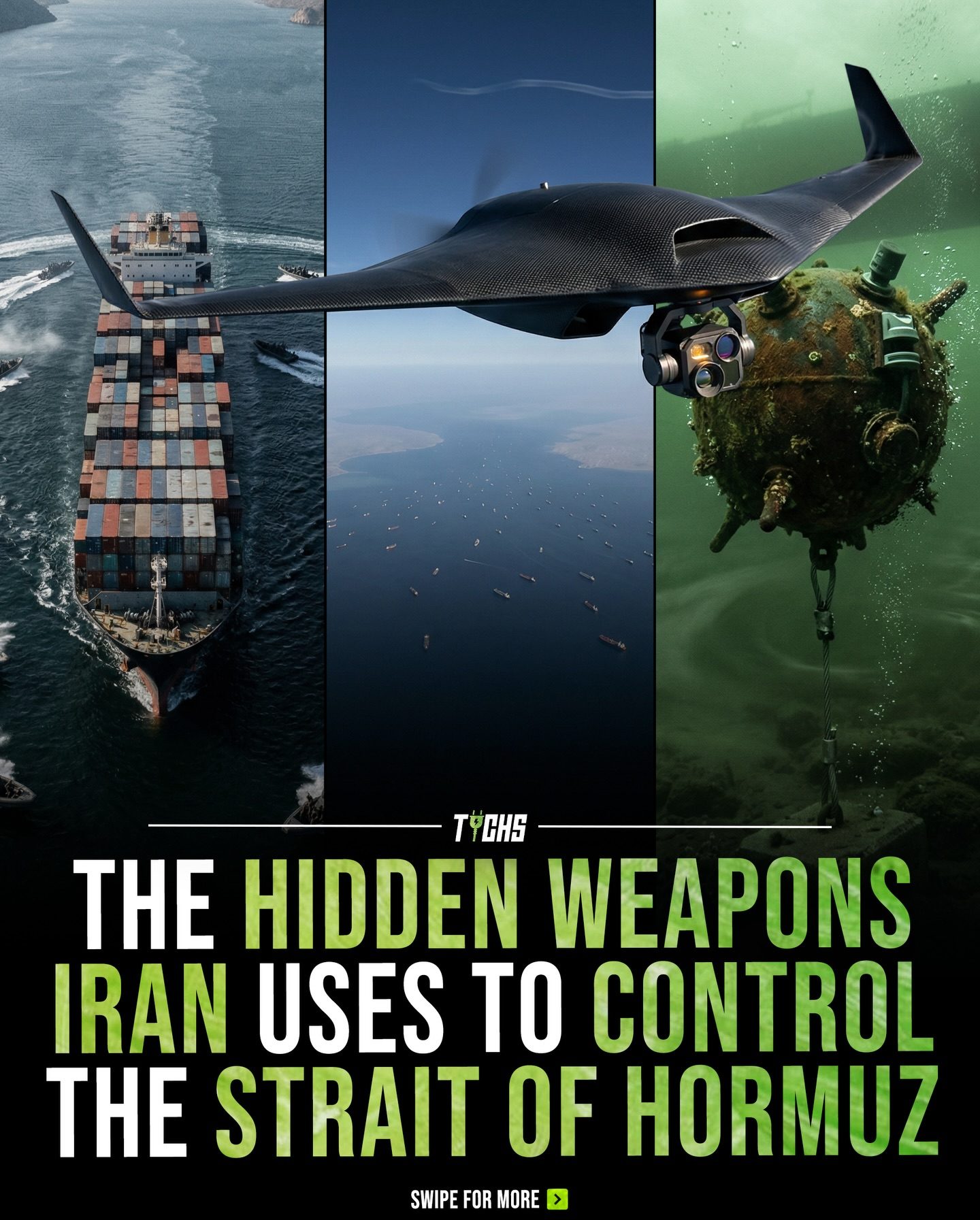
Iran's Hidden Weapons: Strategic Tactics in the Strait of Hormuz
The Strait of Hormuz is a choke point for global maritime trade, particularly for oil and gas shipments. Iran, long aware of this strategic importance, has developed a range of asymmetric naval tactics designed to disrupt traffic and create significant global economic impact. These tactics include everything from sea mines and fast unmanned explosive boats to coordinated swarm tactics using small, high-speed craft. Coastal defense systems, anti-ship missiles, surveillance drones, and smaller submarines all play crucial roles in Iran's approach to controlling this vital waterway.
Why This Matters
The Strait of Hormuz is a narrow passageway connecting the Persian Gulf to the Gulf of Oman, and subsequently, the Arabian Sea. Approximately 20% of the world's petroleum and 30% of its liquefied natural gas flows through this strait. Disruption in this corridor can send shockwaves through the global economy, impacting fuel prices, and causing widespread economic instability. Understanding Iran's strategies in this region is crucial for maritime security, international trade, and global energy stability.
Main Discussion
Naval Strategies and Swarm Tactics
Iran employs a variety of naval strategies to control the Strait of Hormuz, with an emphasis on swarm tactics and speed. Swarm tactics involve multiple small, fast-moving vessels that can overwhelm larger ships. These speedboats, often equipped with explosives, can be used to create chaos and confusion, making it difficult for larger vessels to defend themselves. The use of swarm tactics is particularly effective in congested waterways like the Strait of Hormuz, where the proximity of vessels increases the likelihood of successful attacks.
Key Components
-
Speedboats: These are fast, agile, and relatively inexpensive, making them a cost-effective tool for asymmetric warfare. They can be launched quickly and in large numbers, overwhelming larger ships with sheer volume.
-
Unmanned Explosive Boats: These are autonomous vessels designed to explode on impact, causing significant damage to larger ships. They are especially effective in disrupting maritime traffic and can be deployed in swarms to maximize their impact.
-
Sea Mines: Placed strategically, sea mines can damage or destroy vessels, further disrupting maritime traffic and causing significant delays in shipping.
Aerial and Subsurface Capabilities
Iran's strategies extend beyond the surface of the water. They use military drones for surveillance and precision strikes. These drones provide a constant aerial presence, monitoring ship movements and relaying real-time information back to command centers. This capability allows for quick deployment of countermeasures and precise targeting of high-value targets.
Surveillance and Precision
-
Surveillance Drones: These drones are equipped with high-resolution cameras and other sensors, allowing them to monitor maritime traffic and track the movements of ships. This information is crucial for planning and executing attacks.
-
Precision Strikes: Drones can be armed with precision-guided munitions, allowing for targeted strikes on specific ships or critical infrastructure. This capability enhances Iran's ability to disrupt maritime traffic and inflict significant damage.
Coastal Defense Systems
Coastal defense systems play a vital role in Iran's strategies. These systems include anti-ship missiles and smaller submarines that operate in shallow waters. The combination of these systems creates a multi-layered defense that can effectively counter larger naval forces.
Anti-Ship Missiles
Anti-ship missiles are highly effective against larger vessels and can be launched from various platforms, including coastal batteries and submarines. These missiles are designed to destroy ships from a safe distance, minimizing the risk to the launching platform. They can be used to target high-value targets, such as aircraft carriers or large cargo ships, causing significant disruption to maritime traffic.
Submarines and Stealth Operations
Smaller submarines operating in shallow waters can create stealth-based risks. These submarines are difficult to detect and can be used to deploy sea mines, launch torpedoes, or conduct covert operations. Their ability to operate undetected makes them a valuable asset in Iran's arsenal.
Practical Tips
For policymakers, military strategists, and maritime industries, understanding and countering these tactics is crucial. Here are some practical tips to consider:
-
Enhanced Surveillance: Utilize advanced surveillance technologies, such as satellite imagery and aerial drones, to monitor maritime traffic and detect potential threats.
-
Improved Maritime Security: Implement robust maritime security measures, including escort vessels, to protect high-value targets and ensure the safe passage of ships.
-
Invest in Countermeasures: Invest in countermeasures to defend against unmanned explosive boats and sea mines, such as electronic warfare systems and advanced sonar.
-
Regional Cooperation: Foster regional cooperation and information-sharing among maritime nations to enhance collective security and respond to threats more effectively.
-
Adaptive Strategies: Develop adaptive strategies that can quickly respond to changing threats and ensure the continuity of maritime trade.
Important Takeaways
The Strait of Hormuz is a critical waterway for global trade, and Iran's strategies to control it involve a combination of naval, aerial, and subsurface tactics. These tactics focus on disruption and unpredictability, leveraging speed, cost-effective tools, and layered defense systems. Understanding and countering these strategies is essential for maintaining maritime security and ensuring the continuity of global trade.
Conclusion
Iran's strategic use of the Strait of Hormuz highlights the potential vulnerabilities in global maritime trade. By employing a range of asymmetric tactics, Iran can create significant disruptions and economic impacts. However, with enhanced surveillance, robust security measures, and regional cooperation, these threats can be effectively mitigated. The key lies in understanding the tactics and adapting strategies to ensure the safe and uninterrupted flow of maritime traffic through this vital corridor.
Watch the Reel
Questions readers ask
What are asymmetric naval tactics and how does Iran use them in the Strait of Hormuz?
Asymmetric naval tactics are strategies that leverage unconventional methods to counteract larger, more powerful forces. In the Strait of Hormuz, Iran employs these tactics by using small, fast boats for swarm attacks, sea mines to block or damage ships, and drones for surveillance. These tactics allow Iran to challenge and disrupt maritime traffic without engaging in a traditional naval battle.
Why is the Strait of Hormuz so important for global trade?
The Strait of Hormuz is a critical global maritime trade route, connecting the Persian Gulf to the Gulf of Oman. A significant portion of the world's oil and gas shipments pass through this narrow passageway, making it a key choke point for global energy supplies. Disruptions in the Strait can lead to significant economic consequences worldwide.
What types of vessels does Iran use in swarm attacks?
Iran utilizes small, fast boats and unmanned explosive boats in swarm attacks. These vessels are agile and can approach targets quickly, making them effective in overwhelming and disrupting larger ships. By employing these craft in coordinated swarm tactics, Iran can create a significant threat to maritime traffic in the Strait of Hormuz.
How do sea mines factor into Iran's control strategies?
Sea mines are a crucial component of Iran's maritime strategy in the Strait of Hormuz. They can be deployed to block or damage ships, creating significant disruptions to maritime traffic. Sea mines are particularly effective in narrow waterways like the Strait of Hormuz, where their placement can be strategically targeted to maximize impact.
What role do drones play in Iran's maritime tactics?
Drones serve as vital surveillance tools for Iran's maritime strategy. They provide real-time monitoring of maritime activities, enabling Iran to track ships and gather intelligence. This information allows Iran to better coordinate its other tactics, such as swarm attacks and sea mine deployment, to effectively control and disrupt the Strait of Hormuz.
How do Iran's coastal defense systems support its maritime strategy?
Iran's coastal defense systems complement its naval tactics by providing layered protection. These systems include anti-ship missiles and smaller submarines, which can target and disable ships from shore. By integrating these defenses, Iran can create a multi-layered threat, making it more challenging for adversaries to navigate through the Strait of Hormuz.
What are the potential global impacts of disruptions in the Strait of Hormuz?
Disruptions in the Strait of Hormuz can have severe global impacts, primarily due to the interruption of oil and gas shipments. This can lead to significant economic instability, as the world relies heavily on the energy supplies that pass through this strategic waterway. Moreover, disruptions can cause widespread shortages, price fluctuations, and geopolitical tensions.
Recent articles
Fresh deep dives from the latest Reels we unpacked.




Comments
Be the first to comment.