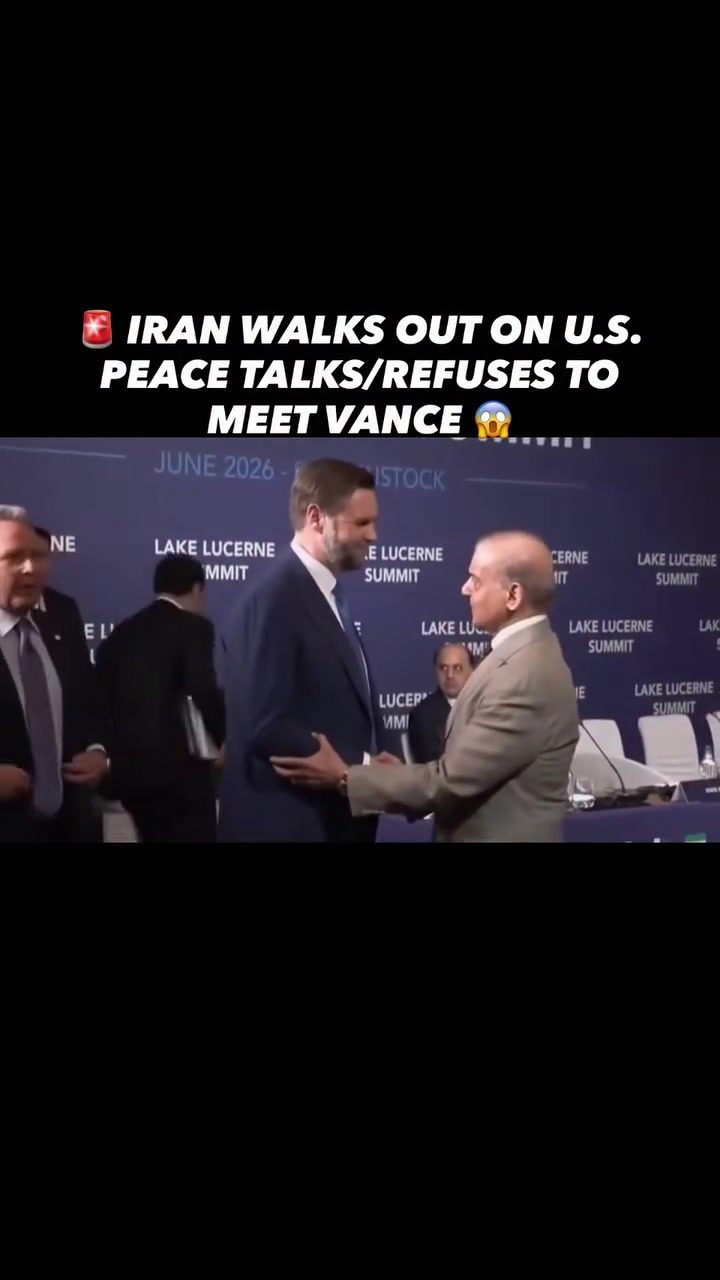
Iran Withdraws from U.S. Peace Talks at Lake Lucerne Summit
The latest developments in international relations have taken a dramatic turn as Iran has walked out on peace talks with the United States before they even began. The event unfolded at a summit in Borgenstock, near Lake Lucerne, which was intended to bring key players to the table for negotiations. The Iranian delegation's refusal to engage in discussions with Vice President JD Vance and the U.S. team has sent shockwaves through the diplomatic community.
Why This Matters
The Middle East has long been a hotbed of geopolitical tensions, and any disruption in diplomatic efforts can have far-reaching consequences. The Lake Lucerne Summit, held in June 2026, was expected to provide a platform for dialogue and potential de-escalation. Iran's abrupt withdrawal, however, signals a significant shift in the region's political landscape.
The Summit and the Walkout
The Setting: Lake Lucerne Summit
The Lake Lucerne Summit, held in the picturesque Borgenstock, was designed to foster high-level discussions aimed at resolving long-standing conflicts. The summit brought together key figures, including the U.S. delegation led by Vice President JD Vance and representatives from Pakistan. The location, known for its serene beauty, was chosen with the hope of creating an atmosphere conducive to productive negotiations.
The Iranian Delegation's Decision
The Iranian delegation arrived at the meeting in Pakistan, greeted the mediator, and then took an unexpected turn. They immediately refused to negotiate with the U.S. team, citing recent threats from former U.S. President Trump as the primary reason for their decision. This move was not a quiet, behind-the-scenes rejection but a very public display of discontent and unwillingness to engage in diplomacy.
The Mediation Efforts
Pakistan’s Prime Minister Shehbaz Sharif attempted to salvage the situation by reaching out to military leadership in Iran. However, these efforts proved futile as the Iranian delegation was resolute in their decision to leave. The U.S. delegation, already present in the meeting room, was left in a state of diplomatic limbo.
Implications for Diplomatic Efforts
A Public Rejection
This public refusal to engage in negotiations is a clear indication that Iran has zero interest in de-escalating tensions at this juncture. Such a move can be seen as a calculated power play, aimed at asserting Iran's stance on the international stage. Alternatively, it could be a sign that the talks were never serious to begin with, and the Iranian delegation used the event as a platform to deliver a strong message.
The Window of Diplomacy Narrows
Whether it was a strategic move or not, the result is the same: the window for diplomacy has significantly narrowed. The international community must now reassess its approach to resolving conflicts in the Middle East, as the path to peace talks has become considerably more challenging.
Practical Tips for Understanding Geopolitical Developments
Stay Informed
Keeping up with the latest news and developments in international relations is crucial for understanding the current geopolitical landscape. Following reliable news sources and expert analyses can provide valuable insights into the motivations and strategies of different nations.
Analyze Statements and Actions
Public statements and actions, such as the Iranian delegation’s walkout, often carry significant weight. Analyzing these can help in understanding the underlying issues and the potential future direction of diplomatic efforts.
Context Matters
The context in which these events unfold is equally important. Locations like Lake Lucerne, chosen for their diplomatic potential, can influence the outcomes of such meetings. Considering the historical and political background of these events adds depth to one’s understanding.
Important Takeaways
Iran's decision to walk out on U.S. peace talks at the Lake Lucerne Summit has significant implications for global diplomacy. The public nature of this rejection underscores Iran's resolute stance against engaging in negotiations under current conditions. For those interested in international relations, this event serves as a reminder of the delicate and unpredictable nature of diplomatic efforts.
Conclusion
The Lake Lucerne Summit was intended to be a beacon of hope for resolving long-standing conflicts, but Iran's withdrawal has cast a shadow over these aspirations. As the world navigates this new landscape, it is essential to stay informed and analyze these developments critically. The future of diplomatic efforts in the Middle East hangs in the balance, and all eyes are on the forthcoming actions of key players in this geopolitical chess game.
Watch the Reel
Questions readers ask
What prompted Iran to withdraw from the peace talks at the Lake Lucerne Summit?
Iran cited former President Trump's previous threats as the primary reason for withdrawing from the peace talks. This move disrupted ongoing diplomatic efforts and potentially escalated tensions in the Middle East.
Who was the U.S. representative at the Lake Lucerne Summit, and why was their presence an issue for Iran?
Vice President JD Vance led the U.S. delegation at the Lake Lucerne Summit. Iran's refusal to engage with Vance was a significant factor in their decision to withdraw from the talks, surprising many in the diplomatic community.
What were the expected outcomes of the Lake Lucerne Summit before Iran's withdrawal?
The summit was intended to serve as a platform for dialogue and potential de-escalation of tensions in the Middle East. Key players from various nations were expected to engage in negotiations to foster a more stable region and improve international relations.
How has the Iranian delegation's refusal to engage affected Middle East tensions?
By refusing to engage, the Iranian delegation disrupted ongoing diplomatic efforts, leading to potential escalation of tensions. This disruption could have broader implications for the peace process and regional stability.
What does Iran's exit from the Lake Lucerne Summit mean for the Iran-US diplomacy process?
Iran's exit has effectively put the peace process on hold, complicating future diplomatic efforts. The U.S. will need to reassess its approach to negotiating with Iran, and both countries may need to explore alternative methods for dialogue.
What specific actions could the U.S. take to potentially renew talks with Iran following this exit?
The U.S. could consider addressing Iran's concerns about past threats and engaging with a different representative for future negotiations. Additionally, diplomatic efforts might involve third-party mediators or renegotiating the terms of engagement to facilitate renewed dialogue.
How did the international community react to Iran's decision to leave the Lake Lucerne Summit?
The diplomatic community was surprised and concerned by Iran's decision. Many feared that the disruption in talks could lead to heightened tensions in the Middle East, impacting regional stability and international relations.
Recent articles
Fresh deep dives from the latest Reels we unpacked.




Comments
Be the first to comment.