Internet Speeds by Region: An In-Depth Look at Global Connectivity
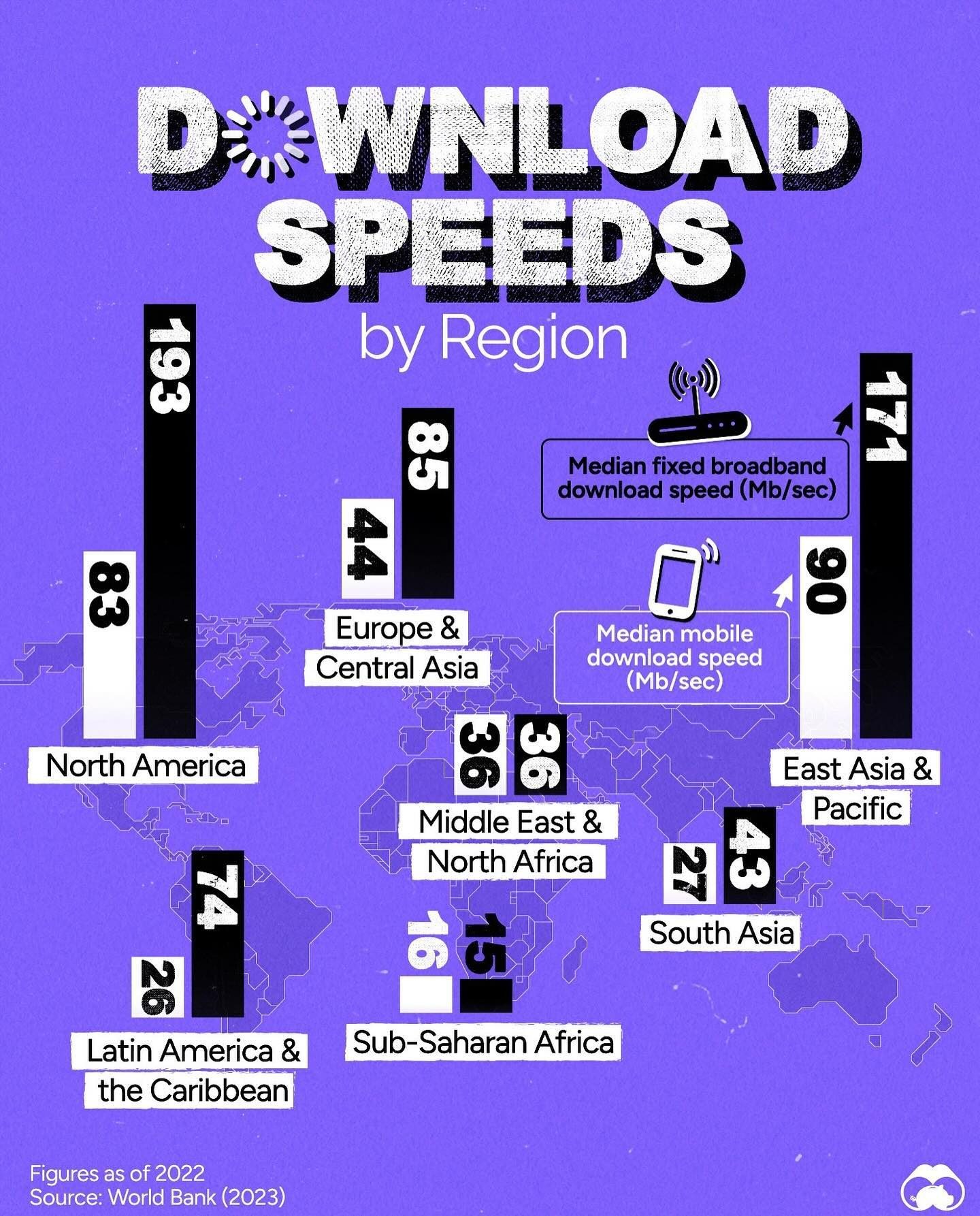
Internet speed varies significantly around the world, and understanding these disparities can provide valuable context for users and policymakers alike. The data presented here is sourced from the World Bank’s Digital Progress and Trends Report 2023, illustrating the median download speeds for both fixed broadband and mobile connections across various global regions. This data helps us understand which parts of the world currently lead in internet connectivity and which regions face significant challenges.
Context / Why This Matters
Fast internet speeds are crucial for economic development, education, and social connectivity. Regions with high internet speeds can leverage these speeds to foster innovation, improve access to online services, and enhance the quality of life. Conversely, regions with slower speeds often struggle with limited access to information, education, and economic opportunities. By examining the global disparities in internet speeds, we can better understand the challenges faced by different regions and work towards solutions to close these gaps.
Main Discussion
Regional Breakdown of Download Speeds
North America and East Asia: Leaders in Connectivity
North America and East Asia are at the forefront of global internet connectivity. These regions boast the highest median mobile and fixed broadband download speeds, making them ideal for high-bandwidth activities such as streaming, online gaming, and remote work. The median mobile download speeds in these regions are particularly noteworthy, with North America and East Asia leading the pack.
Europe & Central Asia
Europe and Central Asia also fare well in terms of internet speeds. This region has the highest median fixed broadband download speed, at 193 Mbps, which is impressive. Mobile speeds are also robust, contributing to a well-connected region with ample opportunities for digital innovation and remote work. The high speeds in this region are a testament to significant investments in infrastructure and technology.
Middle East & North Africa
The Middle East and North Africa region show modest internet speeds, with median mobile download speeds of 83 Mbps and fixed broadband speeds of 85 Mbps. While these speeds are sufficient for many online activities, there is room for improvement, particularly in rural and less developed areas. Efforts to enhance infrastructure and extend connectivity to underserved populations could significantly boost regional development.
Latin America & the Caribbean
Latin America and the Caribbean face more significant challenges, with median fixed broadband download speeds of 44 Mbps and mobile speeds of 74 Mbps. These speeds are lower compared to other regions, highlighting the need for infrastructure upgrades and investment in broadband technologies. Improving internet access in this region could unlock economic potential and enhance social connectivity.
Sub-Saharan Africa
Sub-Saharan Africa has some of the lowest median download speeds, both for mobile and fixed broadband. The median fixed broadband speed is 15 Mbps, and mobile speeds are 36 Mbps. These speeds can hinder digital initiatives and limit access to online education, health services, and economic opportunities. Addressing this disparity requires substantial investment in infrastructure and technology.
East Asia & Pacific
Despite having the highest median mobile download speed at 177 Mbps, the fixed broadband speed in the East Asia and Pacific region is 47 Mbps. The region's high mobile speeds reflect significant investments in mobile networks. However, improving fixed broadband speeds could further enhance digital connectivity and support a broader range of online activities.
South Asia
South Asia faces significant connectivity challenges, with the lowest median mobile download speed at 26 Mbps. Fixed broadband speeds are also low, at 36 Mbps. These speeds can limit access to essential online services, education, and economic opportunities. Enhancing internet infrastructure in this region is crucial for fostering digital inclusivity and economic growth.
Practical Tips
For Individuals
- Check Your Speed: Regularly test your internet speed to ensure you are getting the performance you pay for. Use reliable speed-testing tools to get accurate measurements.
- Optimize Your Connection: Ensure your router is up-to-date and positioned optimally. Consider using a wired connection for activities that require high bandwidth, such as gaming or video conferencing.
- Upgrade Your Plan: If your current internet plan does not meet your needs, consider upgrading to a higher-speed plan. Contact your internet service provider for available options.
For Businesses
- Invest in High-Speed Internet: For businesses, a fast and reliable internet connection is essential. Invest in high-speed internet plans and consider redundancy options to ensure continuous service.
- Use Cloud Services: Leverage cloud services to enhance productivity and collaboration. Fast internet speeds are crucial for efficient cloud operations.
- Support Digital Infrastructure: Advocate for and support initiatives that improve digital infrastructure in your region. This can include public-private partnerships and investments in broadband technologies.
For Policymakers
- Prioritize Infrastructure Investment: Policymakers should prioritize investments in internet infrastructure, particularly in underserved regions. This includes expanding broadband access and improving mobile network coverage.
- Promote Digital Inclusion: Develop policies that promote digital inclusion, ensuring that all citizens have access to high-speed internet. This can include subsidies for low-income households and incentives for internet service providers to expand their reach.
- Encourage Public-Private Partnerships: Foster collaborations between public and private sectors to drive innovation and investment in digital infrastructure. This can accelerate the deployment of high-speed internet and enhance overall connectivity.
Important Takeaways
- Global Disparities: There are significant disparities in internet speeds across different regions, with North America and East Asia leading the way and Sub-Saharan Africa facing the most significant challenges.
- Importance of High-Speed Internet: Fast internet speeds are crucial for economic development, education, and social connectivity. Regions with high speeds benefit from enhanced digital innovation and improved quality of life.
- Need for Investment: To address these disparities, substantial investments in infrastructure and technology are required. This includes enhancing mobile and fixed broadband speeds, particularly in underserved regions.
Conclusion
Understanding internet speeds by region provides valuable insights into global connectivity and the challenges faced by different parts of the world. By examining the data, we can identify areas where investments are needed to improve internet infrastructure and enhance digital opportunities. Whether you are an individual looking to optimize your connection, a business aiming to enhance productivity, or a policymaker seeking to drive digital inclusion, taking actionable steps can help bridge the gap and create a more connected world.
Watch the Reel
Questions readers ask
Which regions have the fastest internet speeds in 2023?
In 2023, North America and East Asia are leading in both mobile and fixed broadband connectivity. These regions consistently demonstrate the highest median download speeds, making them standouts in global internet speed rankings.
What is the difference between fixed broadband and mobile internet speeds?
Fixed broadband speeds generally refer to internet connections provided through wired infrastructure, such as fiber optics or DSL, and tend to be faster and more stable. Mobile internet speeds, on the other hand, are provided through wireless networks and can vary based on network coverage and technology (e.g., 4G, 5G).
Why is it important to track global internet speeds?
Tracking global internet speeds helps identify disparities in connectivity, which is crucial for policymakers and stakeholders to address. Regions with slower speeds may face significant challenges in economic development, healthcare, and overall quality of life, making this data essential for targeting improvements.
How does the World Bank's Digital Progress and Trends Report 2023 categorize global regions based on internet speeds?
The World Bank's report categorizes global regions based on median download speeds for both fixed broadband and mobile connections. This data helps in understanding which regions are leading in connectivity and which are lagging, providing a clear picture of worldwide internet speed distribution.
What are the median mobile internet speeds in North America and East Asia?
North America and East Asia typically have the highest median mobile internet speeds globally. In 2023, these regions are at the forefront of mobile connectivity, with advanced infrastructure and widespread adoption of high-speed technologies like 5G.
Why do internet speeds vary so much between different regions?
Internet speeds vary greatly due to differences in infrastructure investment, technological advancements, and government policies. Regions with robust investment in digital infrastructure and supportive policies tend to have faster internet speeds, while those with limited resources and infrastructure may lag behind.
What impact do high internet speeds have on a region's development?
Regions with high internet speeds benefit from enhanced economic opportunities, improved access to information, and better social connectivity. These speeds can drive innovation, support remote work, and facilitate better access to essential services, all of which contribute to overall regional development.
Related deep dives
Similar reads based on topic and creator.



Recent articles
Fresh deep dives from the latest Reels we unpacked.




Comments
Be the first to comment.