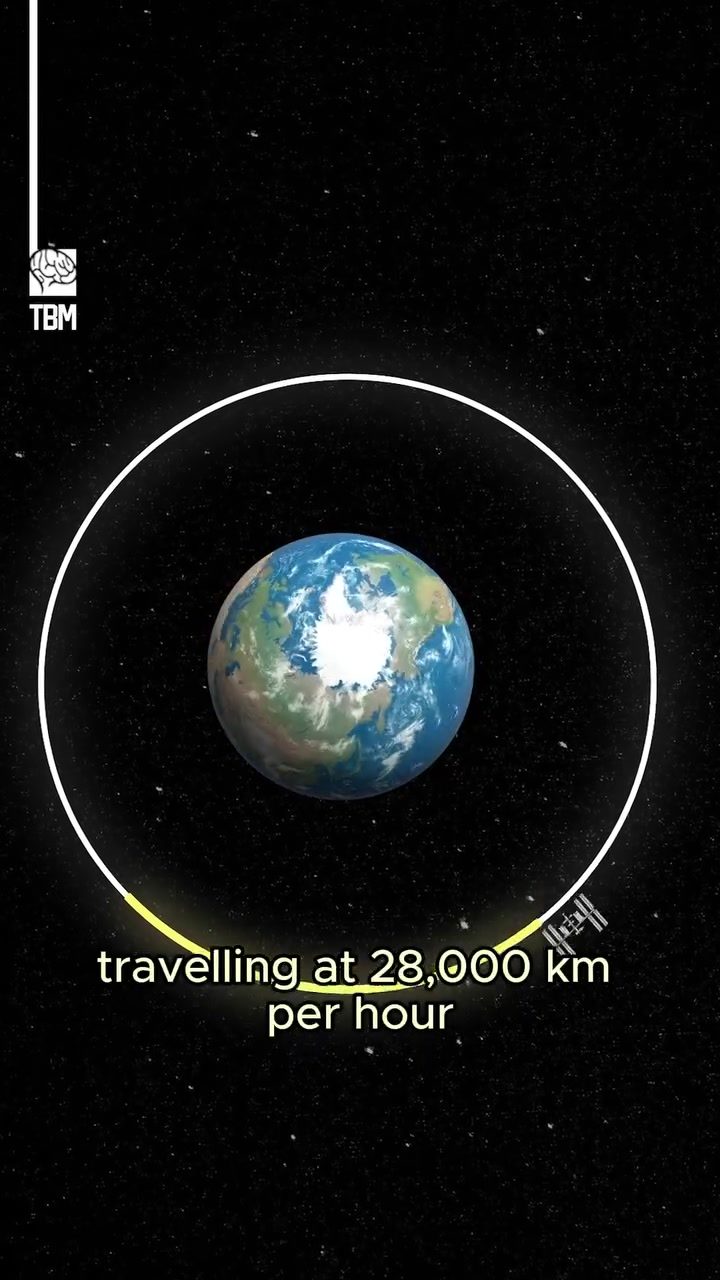
The International Space Station (ISS) is the largest structure ever built in space. This marvel of engineering races around Earth at an astounding 28,000 kilometers per hour, completing 16 orbits every 24 hours. To put that in perspective, the ISS circles the planet once every 90 minutes. This constant motion, combined with its unique design, makes it both a scientific laboratory and a home for astronauts from around the world.
Context / Why This Matters
The ISS is a testament to international cooperation, with contributions from space agencies including NASA, Roscosmos, JAXA, ESA, and CSA. This collaboration has not only enabled the construction and maintenance of the ISS but has also fostered a global effort in space exploration and research. The ISS serves multiple crucial purposes:
- Scientific Research: The ISS provides a unique environment for scientific experiments. Microgravity allows researchers to study phenomena that are impossible to observe on Earth.
- Technological Development: The station is a proving ground for new technologies and materials that could be used in future space missions.
- Human Spaceflight: Living and working in space for extended periods helps scientists understand the effects of microgravity on the human body, crucial for planning future missions to the Moon, Mars, and beyond.
Dimensions and Structure
The ISS is roughly the size of a football field, stretching 109 meters in length and with a mass of about 420 metric tons. To build something of this scale in space is a monumental achievement. The station's structure is composed of various modules, each providing different functionalities:
- Habitation Modules: These include the Zvezda, Unity, and Harmony modules, among others, where astronauts live and work.
- Laboratory Modules: Modules like Destiny (U.S.), Columbus (ESA), and Kibō (JAXA) are dedicated to scientific research.
- Cupola: This observatory module offers a panoramic view of Earth and space, providing a unique vantage point for both research and photography.
Life on the ISS
Since November 2000, the ISS has been continuously inhabited. More than 280 astronauts from over 20 countries have lived and worked on board. Life in space is vastly different from life on Earth. Astronauts must adapt to microgravity, which affects everything from eating and sleeping to exercise and work.
- Daily Routine: Astronauts follow a strict daily schedule, balancing scientific experiments, maintenance tasks, and communication with Earth.
- Exercise and Health: Regular physical exercise is essential to combat the muscle and bone loss that occurs in microgravity. The ISS is equipped with specialized exercise equipment designed for use in a weightless environment.
- Communication: Astronauts maintain regular communication with mission control, family, and friends. Video calls and emails are common, though they often experience delays due to the distance signals must travel.
Research and Experiments
The ISS functions as a unique laboratory, conducting experiments that would be impossible to perform on Earth. Some of the most notable areas of research include:
- Biological Studies: Researchers study how plants, animals, and humans adapt to microgravity. This knowledge is crucial for planning future long-duration space missions.
- Physical Sciences: Experiments in material science, fluid dynamics, and combustion help scientists understand fundamental physical processes.
- Astronomy: The ISS provides a platform for observing space without interference from Earth's atmosphere, allowing for clearer and more detailed astronomical observations.
- Earth Observations: The station is equipped with instruments that monitor Earth's environment, helping scientists study climate change, weather patterns, and natural disasters.
Preparing for Future Missions
The ISS is not just a laboratory for the present; it is also a stepping stone for future missions. Research conducted on the ISS helps prepare for missions to the Moon, Mars, and beyond.
- Lunar Gateway: The ISS serves as a testbed for technologies and procedures that will be used in the Lunar Gateway, a future space station in lunar orbit.
- Mars Missions: Data from the ISS aids in understanding the long-term effects of space travel on human health, vital for planning missions to Mars.
Practical Tips
While most of us will never visit the ISS, there are ways to engage with space exploration and research from Earth:
- Follow ISS Trackers: Websites and apps like NASA's Spot the Station provide real-time tracking of the ISS. You can even watch for it passing overhead and see it with the naked eye.
- Educational Programs: Many space agencies offer educational programs and resources for students and aspiring scientists. These programs can provide insights into life and research on the ISS.
- Citizen Science Projects: Engage in citizen science projects that contribute to space research. For example, the Global Learning and Observations to Benefit the Environment (GLOBE) program allows participants to collect and analyze environmental data.
Important Takeaways
The ISS is a remarkable achievement in space exploration. It serves as a hub for international cooperation, a laboratory for groundbreaking research, and a testbed for future missions. Its continuous operation since 2000 is a testament to human ingenuity and perseverance. The knowledge gained from the ISS will pave the way for future missions to the Moon, Mars, and beyond.
Conclusion
The International Space Station is more than just a laboratory in space; it is a symbol of human achievement and international cooperation. Its contributions to science, technology, and our understanding of space are immeasurable. As we look to the future of space exploration, the ISS will continue to play a crucial role in preparing humanity for the next giant leap.
Watch the Reel
Questions readers ask
How fast does the International Space Station travel?
The ISS orbits Earth at approximately 28,000 kilometers per hour, completing about 16 orbits in a 24-hour period. This high speed allows it to circle the planet once every 90 minutes.
Which space agencies are involved in the International Space Station?
The ISS is a collaborative effort involving several space agencies: NASA (United States), Roscosmos (Russia), JAXA (Japan), ESA (Europe), and CSA (Canada).
What kind of research is conducted on the International Space Station?
The ISS facilitates a wide range of research, especially in the field of microgravity. Some of the research areas include human biology, materials science, and fundamental physics. This research helps to understand the effects of space on human physiology, as well as to develop new technologies.
How does the International Space Station maintain a stable environment for astronauts?
The ISS is equipped with advanced life support systems that manage oxygen, carbon dioxide, and humidity to maintain a safe and breathable atmosphere for astronauts. It also has systems to regulate temperature and monitor radiation levels.
What makes the International Space Station unique compared to other space structures?
The ISS is unique due to its size and the diversity of its international partnerships. It is the largest structure ever built in space, and it serves as both a laboratory and a habitable space for astronauts from various countries, fostering global cooperation in space exploration.
How do astronauts conduct experiments in microgravity on the ISS?
Astronauts use specialized equipment and facilities on the ISS to conduct microgravity experiments. These experiments often involve fluid dynamics, combustion, and crystal growth, which behave differently in microgravity compared to Earth's gravity. Results from these experiments are then examined for insights that can benefit life on Earth and future space missions.
Related deep dives
Similar reads based on topic and creator.



Recent articles
Fresh deep dives from the latest Reels we unpacked.




Comments
Be the first to comment.