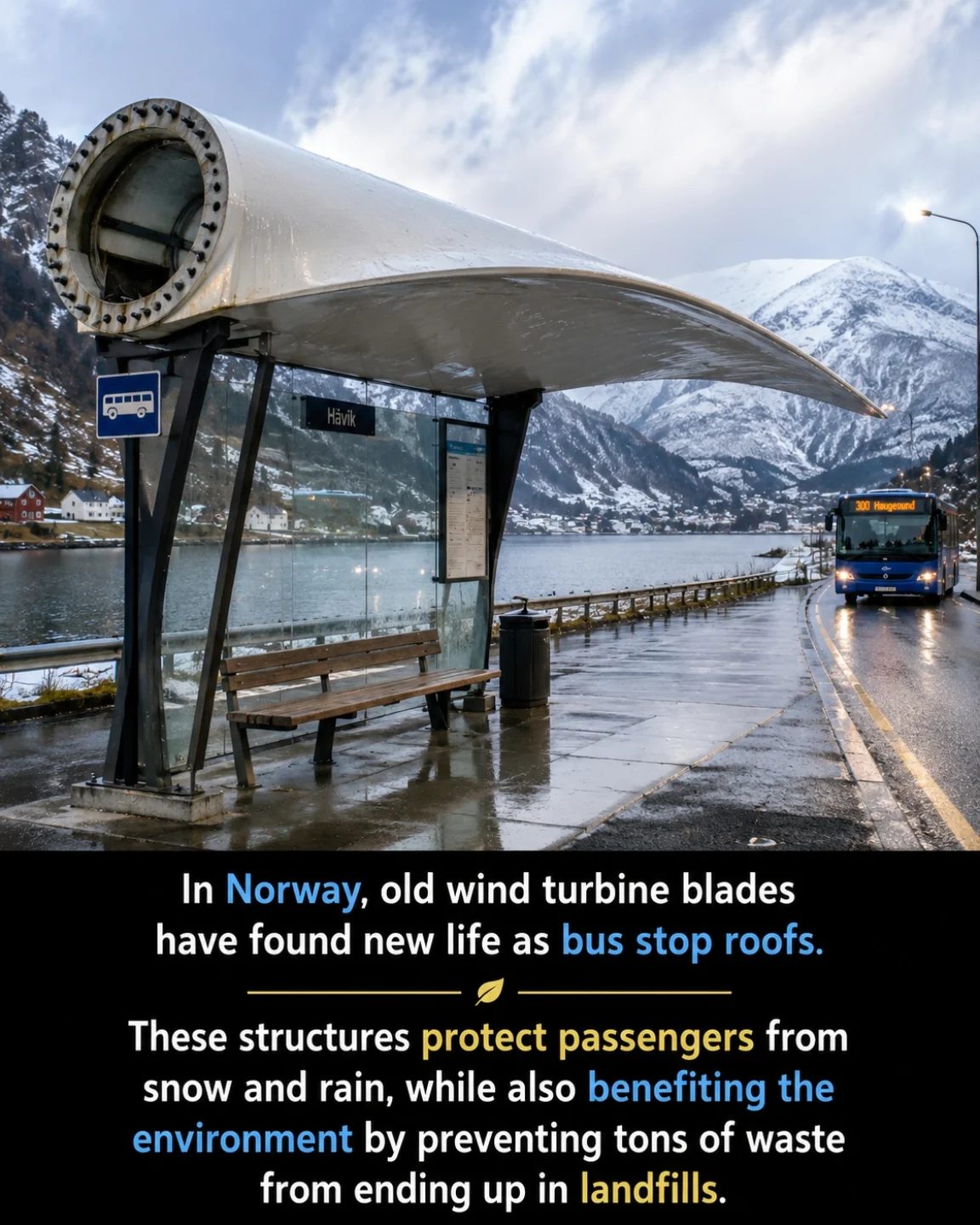
Repurposed Wind Turbine Blades
Old wind turbine blades, often seen as waste at the end of their useful life, are finding new purpose in Norway. These blades, once used to harness wind energy, are now being repurposed as roofs for bus stops. This innovative approach not only provides essential shelter for passengers but also addresses a significant environmental challenge.
Why This Matters
Wind energy is a critical component of renewable power generation, but the disposal of aged turbine blades poses a growing problem. These blades are typically made of composite materials that are difficult to break down or recycle. By repurposing them into functional structures, Norway is setting a precedent for sustainable waste management in the renewable energy sector.
Innovative Solutions for Sustainability
The Håvik Initiative
The small town of Hävvik, near Haugasund, Norway, has become a pioneer in this initiative. The transformation of old turbine blades into bus stop roofs is both a practical and environmentally conscious solution. These new roofs provide shelter from harsh weather conditions, which can be particularly severe in the snowy Norwegian landscape.
Environmental Benefits
Repurposing turbine blades prevents tons of waste from ending up in landfills. By diverting these materials from waste streams, Norway is taking a significant step towards reducing the environmental footprint of its renewable energy infrastructure. This initiative is a testament to how innovative thinking can turn potential waste into valuable resources.
Practical Tips for Repurposing Wind Turbine Blades
Assessing the Feasibility
Before embarking on a repurposing project, it's crucial to assess the condition of the old blades. Work with engineers to determine if the materials are still structurally sound and suitable for their new purpose.
Design Considerations
Designing the new structure requires careful planning. Consider the dimensions and weight of the blades, as well as the structural requirements of the bus stops. Ensure that the new design complies with local building codes and safety regulations.
Community Engagement
Engaging the local community is essential for the success of such initiatives. Involve residents in the planning and execution phases to ensure that the final product meets their needs and expectations. This collaboration can also foster a sense of ownership and pride among the community members.
Important Takeaways
Wind turbine blades, once considered waste, can be repurposed into functional structures. These repurposed blades can provide practical benefits, such as shelter for bus passengers, and can contribute to environmental sustainability by reducing waste. Norway's initiative in Håvik serves as a model for other regions looking to address waste from renewable energy infrastructure. By repurposing these blades, we can create a more sustainable future, one step at a time.
Conclusion
The repurposing of wind turbine blades in Norway is a pioneering effort that combines practicality with environmental consciousness. By transforming old blades into functional bus stop roofs, Norway is not only solving a waste problem but also creating a more sustainable and resilient community. This initiative highlights the potential for innovative solutions in waste management and environmental sustainability. As we continue to seek ways to reduce our environmental impact, initiatives like these serve as valuable examples of how we can turn challenges into opportunities for a better future.
Watch the Reel
Recent articles
Fresh deep dives from the latest Reels we unpacked.




Comments
Be the first to comment.