3D Concrete Printing
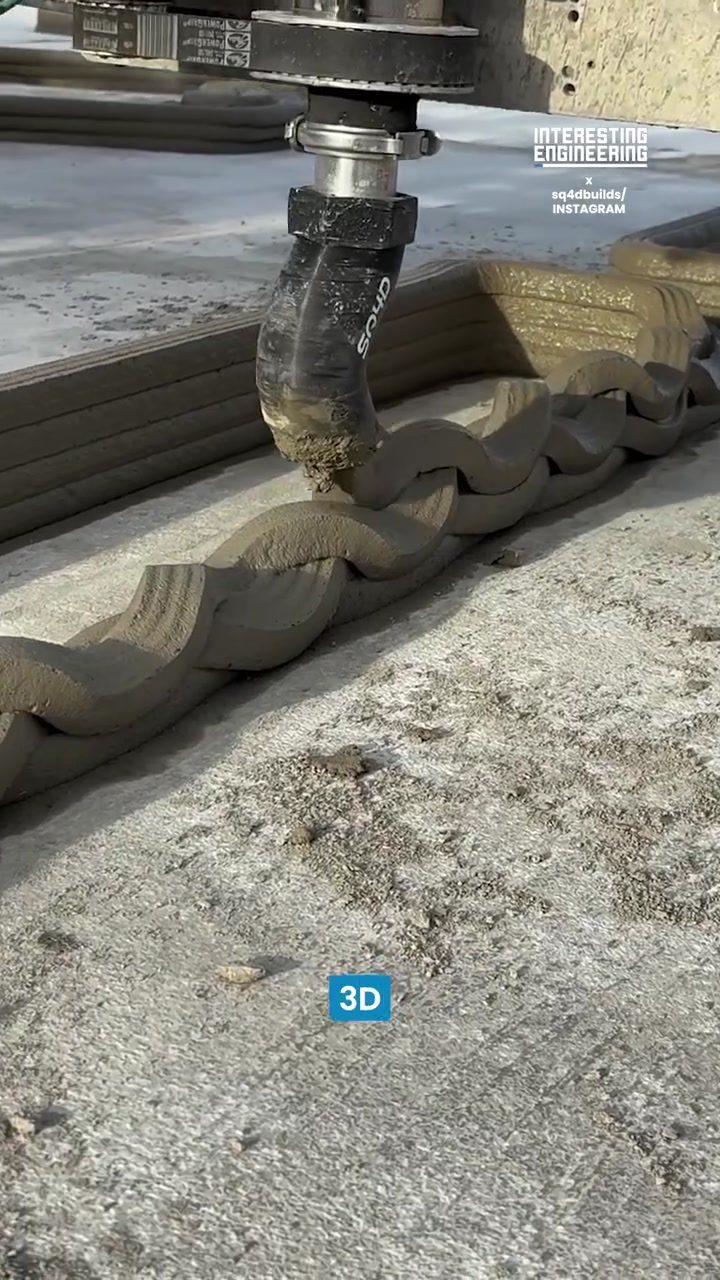
3D concrete printing is revolutionizing the construction industry by enabling the creation of complex, durable structures directly on site. This innovative process uses a robotic 3D concrete printer to extrude specially formulated cement mixtures, layer by layer, eliminating the need for traditional formwork. This technology, showcased by SQ4DBuilds, is transforming how we think about construction, offering new possibilities for design and efficiency.
Context / Why this matters
Traditional construction methods often rely on formwork to shape concrete structures. This process can be time-consuming and labor-intensive, requiring skilled workers to build and dismantle forms. 3D concrete printing offers a more efficient alternative. By depositing concrete directly onto the construction site, this technology can significantly reduce construction time and labor costs. Additionally, the ability to create complex shapes and designs that would be difficult or impossible with traditional methods opens up new possibilities for architects and engineers.
Main discussion
The Technology Behind 3D Concrete Printing
3D concrete printing involves using a robotic arm or gantry system equipped with a nozzle that extrudes a specialized concrete mixture. The mixture is designed to flow smoothly and set quickly, allowing for the creation of durable, stable structures. The robotic arm follows a pre-programmed path, depositing the concrete in precise layers to build the structure from the ground up.
The complexity of the shapes that can be created is limited only by the design software and the capabilities of the printing equipment. This allows for the creation of organic, flowing forms that would be difficult or impossible to achieve with traditional construction methods. The wave-shaped walls demonstrated by SQ4DBuilds are a prime example of this capability, showcasing the potential for creating visually striking and functional structures.
The Benefits of 3D Concrete Printing
One of the key benefits of 3D concrete printing is its efficiency. By automating the construction process, this technology can significantly reduce the amount of time and labor required to build a structure. This not only lowers costs but also speeds up the construction timeline, allowing projects to be completed more quickly.
Another major advantage is the reduction in material waste. Traditional construction methods often result in a significant amount of waste due to the need for formwork and the difficulty of achieving precise cuts. With 3D concrete printing, the concrete is deposited only where it is needed, minimizing waste and reducing the environmental impact of the construction process.
Design Flexibility
One of the most exciting aspects of 3D concrete printing is the design flexibility it offers. Architects and engineers can create complex, custom designs that would be difficult or impossible to achieve with traditional construction methods. This opens up new possibilities for innovative and visually striking architectural designs.
The wave-shaped walls created by SQ4DBuilds are a perfect example of this design flexibility. These walls not only add a unique aesthetic element to the structure but also demonstrate the structural integrity and durability of 3D-printed concrete.
Practical Tips
Choosing the Right Equipment
When considering 3D concrete printing, it's important to choose the right equipment for your needs. Different printers offer varying levels of precision, speed, and material compatibility. For large-scale construction projects, a larger, more robust printer may be necessary. For smaller projects or detailed work, a more precise, smaller printer may be more suitable.
Selecting the Right Concrete Mixture
The success of a 3D concrete printing project depends heavily on the quality and formulation of the concrete mixture. The mixture must be specially formulated to flow smoothly through the printer's nozzle, set quickly, and maintain structural integrity. Working with a supplier experienced in 3D printing concrete can help ensure that the mixture meets these requirements.
Planning and Design
Efficient planning and design are critical to the success of a 3D concrete printing project. The design must be optimized for the specific capabilities and limitations of the printer. This includes considering factors such as the printer's build volume, layer height, and extrusion rate. Collaborating with experienced design professionals can help ensure that the project is well-planned and executed.
Important Takeaways
Efficiency and Cost Savings
3D concrete printing offers significant efficiency and cost savings compared to traditional construction methods. By automating the construction process and reducing material waste, this technology can help lower construction costs and speed up project timelines.
Design Innovation
The design flexibility offered by 3D concrete printing opens up new possibilities for innovative and visually striking architectural designs. The ability to create complex, custom shapes and forms allows architects and engineers to push the boundaries of what is possible in construction.
Structural Integrity
Despite its innovative approach, 3D concrete printing produces structures with exceptional structural integrity. The carefully formulated concrete mixtures and precise layer-by-layer deposition ensure that the printed structures are durable and stable.
Conclusion
3D concrete printing is a groundbreaking technology that is transforming the construction industry. By enabling the creation of complex, durable structures directly on site, this technology offers significant efficiency, cost savings, and design flexibility. As the technology continues to evolve, it has the potential to revolutionize the way we build, making construction faster, more cost-effective, and more innovative.
Watch the Reel
Questions readers ask
What are the primary benefits of using 3D concrete printing in construction?
3D concrete printing offers several advantages, including the ability to create complex shapes like wave-shaped walls without the need for traditional formwork. It also reduces labor requirements, accelerates construction timelines, and minimizes waste by depositing only the necessary amount of concrete.
How does 3D concrete printing work in the construction process?
3D concrete printing involves using a robotic arm or printer that extrudes a specially formulated cement mixture layer by layer according to a digital design. This process allows for the on-site creation of intricate and durable structures, such as 3D concrete walls and curved concrete walls, with high precision.
What types of structures can be created using 3D concrete printing?
3D concrete printing can create a variety of structures, from simple walls to complex, curved designs. It is particularly useful for constructing wave-shaped walls, 3D concrete walls, and other 3D concrete structures that would be challenging or impossible to achieve with traditional methods.
What is the role of a 3D concrete printer in construction?
A 3D concrete printer plays a pivotal role in the construction process by acting as a robotic arm that directly deposits concrete based on digital construction models. This technology streamlines the building process by eliminating the need for formwork, thus reducing construction time and labor.
How does 3D concrete printing compare to traditional construction methods?
Traditional construction often relies on formwork to shape concrete, which can be time-consuming and labor-intensive. In contrast, 3D concrete printing allows for the on-site creation of complex, durable structures without the need for formwork, offering a more efficient and flexible approach to building.
What are the environmental benefits of 3D concrete printing?
3D concrete printing can reduce material waste by depositing concrete only where needed, thereby minimizing excess waste. Additionally, the process can lower emissions by reducing the need for transportation of pre-cast materials and formwork, contributing to a more sustainable construction process.
Can 3D concrete printing be used for large-scale projects?
Yes, 3D concrete printing is scalable and can be used for large-scale projects. The technology allows for the creation of extensive structures efficiently. Companies like SQ4DBuilds have demonstrated the feasibility of using 3D concrete printing for significant construction projects, showcasing its potential for widespread adoption.
Related deep dives
Similar reads based on topic and creator.


Recent articles
Fresh deep dives from the latest Reels we unpacked.




Comments
Be the first to comment.