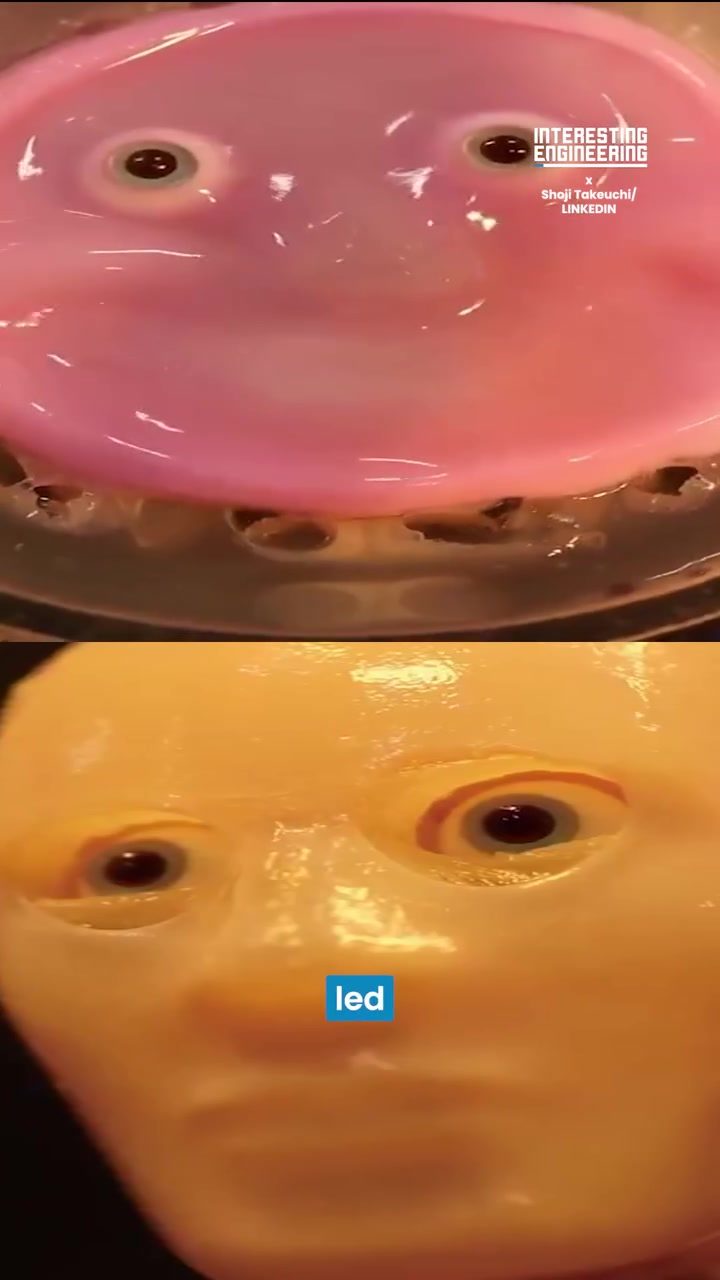
Self-Healing Robot Skin
Robotic skin that can heal itself is no longer a concept confined to science fiction. Researchers at the University of Tokyo, under the leadership of Professor Shoji Takeuchi, have developed a groundbreaking method to attach engineered living skin to humanoid robots. This innovation uses collagen gel and tiny V-shaped perforations, inspired by human skin ligaments, to create a secure and flexible bond.
Why This Matters
The ability to create self-healing skin for robots has profound implications across various fields. Envision robots that can repair minor damage autonomously, extending their operational lifespan and reducing maintenance costs. This technology could revolutionize industries that rely on robotic systems, from manufacturing and healthcare to cosmetics and surgical training.
Self-healing skin also opens up new avenues for bio-hybrid robotic systems, where living tissue integrates seamlessly with mechanical components. This blend of biology and engineering has potential applications in advanced medical research, allowing for more realistic simulations and training models.
Main Discussion
The Science Behind Self-Healing Robot Skin
The key to this innovation lies in the use of collagen gel and V-shaped perforations. Collagen is a natural protein found in human skin, providing both strength and flexibility. By incorporating collagen gel into the engineered skin, researchers have created a material that can mimic the properties of human skin, including its ability to heal from minor injuries.
The V-shaped perforations, inspired by human skin ligaments, play a crucial role in securing the engineered skin to the robot's surface. These perforations allow the skin to move with the robot without tearing or peeling, ensuring that the skin remains intact even during complex movements. This design mimics the natural flexibility and durability of human skin, making it an ideal solution for humanoid robots.
Applications in Cosmetics and Surgical Training
One of the most exciting applications of self-healing robot skin is in the field of cosmetics testing. Currently, cosmetics companies rely on animal testing or human volunteers to evaluate the safety and effectiveness of new products. With self-healing robot skin, cosmetics testing could become more efficient and ethical. Robots with living skin can provide a realistic model for testing skincare and makeup products, reducing the need for animal testing and human involvement.
Similarly, surgical training could benefit significantly from this technology. Medical students and surgeons could practice complex procedures on robots with self-healing skin, providing a realistic and reusable training model. This would not only improve surgical skills but also reduce the dependence on cadavers and animal models for training purposes.
Medical Research and Robotic Systems
The integration of living skin into robotic systems has vast potential in medical research. Researchers can use these bio-hybrid robots to study skin diseases, wound healing, and the effects of various treatments. The ability of the skin to heal itself opens up new possibilities for research on regenerative medicine and tissue engineering.
Moreover, advanced bio-hybrid robotic systems equipped with self-healing skin could be used in various medical procedures, from rehabilitation to surgical assistance. These robots could provide more natural and effective interactions with patients, enhancing the overall quality of care.
Practical Tips
For those interested in exploring self-healing robot skin, here are some practical tips:
Getting Started with Collagen Gel
Collagen gel is widely available and can be purchased from various suppliers. Ensure you choose a high-quality gel that is free from impurities and contaminants. Follow the manufacturer's instructions for preparation and storage to maintain the gel's properties.
Creating V-Shaped Perforations
Creating V-shaped perforations requires precision and attention to detail. Use a laser cutter or a precision cutting tool to create the perforations. Ensure the size and spacing of the perforations are consistent to achieve a uniform bond between the skin and the robot's surface.
Testing and Refining
Once you have created the engineered skin, test its performance under various conditions. Assess the skin's flexibility, durability, and self-healing capabilities. Refine the design and materials based on your observations to achieve optimal performance.
Important Takeaways
The development of self-healing robot skin by researchers at the University of Tokyo represents a significant advancement in robotic technology. This innovation has the potential to revolutionize various industries, from cosmetics and surgical training to medical research and advanced bio-hybrid robotic systems.
By using collagen gel and V-shaped perforations, researchers have created a flexible and durable skin that can heal itself. This technology opens up new possibilities for ethical cosmetics testing, realistic surgical training models, and advanced medical research. As this technology continues to evolve, it will undoubtedly shape the future of robotics and its applications in various fields.
Conclusion
Self-healing robot skin is a groundbreaking innovation that combines biology and engineering to create flexible, durable, and realistic robotic systems. This technology has the potential to transform industries and improve the quality of care in medical settings. With continued research and development, self-healing robot skin could become a standard feature in advanced robotic systems, paving the way for a future where robots and humans work together more seamlessly.
Watch the Reel
Questions readers ask
How does the self-healing robot skin developed in Japan work?
The self-healing robot skin developed by researchers at the University of Tokyo uses a combination of collagen gel and tiny V-shaped perforations. The perforations, inspired by human skin ligaments, allow the skin to bond securely to the robot while maintaining flexibility. The collagen gel facilitates the healing process, enabling the skin to repair minor damages autonomously.
What are the benefits of self-healing robot skin for industries?
Self-healing robot skin can significantly enhance robot longevity and reduce maintenance costs. Robots equipped with this technology can repair minor damages on their own, minimizing downtime and extending their operational lifespan. This is particularly beneficial for industries that rely heavily on robotic systems, such as manufacturing and healthcare.
Who is leading the research on self-healing robot skin in Japan?
The research on self-healing robot skin in Japan is led by Professor Shoji Takeuchi at the University of Tokyo. Under his guidance, the team has made significant strides in attaching engineered living skin to humanoid robots, paving the way for advanced bio-hybrid systems.
How does the self-healing robot skin mimic human skin?
The self-healing robot skin mimics human skin through the use of unique V-shaped perforations. These perforations are designed to mimic human skin ligaments, providing a secure and flexible bond. This design, combined with collagen gel, allows the robot skin to flex and repair itself, similar to how human skin functions.
What are the potential applications of self-healing robot skin beyond manufacturing?
Beyond manufacturing, self-healing robot skin has promising applications in healthcare, where robots could assist in patient care with reduced risk of damage. Additionally, this technology could be utilized in hazardous environments, where robots need to operate autonomously for extended periods without frequent maintenance. It also opens avenues for advancements in bio-hybrid systems, integrating biological components with robotic structures.
What inspired the design of the perforations in the self-healing robot skin?
The design of the perforations in the self-healing robot skin was inspired by human skin ligaments. These tiny V-shaped perforations allow for a secure attachment to the robot's surface while providing the necessary flexibility for movement and repair, mimicking the natural structure and function of human skin.
Related deep dives
Similar reads based on topic and creator.



Recent articles
Fresh deep dives from the latest Reels we unpacked.




Comments
Be the first to comment.