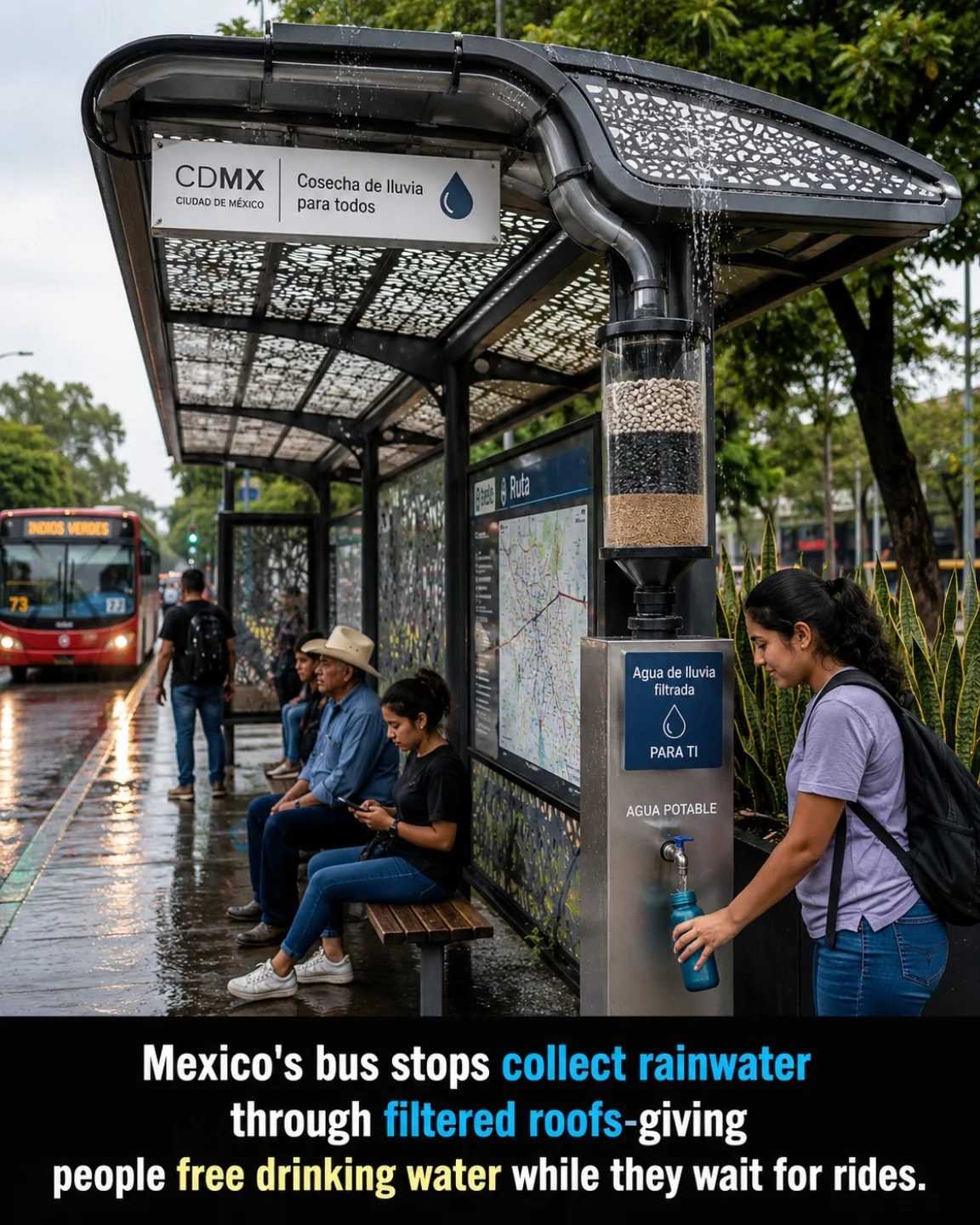
Rainwater Harvesting Bus Stops in Mexico City
Bus stops in Mexico City are equipped with an innovative system that collects and filters rainwater, providing free drinking water to commuters. This initiative, part of a broader effort in urban sustainability, demonstrates a practical solution for water conservation and public access to clean water.
Why This Matters
Water scarcity and sustainability are pressing global issues. Urban areas face unique challenges in managing water resources efficiently while catering to the needs of a dense population. Public spaces like bus stops, which are high-traffic areas, offer ideal locations to implement sustainable water solutions. By harnessing rainwater, cities can reduce their reliance on traditional water sources and promote environmental stewardship.
Harvesting Rainwater at Bus Stops
The Agua Potable System
The Agua Potable system at Mexico City's bus stops exemplifies how urban infrastructure can be repurposed for sustainability. These bus stops are designed with roofs that collect rainwater, which is then filtered and made available for public consumption through water dispensers. This system not only ensures a steady supply of clean water but also reduces the strain on the city's water treatment facilities.
How It Works
The process begins with the collection of rainwater through specially designed roofs. This water is then directed to a filtration system that removes impurities, making it safe for drinking. The filtered water is stored and dispensed through water dispensers placed at strategic points within the bus stop. This setup ensures that commuters have access to clean water while they wait for their rides.
Public Benefits
The primary beneficiaries of this system are the city's commuters. Access to free, clean drinking water is a significant advantage, especially for those who rely on public transportation for daily commutes. It also promotes a culture of water conservation and sustainability, encouraging people to appreciate the value of harvested rainwater.
The Impact on Urban Sustainability
Water Conservation
Rainwater harvesting is a simple yet effective way to conserve water. By collecting and using rainwater, cities can reduce their dependence on municipal water supplies, which are often strained due to high demand and limited resources. This approach not only helps in managing water scarcity but also reduces the energy required for water treatment and distribution.
Environmental Impact
The environmental benefits of rainwater harvesting are manifold. It helps in reducing runoff, which can lead to soil erosion and water pollution. By filtering and using rainwater, cities can mitigate these issues, contributing to a healthier urban ecosystem. Additionally, the reduction in energy consumption for water treatment lowers the city's carbon footprint, aligning with broader sustainability goals.
Practical Tips for Implementing Rainwater Harvesting
Choosing the Right Location
When implementing a rainwater harvesting system, choosing the right location is crucial. High-traffic areas like bus stops are ideal because they ensure maximum usage and visibility. Other potential locations include parks, schools, and public offices.
Design Considerations
The design of the collection and filtration system is essential for its effectiveness. The roofs should be designed to maximize water collection, and the filtration system must be robust enough to remove all impurities. Additionally, the water dispensers should be easily accessible and user-friendly.
Community Engagement
Engaging the community is vital for the success of any sustainability initiative. Educating people about the benefits of rainwater harvesting and encouraging them to use the facilities can enhance the system's adoption and impact. Regular maintenance and updates can also keep the system in optimal condition.
Important Takeaways
Rainwater harvesting at bus stops in Mexico City is a prime example of how urban infrastructure can be adapted for sustainability. By providing free drinking water to commuters, this initiative promotes water conservation and environmental stewardship. The benefits are manifold, from reducing the strain on municipal water supplies to lowering the city's carbon footprint.
Conclusion
The Agua Potable system at Mexico City's bus stops is a testament to innovative urban planning. By harnessing the power of rainwater, cities can create sustainable solutions to pressing issues like water scarcity. This initiative not only provides a practical benefit to commuters but also serves as a model for other urban areas looking to enhance their sustainability efforts.
Watch the Reel
Questions readers ask
How does the rainwater harvesting system work at Mexico City bus stops?
The system collects rainwater from the bus stop roofs and canopies, then filters it to remove impurities, making it safe for drinking. The clean water is then stored and dispensed through drinking fountains for commuters to access.
What are the benefits of having drinking water at bus stops?
Providing free, clean drinking water at bus stops encourages commuters to stay hydrated, promotes public health, and reduces plastic waste from bottled water. Additionally, it serves as a public demonstration of sustainable urban water management.
How does rainwater harvesting at bus stops address Mexico City's water scarcity?
By collecting and filtering rainwater, these systems reduce the demand on traditional water sources, helping to conserve Mexico City's water resources. This is particularly important in a densely populated urban area facing water scarcity.
What role do bus stops play in urban water harvesting?
Bus stops are high-traffic areas, making them ideal locations for urban water harvesting. They offer a unique opportunity to provide sustainable public water access to a large number of people while also promoting awareness of water conservation efforts.
Can the rainwater harvesting systems at bus stops be implemented in other cities?
Yes, the design and technology used in these systems can be adapted for other cities. Any location with sufficient rainfall and a need for public water access can benefit from similar rainwater harvesting initiatives.
Is the water from these systems safe to drink?
Yes, the water is safe to drink. The rainwater harvesting systems at Mexico City bus stops are designed with advanced filters to remove impurities and contaminants, ensuring the water meets health and safety standards.
Who maintains the rainwater harvesting systems at the bus stops?
The bus stop rainwater harvesting systems are maintained by local authorities. This includes regular filter checks, cleaning, and ensuring the system operates efficiently to provide a continuous supply of clean drinking water for commuters.
Recent articles
Fresh deep dives from the latest Reels we unpacked.




Comments
Be the first to comment.