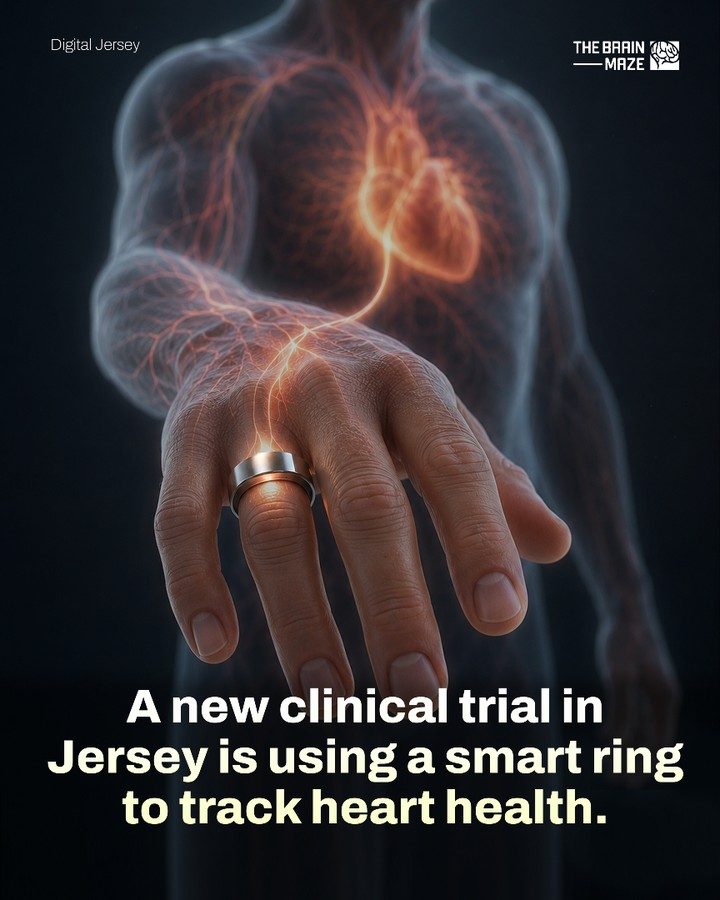
Smart Ring Health Tracking
Smart rings are becoming a powerful tool in the medical field, and a recent clinical trial in Jersey is showcasing their potential in monitoring heart health. The focus is on patients with Heart Failure with Preserved Ejection Fraction (HFpEF), a condition that affects millions worldwide. The trial aims to determine if iron injections can alleviate symptoms and improve exercise ability. Participants will wear a smart ring for 14 weeks, allowing researchers to continuously monitor heart rate, activity, and mobility. This continuous data collection offers a more comprehensive understanding of treatment effectiveness compared to traditional testing methods.
Context: Heart Failure with Preserved Ejection Fraction (HFpEF)
Heart failure is a condition where the heart cannot pump enough blood to meet the body's needs. HFpEF is a specific type of heart failure where the heart's ejection fraction—the percentage of blood pumped out with each beat—remains within normal limits. Despite this, patients experience symptoms such as shortness of breath, fatigue, and exercise intolerance. The exact causes of HFpEF are not fully understood, making it challenging to treat effectively. Iron deficiency is increasingly recognized as a contributing factor, which is why the clinical trial in Jersey is exploring the benefits of iron injections.
Main discussion
The Role of Smart Rings in Health Monitoring
Smart rings are compact, wearable devices that can track various health metrics. Unlike smartwatches, which are bulkier and less discreet, smart rings offer a convenient and stylish way to monitor health parameters. These devices typically include sensors that can measure heart rate, activity levels, and even sleep patterns. The continuous data collected by these devices can provide valuable insights into a patient's health over time, rather than relying on sporadic visits to a healthcare provider.
Continuous Heart Health Monitoring
The clinical trial in Jersey is leveraging the capabilities of smart rings to monitor heart health in real time. By tracking heart rate, activity, and mobility, researchers can gain a clearer picture of how iron injections affect patients with HFpEF. Traditional testing methods, such as electrocardiograms (ECGs) or stress tests, provide a snapshot of a patient's health at a single point in time. In contrast, smart rings offer continuous monitoring, allowing researchers to observe changes over an extended period.
The smart ring's ability to monitor heart rate is particularly important. Heart rate variability (HRV)—the fluctuation in time between each heartbeat—can indicate the body's stress response and overall health. By tracking HRV, researchers can assess the impact of iron injections on a patient's cardiovascular health and stress response.
Patient Mobility and Activity Tracking
Mobility and activity levels are crucial indicators of a patient's overall health and well-being. Smart rings equipped with accelerometers can track a patient's movement throughout the day, providing data on steps taken, distance traveled, and activity intensity. This information can help researchers understand how iron injections affect a patient's ability to perform daily activities and engage in physical exercise.
Improving Treatment Effectiveness
One of the key goals of the Jersey clinical trial is to determine whether iron injections can improve symptoms and exercise ability in patients with HFpEF. By continuously monitoring heart rate, activity, and mobility, researchers can assess the effectiveness of the treatment more accurately. This real-time data allows for more personalized and targeted interventions, potentially leading to better patient outcomes.
Practical tips for using smart rings in health monitoring
While smart rings are powerful tools for health monitoring, there are some practical considerations to keep in mind.
Choosing the Right Smart Ring
When selecting a smart ring, it's essential to choose one that offers the features you need. For heart health monitoring, look for a ring with a built-in heart rate sensor and accelerometer. Some models may also include additional sensors for measuring blood oxygen levels, skin temperature, and even blood pressure. Consider the battery life, comfort, and design to ensure the ring is suitable for continuous wear.
Ensuring Accurate Data Collection
To get the most accurate data from your smart ring, it's important to wear it consistently. Remove the ring only when necessary, such as during bathing or charging. Regularly sync your ring with its companion app to ensure data is securely stored and accessible for review. Some rings may require calibration or specific placement on the finger for optimal performance.
Interpreting the Data
Smart rings provide a wealth of data, but interpreting that information can be challenging. Use the companion app to track your progress and set goals. Many apps offer insights and recommendations based on your data, but it's always a good idea to consult a healthcare provider for a professional assessment. Some smart rings may also offer integration with other health apps or platforms, allowing you to share your data with healthcare providers for a more comprehensive review.
Important takeaways
The clinical trial in Jersey highlights the potential of smart rings in monitoring heart health and improving treatment effectiveness. Here are some key takeaways:
- Smart rings offer a convenient and stylish way to monitor heart rate, activity, and mobility.
- Continuous data collection provides a more comprehensive understanding of treatment effectiveness compared to traditional testing methods.
- Heart rate variability (HRV) and mobility data can provide valuable insights into a patient's cardiovascular health and overall well-being.
- Choosing the right smart ring and ensuring accurate data collection are essential for effective health monitoring.
- Consulting a healthcare provider for data interpretation and personalized recommendations is crucial.
Conclusion
Smart rings are revolutionizing the way we monitor and manage heart health. The clinical trial in Jersey is a prime example of how these innovative devices can be used to track heart health in real time, providing valuable data for researchers and healthcare providers. As smart ring technology continues to evolve, we can expect to see even more advancements in health monitoring and personalized treatment. For patients with HFpEF and other heart conditions, smart rings offer a powerful tool for improving symptoms, exercise ability, and overall quality of life.
Watch the Reel
Questions readers ask
What is the primary goal of the 14-week Jersey trial involving smart rings?
The primary goal is to assess the effectiveness of a new treatment for patients with Heart Failure with Preserved Ejection Fraction (HFpEF). Specifically, researchers are evaluating if iron injections can reduce symptoms and improve physical capability.
What specific health metrics are the smart rings designed to monitor?
The smart rings are designed to monitor heart rate, activity, and mobility. These metrics provide a comprehensive view of the patient's condition and response to treatment.
Why are smart rings considered a beneficial tool in this trial?
Smart rings offer continuous data collection, which allows for a more detailed and accurate assessment of patient health compared to traditional, intermittent testing methods.
What is Heart Failure with Preserved Ejection Fraction (HFpEF)?
HFpEF is a type of heart failure where the heart’s ejection fraction is normal (meaning the heart is able to pump blood efficiently), but the heart does not relax and fill with blood properly, leading to symptoms of heart failure.
How do smart rings contribute to the understanding of treatment effectiveness in this trial?
By continuously monitoring heart rate, activity, and mobility, smart rings provide a real-time and comprehensive view of how patients respond to the new treatment, offering deeper insights compared to traditional monitoring methods.
What are the benefits of using smart rings for patients in the trial?
Patients benefit from the convenience and accuracy of smart rings, which allow for continuous monitoring without the need for frequent hospital visits. This can also help in early detection of any changes in their health status.
Can smart rings be used for monitoring conditions other than heart failure?
Yes, smart rings have the potential to monitor a variety of health metrics, such as sleep patterns, stress levels, and physical activity, making them versatile tools for managing various health conditions beyond heart failure.
Related deep dives
Similar reads based on topic and creator.




Recent articles
Fresh deep dives from the latest Reels we unpacked.




Comments
Be the first to comment.