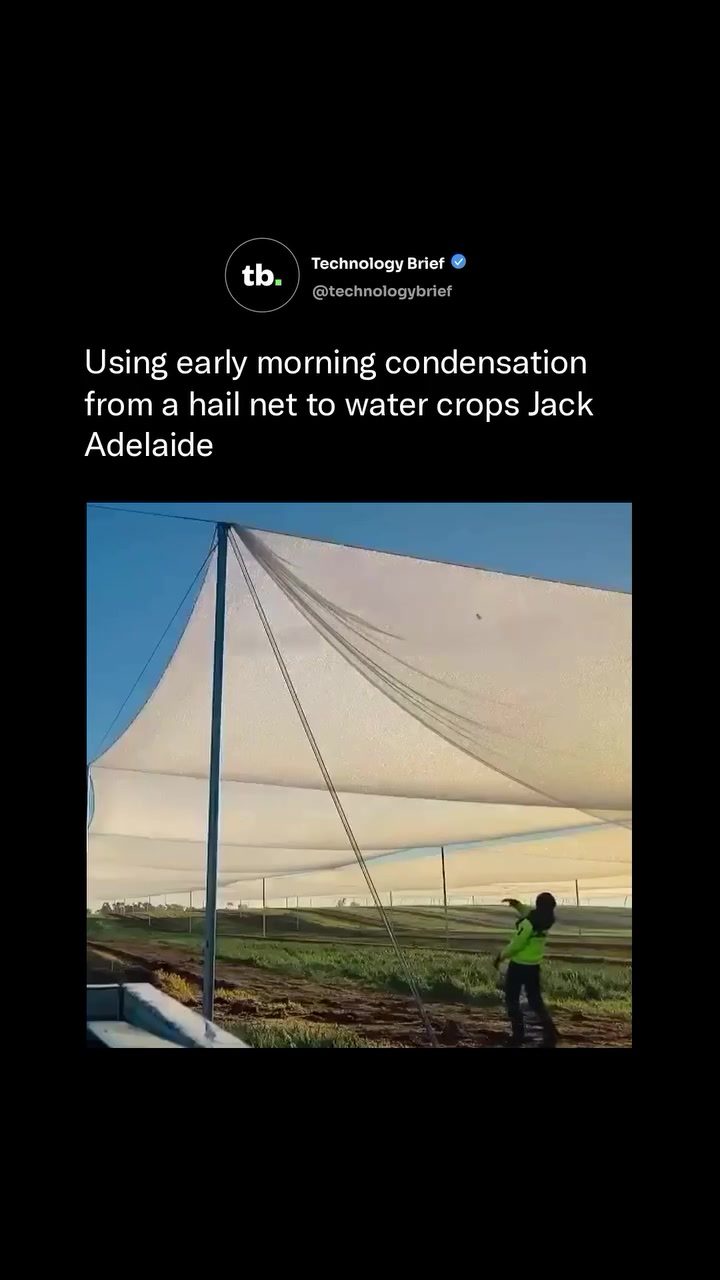
Hail Net Condensation Harvesting
Hail nets, traditionally used to protect crops from storm damage, are increasingly being recognized for an additional benefit: passive water collection. This innovative approach is particularly valuable in regions with limited water resources, where every drop counts.
Context / Why this matters
Water scarcity is a growing concern for farmers worldwide. Traditional irrigation methods can be costly and resource-intensive. Hail nets, which are already in use to shield crops from hail and other weather impacts, offer a secondary function that can significantly reduce the need for additional irrigation. By harnessing condensation, farmers can turn a protective measure into a sustainable water source, potentially increasing crop yields while conserving precious resources.
Main discussion
How Hail Nets Work
Hail nets are large mesh covers installed over crops to protect them from hail and other adverse weather conditions. These nets are typically made of durable materials that can withstand the elements and provide a physical barrier to falling debris. Beyond this protective function, hail nets can also play a crucial role in water conservation.
Condensation Collection
On cool nights, moisture from the air condenses on the surface of the hail net. This condensation builds up as droplets, which can then be harvested. In the morning, a sprinkler system or mechanical vibration can knock the collected water loose, sending it raining down directly onto the crops below. This passive water collection system requires no pumps, external energy, or additional cost beyond what the net already provides.
Environmental Benefits
Hail nets offer several environmental benefits that enhance their utility as a water collection system:
- Temperature Reduction: Hail nets can reduce air temperature by around 1 degree Celsius, creating a cooler microclimate for the crops.
- Wind Speed Reduction: The nets cut wind speed by over 50 percent, which helps in retaining moisture and reducing evaporation.
- Humidity Increase: The increased humidity around the plants lowers the amount of irrigation water needed, as the crops benefit from the more humid environment.
Research and Findings
Research on shading hail nets in Mediterranean climates has shown promising results. Studies have found that these nets can cut seasonal irrigation water use by up to 25 percent while actually increasing yields. This is a significant achievement, especially in water-scarce regions where every drop of water is crucial.
Fog and dew collection systems, similar to the approach used with hail nets, can capture between 5 and 14 liters of water per square meter of net per day, depending on local conditions. For farms in arid regions, this approach provides a practical way to maximize the use of existing infrastructure.
Practical Implications
Hail nets can be a game-changer for farmers in arid regions. By turning a protective measure into a water source, farmers can reduce their reliance on external water supplies and lower their costs. This dual functionality makes hail nets a cost-effective and sustainable solution, especially in areas where water is a precious commodity.
Practical tips
Optimizing Hail Net Installation
To maximize the benefits of hail net condensation harvesting, consider the following tips:
- Proper Installation: Ensure that the nets are installed correctly to cover the entire crop area. Proper installation helps in collecting as much condensation as possible.
- Regular Maintenance: Regularly check the nets for any damage or blockages that could hinder the condensation collection process.
- Timing: Use sprinkler systems or mechanical vibrations at the right time to knock the collected water loose, ensuring that the crops receive the water when they need it most.
Enhancing Water Collection
- Material Choice: Choose high-quality materials for the nets that are not only durable but also facilitate better condensation collection.
- Net Design: Opt for a net design that maximizes the surface area for condensation. Nets with a larger surface area can collect more water.
Monitoring and Adaptation
- Weather Monitoring: Keep an eye on local weather conditions to predict when condensation will be highest. This can help in planning the water collection process more effectively.
- Adaptation to Local Conditions: Adapt the water collection system according to the specific needs and conditions of your farm. What works in one region might not be as effective in another.
Additional Benefits
- Pest Control: Hail nets also provide a barrier against pests, which can further enhance crop health and yield.
- Soil Conservation: By reducing the impact of harsh weather, hail nets help in conserving soil moisture and nutrients, which is beneficial for long-term crop health.
Important takeaways
- Hail nets offer a dual benefit of protection and water collection, making them a versatile tool for farmers.
- The environmental benefits, including temperature reduction, wind speed reduction, and increased humidity, contribute to better crop health and higher yields.
- Proper installation, regular maintenance, and adaptation to local conditions are key to maximizing the benefits of hail net condensation harvesting.
Conclusion
Harvesting condensation from hail nets is a practical and sustainable way to conserve water and enhance crop yields. This innovative approach leverages existing infrastructure to provide an additional water source, making it a valuable tool for farmers in water-scarce regions. By understanding and optimizing the use of hail nets, farmers can not only protect their crops but also ensure a more efficient and sustainable water management system.
Watch the Reel
Questions readers ask
How does hail net water harvesting work?
Hail net water harvesting involves using protective mesh covers, typically employed to shield crops from hail, to collect condensation. As water vapor from the air condenses on the netting, it drips down to irrigate the crops below, providing a natural and sustainable water source.
Can hail net irrigation systems be used in all climates?
Hail net irrigation is most effective in areas with frequent temperature fluctuations and high humidity. In such climates, the contrast between day and night temperatures promotes condensation, making water harvesting more efficient. However, arid or extremely dry regions may not provide enough moisture in the air to make this method practical.
What are the benefits of using hail nets for water harvesting?
Hail nets for water harvesting offer multiple benefits, including cost savings on traditional watering systems, reduced reliance on external water sources, and improved sustainability. This method also provides an additional layer of crop protection from harmful weather conditions, making it a versatile tool for farmers.
How does hail net irrigation compare to traditional rainwater harvesting?
Hail net irrigation and traditional rainwater harvesting both aim to collect and use natural water sources, but they differ in their methods. While traditional rainwater harvesting relies on collecting rainwater through gutters or other systems, hail net irrigation passively collects condensation from the air, making it a supplemental water source even in the absence of direct rainfall.
How can farmers implement hail net water harvesting on their farms?
To implement hail net water harvesting, farmers can install protective mesh covers over their crops. Some nets are specifically designed for condensation collection, and they come in a variety of sizes and materials. Additionally, farmers should consider the local climate and adjust the installation to optimize condensation collection and water distribution.
What types of crops benefit most from hail net water harvesting?
Hail net water harvesting can be beneficial for a wide range of crops, but it is particularly useful for those that are sensitive to water scarcity or require consistent moisture. This includes fruits, vegetables, and other high-value crops. The method helps maintain a steady water supply, which can improve crop yields and overall farm productivity.
Are there any maintenance requirements for hail net irrigation systems?
Hail net irrigation systems are generally low maintenance. However, farmers should regularly inspect the nets for any damage or debris that could hinder water collection. Occasional cleaning and proper tensioning of the nets will ensure optimal performance and longevity of the system.
Recent articles
Fresh deep dives from the latest Reels we unpacked.




Comments
Be the first to comment.