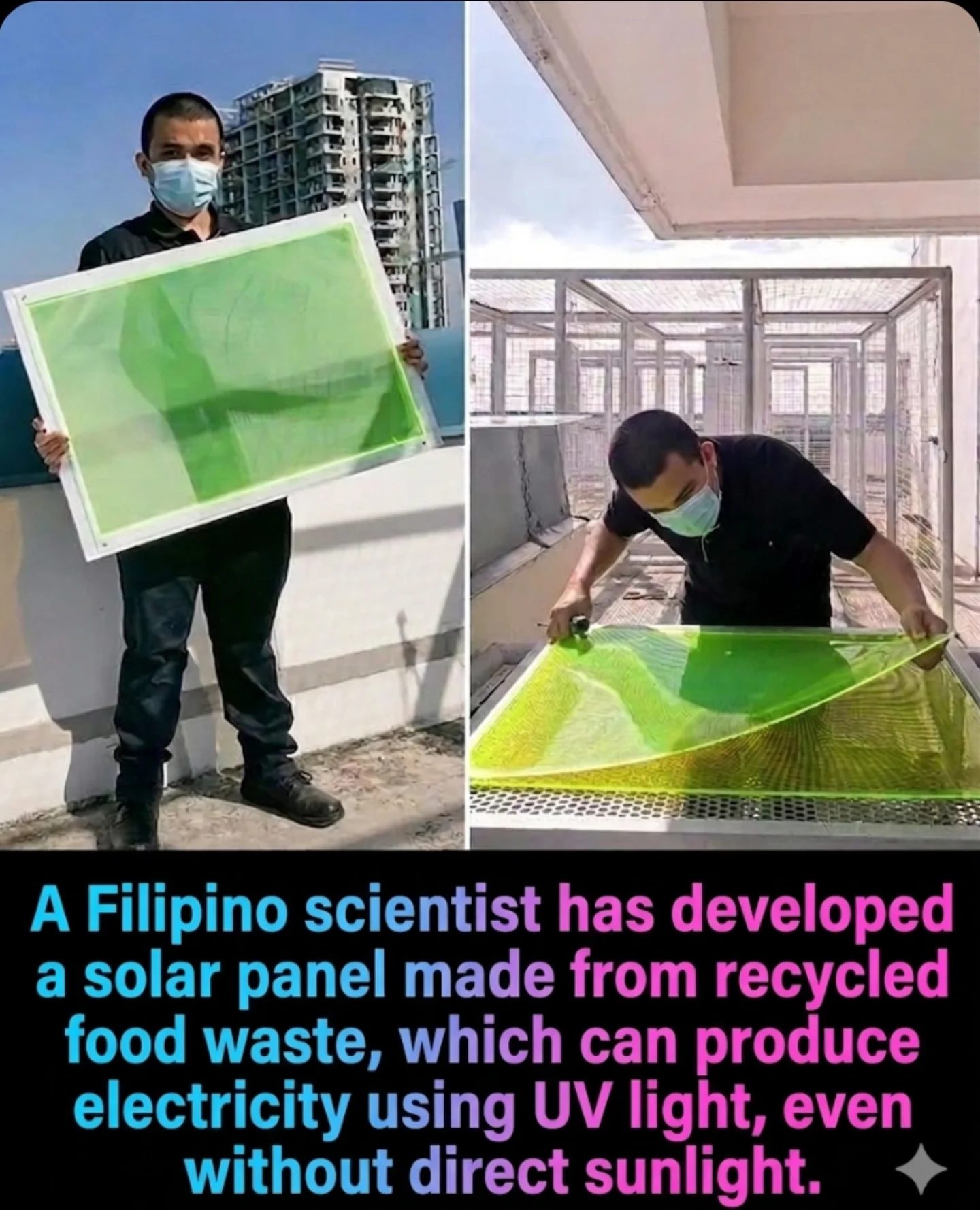
Recycled Solar Panels: Harvesting Energy with Food Waste
The concept of solar panels is nothing new, but what if these essential devices could be made from food waste and still efficiently generate electricity? This is the groundbreaking idea behind a revolutionary solar panel technology called AuREUS, created by Filipino engineer Carvey Ehren Maigue. His invention utilizes a clever application of bioluminescence to harness energy in a unique and efficient way.
Context
The world currently faces two pressing challenges: energy demand and waste management. Traditional solar panels have been a valuable solution for renewable energy, but they come with limitations, such as the need for direct sunlight. On the other hand, food waste is a significant global problem, with millions of tons of edible food discarded annually. The AuREUS solar panel technology addresses both issues by transforming food waste into an effective energy source. This makes it a breakthrough in the renewable energy sector, especially in urban settings and disaster-prone areas.
The Science Behind AuREUS
AuREUS is a solar panel technology designed to address various energy-related challenges. But how does it work? The technology revolves around the concept of bioluminescence, the natural emission of light by living organisms.
Bioluminescence and the Aurora Borealis
Carvey Ehren Maigue, the inventor of AuREUS, drew inspiration from the Aurora Borealis, or Northern Lights. The high-energy particles in the Earth's atmosphere are absorbed by luminescent particles, which then re-emit them as visible light. Applying this natural phenomenon, Maigue designed a solar panel that uses similar principles to generate electricity.
Using Food Waste
Traditional solar panels rely on silicon to convert sunlight into electricity. AuREUS, however, leverages luminescent particles extracted from local fruit and vegetable waste. The waste materials, which may otherwise go unused or end up in landfills, are crushed, and the juices are filtered to isolate these luminescent particles. These particles are then suspended in a resin substrate, which can be molded into various shapes, making the panels versatile and adaptable.
Harnessing UV Light
Unlike standard solar panels that require direct sunlight, AuREUS can generate electricity even on cloudy days. This is because it absorbs Ultraviolet (UV) light, which penetrates clouds and can reach the Earth's surface even when it's not sunny. The luminescent particles in the panel capture the UV rays and convert them into visible light, which is then directed to the edges of the panel. Here, regular photovoltaic (PV) cells capture this light and transform it into electricity.
Urban Integration and Climate Resilience
A major benefit of this technology is its adaptability to urban environments. Because the panels are translucent, they can be integrated into building designs like windows, turning entire structures into vertical solar farms. This is particularly useful in densely populated areas where space is limited.
Efficiency and Climate Resilience
The AuREUS prototype demonstrated a nearly 50% efficiency rate, which is significantly higher than traditional solar panels that typically operate at 15-25% efficiency due to weather and nighttime limitations. This makes AuREUS a more reliable and efficient energy source, especially in areas with unpredictable weather patterns.
For farmers in regions prone to natural disasters, this technology offers a lifeline. Damage from typhoons and other calamities often results in significant crop loss. By providing a market for crops that would otherwise be discarded, AuREUS not only supports sustainable farming practices but also helps generate additional income for farmers.
Practical Tips for Implementing AuREUS
Implementing this technology in urban settings requires careful planning and execution. Here are some practical considerations:
- Urban Planning: Engage with urban planners and architects to integrate the panels effectively into building designs. This could involve retrofitting existing structures or incorporating the technology into new construction projects.
- Waste Management: Collaborate with local waste management authorities to ensure a steady supply of food waste for the extraction of luminescent particles. This could also involve partnerships with local farms and markets.
- Technical Expertise: Work with a team of engineers and scientists to fine-tune the technology and ensure it meets the required efficiency standards. This is crucial for maximizing the potential of the AuREUS panels.
Important Takeaways
AuREUS represents a significant step forward in renewable energy technology. By transforming food waste into a valuable resource, it addresses both energy and waste management challenges. Its ability to generate electricity even on cloudy days and its versatility in urban settings make it a promising solution for sustainable energy production.
The technology's potential for urban integration and climate resilience also positions it as a valuable tool for urban planning and disaster management. For farmers, it offers a means to turn disaster into opportunity, providing additional income and aiding in sustainable farming practices.
Conclusion
Solar energy has long been hailed as a renewable energy solution, but the limitations of traditional solar panels have hindered their effectiveness. AuREUS offers a revolutionary approach by leveraging bioluminescence and food waste to generate electricity. This not only makes it a more sustainable option but also enhances its adaptability and efficiency. As we continue to seek innovative solutions to energy and waste challenges, AuREUS stands out as a beacon of sustainable progress.
Watch the Reel
Questions readers ask
How do AuREUS solar panels generate electricity from food waste?
AuREUS solar panels use a process called bioluminescence to turn food waste into electricity. The panels are designed to absorb and convert the energy from the bioluminescent process into usable electricity, which makes them an innovative solution to both energy generation and waste management.
What are the benefits of using AuREUS solar panels in urban areas?
In urban areas, AuREUS solar panels address two major issues. Firstly, they provide a sustainable and renewable energy source, helping to meet the high energy demands of cities. Secondly, they help manage waste by converting food waste into energy, thus reducing the volume of waste sent to landfills and helping to alleviate waste management challenges.
Can AuREUS solar panels work in areas with limited sunlight?
Yes, unlike traditional solar panels, AuREUS solar panels do not rely solely on direct sunlight to generate electricity. By utilizing bioluminescence from food waste, they can produce energy even in low-light conditions, making them an excellent solution for areas with limited sunlight or during periods of cloudy weather.
How do AuREUS solar panels contribute to disaster resilience?
AuREUS solar panels can help improve disaster resilience in areas prone to natural disasters. Since they can generate energy from food waste without needing direct sunlight, they provide a reliable power source during emergencies or power outages, ensuring that essential services and infrastructure remain functional.
Who is the inventor of AuREUS solar panels, and what inspired their creation?
AuREUS solar panels were created by Filipino engineer Carvey Ehren Maigue. His inspiration stemmed from the need to address both energy demands and waste management, especially in urban and disaster-prone areas. By combining these two challenges, he developed a innovative bioluminescent solar panel technology.
What types of waste can be used to generate energy in AuREUS solar panels?
AuREUS solar panels are specifically designed to use food waste as their primary energy source. This includes organic waste from households, restaurants, and other food industries. The bioluminescent process within the panels converts this organic waste into a renewable source of electricity, promoting sustainable waste management.
Are AuREUS solar panels a cost-effective solution for urban waste management and renewable energy generation?
AuREUS solar panels present a cost-effective and sustainable solution for urban waste management and energy generation. By converting food waste into electricity, they reduce waste disposal costs and provide a reliable, renewable energy source. Over time, the savings from reduced waste management costs and lower energy bills can make AuREUS solar panels a financially viable option for urban settings.
Recent articles
Fresh deep dives from the latest Reels we unpacked.




Comments
Be the first to comment.