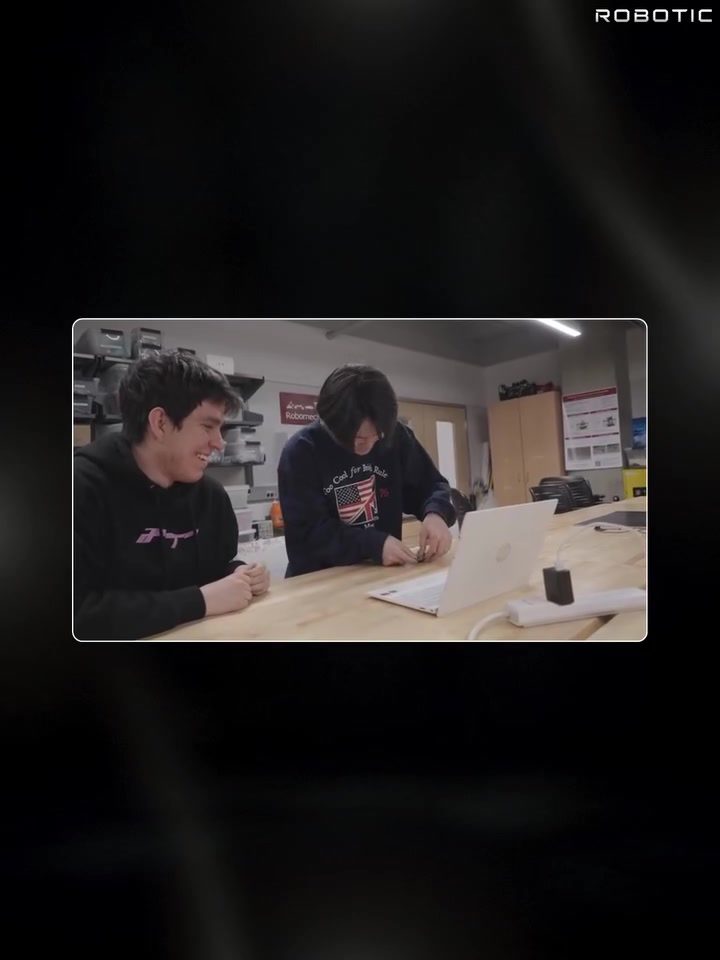
The World’s Smallest Self-Powered Bipedal Robot
The world's smallest self-powered bipedal robot, Zippy, is a groundbreaking innovation developed by researchers at Carnegie Mellon University. Standing less than 1.5 inches tall, Zippy can walk, turn, skip, and climb tiny obstacles completely on its own. This remarkable robot carries its own battery, actuator, and control system, making it the fastest power-autonomous biped. Despite its diminutive size, Zippy has significant potential for applications in search and rescue, industrial inspections, and scientific exploration.
Context / Why this matters
Robotics is a field that continuously pushes the boundaries of what is possible. Miniature robots like Zippy represent a significant advancement in this area. Their ability to navigate and operate in confined spaces where larger robots cannot go opens up new possibilities for a variety of applications. This technology could revolutionize industries by providing more efficient and effective solutions to complex problems.
Main discussion
The Engineering Behind Zippy
Zippy's design highlights the ingenuity of its creators. This tiny robot is equipped with a battery, actuator, and control system, all of which are essential for its autonomous movement. The robot's speed of 10 leg lengths per second is truly impressive. This makes Zippy not only the fastest power-autonomous biped but also a testament to the advancements in miniaturization and robotics engineering.
The robot's locomotion system is inspired by the principles of Lego locomotion and mechanism design. These principles allow for a high degree of maneuverability and control, enabling Zippy to perform various tasks with precision. The design process involves exploring concepts that allow students to create fun and functional robots, pushing the limits of what is achievable in the field.
Applications
Zippy's applications go far beyond just being a marvel of engineering. Its size and capabilities make it an ideal tool for search and rescue operations. For example, Zippy could navigate through collapsed structures to locate survivors in disaster zones. Its mobility allows it to access areas that are too dangerous or inaccessible for humans, providing a crucial advantage in emergency situations.
Industrial inspections also stand to benefit significantly from Zippy's capabilities. The robot can enter tight spaces and inspect machinery or structures without the need for human intervention. This reduces the risk of human injury and the potential for errors, leading to more efficient and safer industrial operations.
Scientific exploration is another area where Zippy shines. Its compact size and autonomous operation make it perfect for exploring environments that are too hazardous or difficult for larger robots or humans to access. Whether it's investigating microbial life in remote locations or exploring the depths of the ocean, Zippy's versatility makes it an invaluable tool for scientific research.
Educational Insights
The development of Zippy and similar robots provides a unique opportunity for students to explore the concepts of robotics. By working on projects like this, students can gain hands-on experience with Lego locomotion and mechanism design. This practical application of theoretical knowledge can inspire young minds to design their own innovative robots, fostering a deeper understanding of engineering principles.
Practical tips
Building Your Own Miniature Robot
If you're inspired by Zippy and want to build your own miniature robot, here are some practical tips to get you started:
-
Start with a Plan: Before you begin, have a clear idea of what you want your robot to do. Whether it's walking, climbing, or performing specific tasks, a well-defined goal will guide your design process.
-
Choose the Right Components: Select components that are suitable for your robot's size and functionality. This includes motors, batteries, sensors, and control systems. Make sure they are compatible and can work together efficiently.
-
Experiment with Designs: Don't be afraid to experiment with different designs and mechanisms. Prototyping is a crucial step in the development process. Use materials like Lego or other modular components to test different configurations.
-
Test and Iterate: After building your initial prototype, test it thoroughly. Identify any issues or areas for improvement and make the necessary adjustments. This iterative process will help you refine your design and achieve the desired functionality.
-
Learn from the Community: Engage with online communities and forums dedicated to robotics. Share your experiences, seek advice, and learn from others who have undertaken similar projects. There's a wealth of knowledge and resources available that can help you along the way.
Important takeaways
Zippy, the world's smallest self-powered bipedal robot, is a remarkable achievement in the field of robotics. Its design and capabilities demonstrate the potential of miniature robots in various applications, from search and rescue to industrial inspections and scientific exploration. By understanding the principles behind Zippy's locomotion and mechanism design, we can inspire future innovations and push the boundaries of what is possible in robotics.
Conclusion
The world's smallest self-powered bipedal robot, Zippy, is a testament to the advancements in robotics engineering. Its ability to navigate and operate in confined spaces makes it an invaluable tool for a variety of applications. From search and rescue to industrial inspections and scientific exploration, Zippy's capabilities open up new possibilities for the future. By exploring the principles behind its design, students and researchers alike can be inspired to create their own innovative robots, driving forward the field of robotics and its real-world applications.
Watch the Reel
Questions readers ask
How does Zippy's speed compare to other small robots?
Zippy is exceptionally fast for its size, reaching speeds of 10 body lengths per second. This makes it one of the fastest self-powered bipedal robots, even among larger models. Its speed is particularly notable in confined or tight spaces.
What makes Zippy's design unique?
Zippy stands out due to its compact size—less than 1.5 inches tall—and its ability to carry its own power source, actuator, and control system. This self-contained design allows it to operate independently, making it highly versatile for various applications.
How might Zippy be used in industrial settings?
Zippy's small size and agility make it ideal for industrial inspections, especially in areas that are difficult or dangerous for humans to access. It can navigate tight spaces and inspect equipment, helping to identify potential issues before they become significant problems.
What advantages does Zippy offer for search and rescue missions?
Due to its small size and remarkable agility, Zippy can access confined areas that larger robots or humans cannot. This capability is invaluable in search and rescue missions, where speed and the ability to navigate through debris are crucial.
Can Zippy perform tasks besides walking?
Yes, Zippy is designed to perform a variety of movements, including walking, turning, skipping, and climbing small obstacles. Its versatile motion capabilities make it adaptable to different environments and tasks.
What kind of power source does Zippy use?
Zippy is equipped with its own battery, which allows it to operate independently without the need for external power sources. This self-contained power system is essential for its autonomous functionality and portability in various settings.
Who developed Zippy, and where is it located?
Zippy was developed by researchers at Carnegie Mellon University, a renowned institution known for its advancements in robotics and technology. The robot is designed and maintained at the university's facilities in Pittsburgh, Pennsylvania.
Related deep dives
Similar reads based on topic and creator.




Recent articles
Fresh deep dives from the latest Reels we unpacked.




Comments
Be the first to comment.