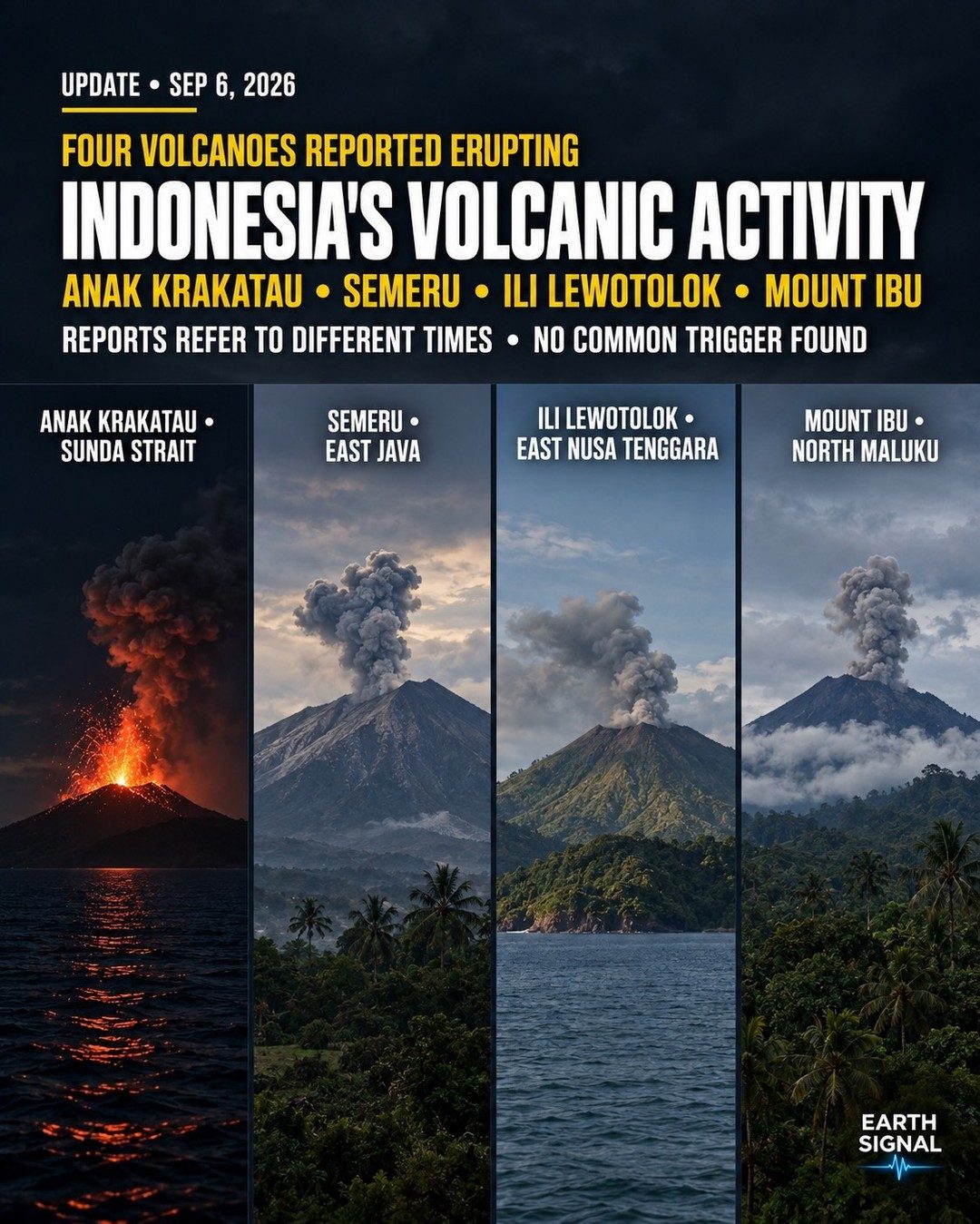
Four Volcanic Eruptions Across Indonesia
Devastating volcanic eruptions across Indonesia have left experts and residents alike in a state of alarm. Four volcanoes, spanning across the Indonesian archipelago, erupted with no apparent common trigger. This suggests that the events are disjointed and not linked by a singular underlying geological process. The volcanoes in question are Anak Krakatau, Semeru, Ili Lewotolok, and Mount Ibu. The eruptions occurred in the Sunda Strait, East Java, East Nusa Tenggara, and North Maluku. These eruptions have led to intense speculations on connections. Indeed, Indonesia sits along the Pacific Ring of Fire, an area known for high volcanic activity, but the simultaneous eruptions over such a wide geographical area are rare and might indicate a larger seismic event. However, there is no current evidence to substantiate that these eruptions are linked by a single event. While experts have yet to determine any correlation, they reinforce the reputation of Indonesia as a hotbed of volcanic activity.
Hotspots in Focus: Anak Krakatau and Semeru
Anak Krakatau, situated in the Sunda Strait, and Semeru, located in East Java, are two of the most infamous volcanoes in Indonesia. Anak Krakatau, the "Child of Krakatoa," is a remnant of the infamous 1883 eruption that devastated the region. Explosive eruptions from Anak Krakatau pose a significant threat to coastal regions due to tsunami generation. Semeru’s frequent eruptions have historically caused major ashfall, disrupting air travel, and agricultural activities. Mount Ibu, in North Maluku, and Ili Lewotolok, in East Nusa Tenggara, are also noteworthy, despite being less famous than the other two. Mount Ibu is known for its persistent volcanic activity, while Ili Lewotolok’s eruptions are less frequent but equally concerning. Together, these eruptions form a grave reminder to authorities and residents of the constant threat that these natural occurrences pose.
Geological Processes and the ‘Earth Signal’
There is much debate over what the recent spate of eruptions might indicate. One possibility is that these disruptions are an intricate interplay of complex geological processes. The ‘Earth Signal’, which accompanied the report, suggests an ongoing seismic readjustment rather than a casual, isolated incident. According to geologists, this could either imply a period of heightened volcanic activity or a temporary spike that will quickly subside. The conceptual explanation for simultaneous but uncorrelated volcanic activities lies in the vast and interconnected web of geological systems. This means that these eruptions are more likely a consequence of Indonesia's unstable geological environment rather than a singular driving force. It underscores the need for ongoing research and preparedness to mitigate the impact of such natural calamities in a country where people live in close proximity to active volcanoes.
Public Safety and Preparedness
The potential for more eruptions in Indonesia demands a robust public safety strategy. The government must prioritize communication, education, and the establishment of emergency protocols. Residents should be informed about the risks and educated on safety measures. Evacuation plans and shelters need to be in place and tested regularly. The government must also enhance monitoring systems to detect early signs of volcanic activity and provide timely warnings. Public safety must be paramount in addressing natural disasters. Ensuring that communication flows smoothly and education about these disasters becomes part of school curriculums would help in preparing the next generation. Frequent emergency drills would build resilience and preparedness. The visual reminder of the earth’s seismic structure served as a stark warning and a call to action for Indonesia. This isn't just about saving lives, it's about safeguarding communities, economies, and the nation’s future.
Watch the Reel
Related deep dives
Similar reads based on topic and creator.
Recent articles
Fresh deep dives from the latest Reels we unpacked.


Comments
Be the first to comment.