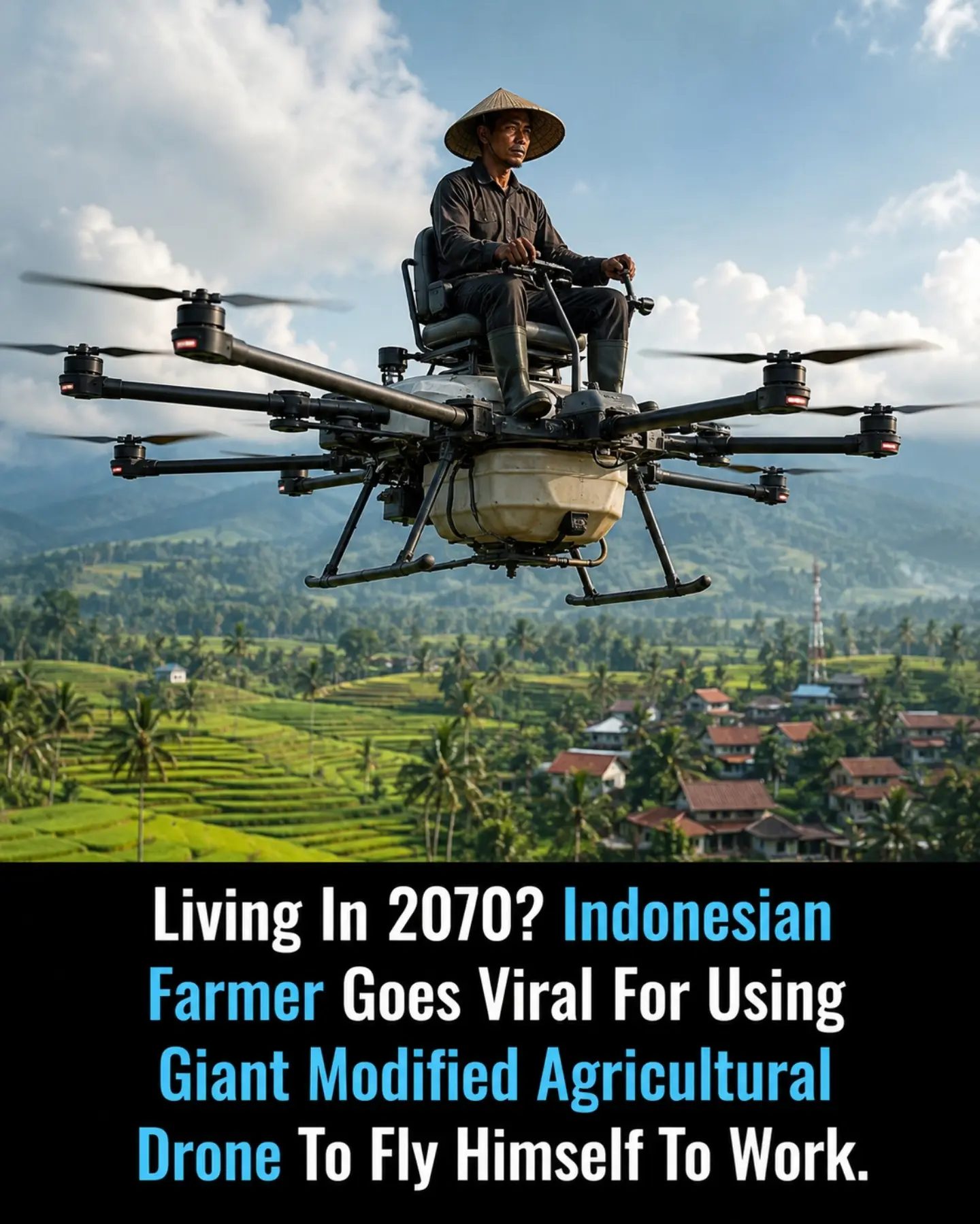
Farmer Using Drones for Transportation in Rice Paddies
In the lush landscapes of Indonesia, a farmer has taken to the skies using a giant modified agricultural drone to navigate the expansive rice paddies. This innovative use of technology showcases a futuristic approach to agriculture and transportation, blending traditional farming practices with cutting-edge technology.
Context: Why This Matters
Indonesia's agricultural sector is vital to its economy and food security. The country is the world's third-largest rice producer, and the vast rice paddies are a cornerstone of its agricultural landscape. Traditional methods of traversing these fields can be time-consuming and physically demanding. Drones, originally designed for various tasks like aerial photography and surveying, are now being repurposed for more practical applications, such as transportation.
Main Discussion
The Rise of Agricultural Drones
Agricultural drones have been gaining traction globally for their ability to perform tasks efficiently and accurately. They are commonly used for crop monitoring, pesticide spraying, and soil analysis. However, the modified drone shown in the video represents a novel application, focusing on human transportation. This drone is not a standard off-the-shelf model but a custom-built contraption designed to carry a farmer across the rice paddies.
Custom-Built for Comfort and Efficiency
The drone in question is described as a 'giant modified agricultural drone,' indicating that it has been significantly altered from its original design. The modifications likely include enhancements for stability, safety, and comfort, ensuring the farmer can traverse the paddy fields with ease. This customization is crucial, as the landscape of rice paddies presents unique challenges compared to urban environments.
Futuristic Vision of Farming
The farmer's use of the drone to fly himself to work suggests a futuristic vision of farming. This approach to transportation could revolutionize agricultural practices by increasing efficiency and reducing the physical strain on farmers. Imagine a scenario where farmers can quickly and easily access different parts of their fields, monitor crops, and perform necessary tasks without the limitations of traditional ground-based transportation.
Safety and Regulation
While the use of drones in agriculture offers numerous benefits, it also raises important considerations regarding safety and regulation. The custom-built nature of the drone highlights the need for stringent safety standards and regulations to ensure the well-being of the users. As drone technology continues to evolve, it is essential for regulatory bodies to establish guidelines that balance innovation with safety.
Environmental Impact
Drones offer a more sustainable alternative to traditional modes of transportation in agricultural settings. By reducing the need for fossil fuel-powered vehicles, drones can help lower carbon emissions and promote eco-friendly practices. This alignment with environmental sustainability makes drones an attractive option for modern agriculture.
Practical Tips
While the use of drones for human transportation in agriculture is still in its nascent stages, there are several practical tips to consider for those interested in adopting this technology:
- Assess Needs and Regulations: Before investing in a custom-built drone, assess your specific needs and familiarize yourself with local regulations. Ensure that the drone complies with safety standards and obtain necessary permits.
- Training and Maintenance: Proper training is essential for safe and effective drone operation. Regular maintenance is also crucial to ensure the drone remains in good working condition.
- Safety Measures: Implement safety protocols, such as regular inspections, emergency protocols, and safety gear, to mitigate risks associated with drone use.
Important Takeaways
The innovative use of drones for transportation in agriculture showcases the potential for technology to transform traditional practices. This futuristic approach offers numerous benefits, including increased efficiency, reduced physical strain, and environmental sustainability. However, it also underscores the importance of safety, regulation, and environmental considerations.
Conclusion
The sight of a farmer navigating rice paddies in a custom-built drone is a glimpse into the future of agriculture. As technology continues to advance, the integration of drones into agricultural practices could revolutionize the industry. By embracing innovative solutions, farmers can enhance efficiency, safety, and sustainability, paving the way for a more progressive and resilient agricultural sector. The journey towards this futuristic vision of farming is already underway, and the possibilities are endless.
Watch the Reel
Questions readers ask
What inspired the Indonesian farmer to use a drone for commuting across rice paddies?
The farmer was motivated by the challenges of traversing expansive rice fields using traditional methods, which can be time-consuming and physically demanding. By using a giant modified agricultural drone, the farmer aimed to merge traditional farming practices with advanced technology to improve efficiency.
How does the use of a drone benefit rice farming in Indonesia?
Drones can cover large areas quickly, reducing the time and effort required to monitor and manage rice paddies. This innovation allows farmers to tend to their crops more efficiently, potentially increasing productivity and yield, while also mitigating the physical strain of traditional methods.
What kind of drone is the Indonesian farmer using?
The farmer is using a giant modified agricultural drone, which was initially designed for tasks like aerial photography and surveying. This drone has been adapted for transportation, enabling the farmer to commute across vast rice paddies efficiently.
Can other farmers in Indonesia adopt this drone technology for their rice paddies?
While the concept is innovative, widespread adoption depends on several factors, including cost, availability of modified drones, and the specific needs of individual farms. It is a promising development that other farmers could explore, particularly those with expansive fields.
What are the potential challenges of using drones for farming in Indonesia?
Challenges include the initial cost of acquiring and maintaining drones, as well as ensuring the technology is reliable and safe in varying weather conditions and terrains. Additionally, farmers may need to adapt to new skills for operating and integrating drone technology into their daily routines.
How does drone technology impact the future of agriculture in Indonesia?
Drone technology brings a new dimension to agriculture, offering efficient ways to manage and monitor crops. This could lead to increased productivity, better resource management, and potentially higher yields. As more farmers adopt drone technology, it could catalyze broader changes in farming practices and infrastructure.
Related deep dives
Similar reads based on topic and creator.




Recent articles
Fresh deep dives from the latest Reels we unpacked.




Comments
Be the first to comment.