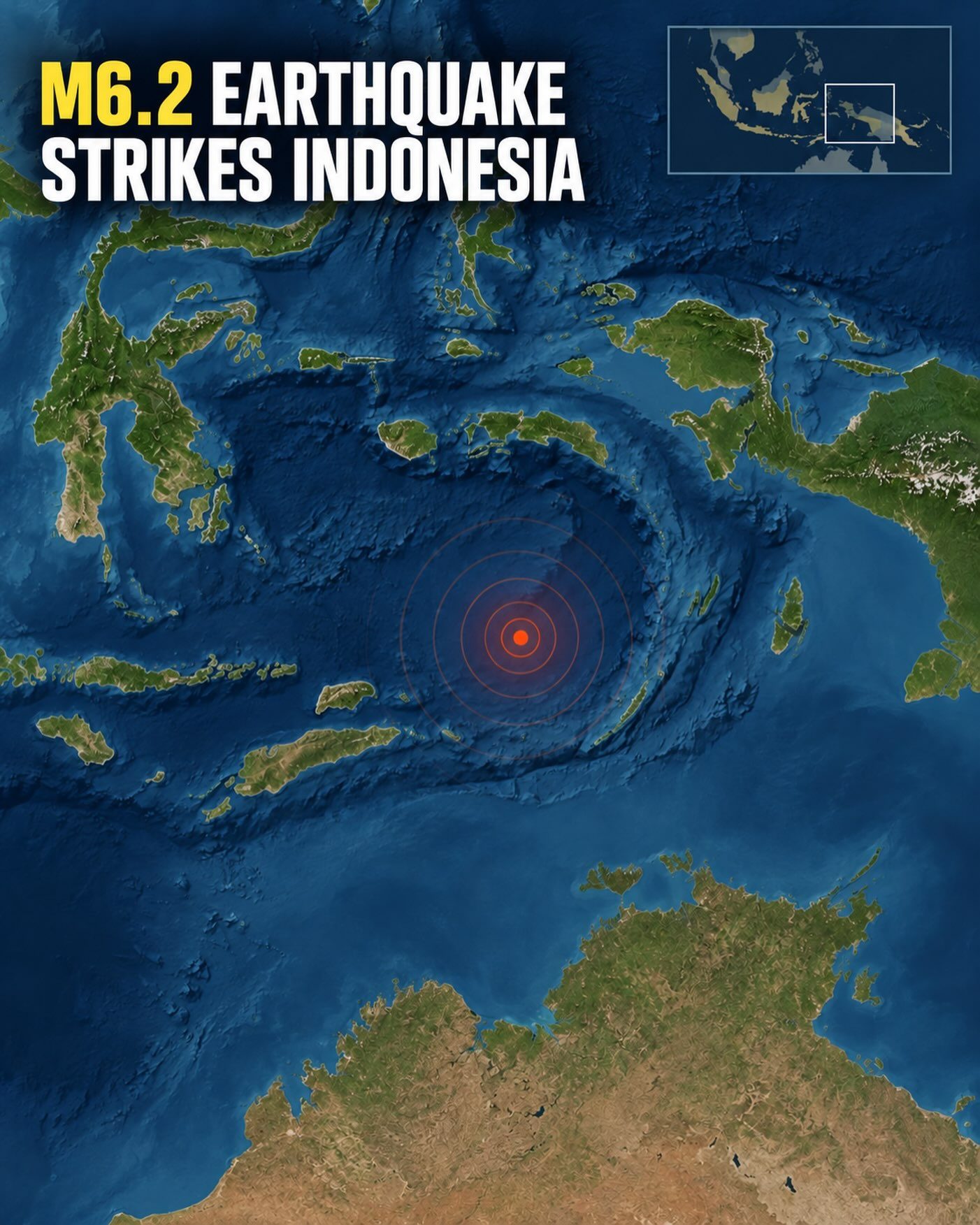
Focal Earthquake
A 6.2 magnitude earthquake struck Indonesia. This seismic event is more than just numbers and locations. It underscores the volatile nature of Indonesia, which lies within the Pacific Ring of Fire, a hotspot for seismic activity. This recent earthquake introduces a sense of urgency in understanding the region’s seismic landscape, and the potential cascading impacts for residents. While the epicenter’s exact location remains ambiguous, the seismic waves’ reach could extend to neighbouring communities and countries. The recent 6.2 magnitude earthquake would have sent tremors reverberating not only through the ground but also through Indonesia's cultural and economic fabric. The seismic impact rippled across Indonesia, likely displacing residents and damaging infrastructure. The country's disaster management agencies would have swiftly mobilized resources, deploying emergency crews and coordinating evacuation plans. Medical facilities would have braced for potential influxes of casualties, while relief organizations would have geared up to provide essential supplies.
The Earthquake's Epicenter
The affected region of Indonesia covers underdeveloped areas, and have high densities of population. An earthquake of this magnitude is known to set off aftershocks, and they pose further risk to an already vulnerable population. More so, the earthquake could also affect the tourism industry, as visitors may be deterred from visiting regions deemed unstable. Indonesia’s economy, heavily reliant on tourism and agriculture, would be challenged to recover. The Pacific Ring of Fire stretches across 40,000 kilometers, encompassing regions from the southern tip of South America to Japan, Indonesia, New Zealand, and beyond. It is dotted with around 452 volcanoes, or roughly 75% of the world’s active and dormant volcanoes. This specific earthquake highlights the broader seismic risks the region faces. The region straddles vast oceanic trenches, fiery volcanoes, and seismic faults, making it a hotbed of dynamic geological activity.
Government Response
Indonesian disaster management bodies would recognise the potential for escalating risks; protective measures enacted would vary based on specific earthquake parameters. The government’s response to seismic disasters extends beyond immediate relief. Long-term strategies focus on resilient infrastructure development and comprehensive public education. Tax breaks and other incentives could also encourage businesses to invest in earthquake-resistant technologies. Government commitments are pivotal in mitigating the impact of seismic events. Disaster response strategies encompass rapid intervention, evacuation protocols, and aid distribution. However, preparedness is just one side of the coin. Building infrastructure that withstands seismic activity and fostering a prepared community prepares the region to weather future storms.
Preparing for the Future
Indonesia’s resilience efforts are ongoing, aimed at mitigating risks and ensuring faster recovery. Incentives and disaster management strategies are where the fight against seismic disasters is won. Long term, this means fostering a proactive culture of disaster preparedness, reinforcing infrastructure, and ensuring emergency services remain efficient and on call.
Watch the Reel
Related deep dives
Similar reads based on topic and creator.


Recent articles
Fresh deep dives from the latest Reels we unpacked.



Comments
Be the first to comment.