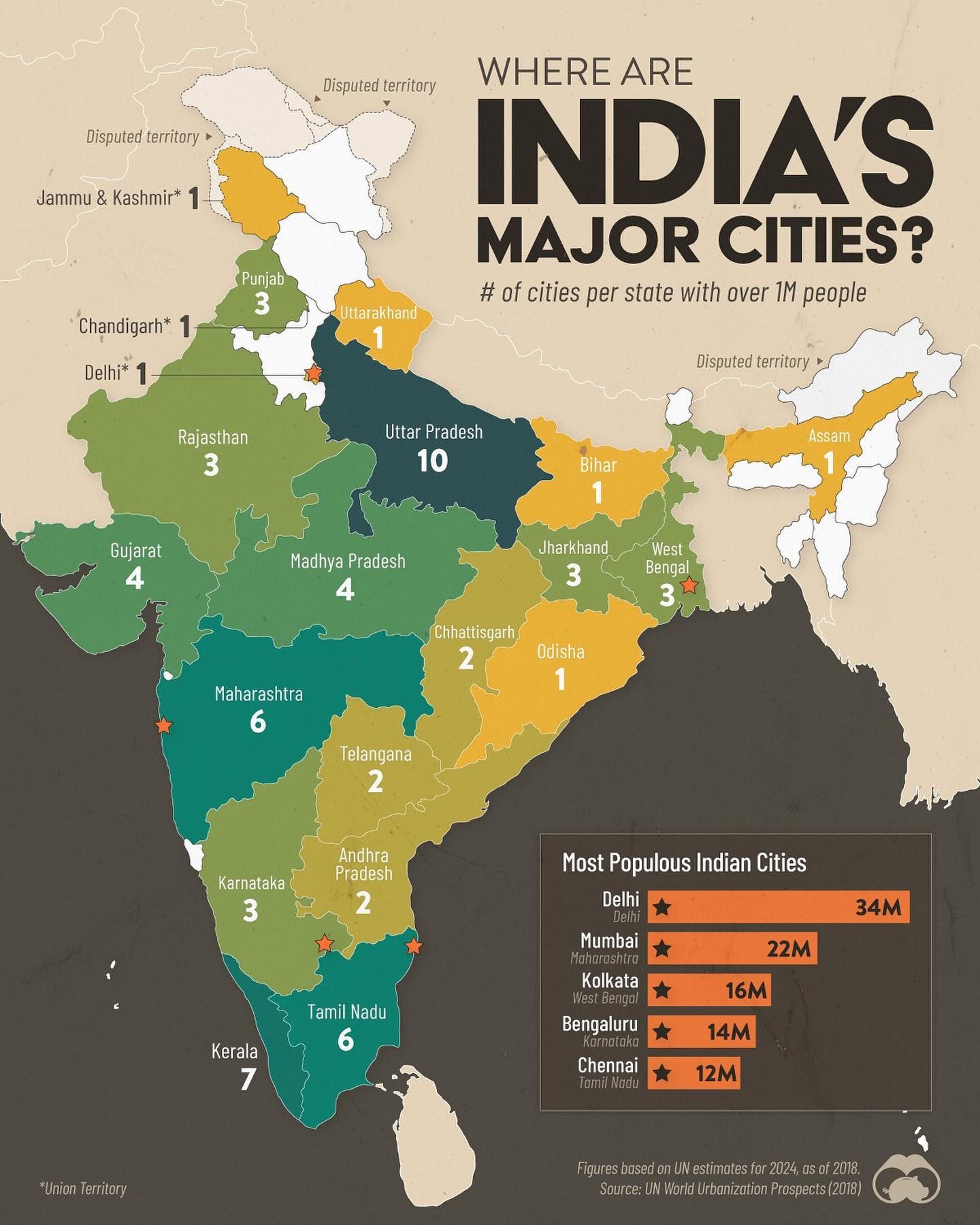
Indian Cities with Over One Million Residents
India's urban landscape is diverse and complex, with significant variations in population density and city size across different states. Ten Indian states do not have a single city with a population of one million or more. In stark contrast, Uttar Pradesh, India's most populous state, boasts ten cities with populations exceeding one million. This disparity highlights the uneven distribution of urban populations across the country. Understanding this distribution is crucial for urban planning, resource allocation, and infrastructure development.
Context / Why this matters
The population distribution in Indian cities is not merely a demographic curiosity; it has far-reaching implications for economic development, infrastructure, and public services. Cities with large populations often serve as economic hubs, driving national growth and innovation. However, they also face significant challenges in terms of housing, transportation, healthcare, and public safety. The varying numbers of large cities in different states can influence policy decisions and resource allocation, affecting everything from urban planning to healthcare delivery.
Main discussion
Urban Population Distribution in India
According to the latest data from the UN World Urbanization Prospects, the distribution of cities with over one million residents in India is highly uneven. States like Uttar Pradesh lead the way with ten cities exceeding this population threshold. In contrast, states like Uttarakhand, Punjab, and Bihar each have only one city with a population of over one million. This disparity underscores the need for targeted urban development strategies that address the unique challenges and opportunities of each region.
Most Populous Cities in India
The most populous cities in India, as highlighted in the infographic, are Mumbai, Delhi, and Chennai. Mumbai, with a population of approximately 34 million, is the most populous city in the country. Delhi follows with around 16 million residents, and Chennai, with a population of about 12 million, is also a major urban center.
These cities are not only densely populated but also serve as key economic and cultural hubs. Mumbai is renowned for its financial and entertainment industries, while Delhi is the political heart of the nation. Chennai is celebrated for its contributions to technology, automotive, and healthcare sectors.
The latest estimates place the population of these cities based on UN data from 2018. The projections for 2024 indicate continued growth, which will necessitate enhanced infrastructure and urban management strategies.
Challenges and Opportunities
Cities with large populations face numerous challenges. Rapid urbanization often outpaces the development of essential infrastructure, leading to issues like overcrowding, traffic congestion, and inadequate public services. Additionally, the concentration of people in urban areas can strain resources such as water, electricity, and healthcare facilities.
However, large cities also present significant opportunities. They are centers of economic activity, innovation, and cultural diversity. By leveraging these strengths, cities can drive national development and improve the quality of life for their residents. Effective urban planning and policy-making are essential to capitalize on these opportunities while mitigating the challenges.
The Role of Urban Planning
In order to address the disparities and challenges in urban population distribution, effective urban planning is crucial. This involves comprehensive strategies that consider the unique needs and resources of each urban area. Key areas of focus include housing, transportation, public services, and environmental sustainability. Policies that promote inclusive growth and equitable resource distribution can help ensure that the benefits of urbanization are shared widely.
Efficient public transportation systems, affordable housing, and accessible healthcare are fundamental to supporting the growing urban populations. Cities must also prioritize environmental sustainability, implementing policies that reduce pollution, conserve resources, and promote green spaces.
The Impact of Urbanization on Rural Areas
The concentration of large populations in urban areas also has implications for rural development. Many rural areas face issues such as depopulation, lack of economic opportunities, and limited access to public services. Balanced urban and rural development strategies can help address these disparities, promoting economic growth and improving the quality of life in both urban and rural regions. This includes initiatives that support rural-urban migration, such as job creation, infrastructure development, and access to public services.
Practical tips
For Urban Planners
-
Data-Driven Decisions: Utilize demographic data to inform urban planning strategies. Understanding the distribution and growth of urban populations can help in developing targeted policies and initiatives.
-
Inclusive Growth: Promote policies that ensure equitable access to resources and opportunities for all residents, regardless of their socio-economic background.
-
Public Participation: Engage residents in the planning process to ensure that urban development strategies meet the needs and aspirations of the community.
For Policymakers
-
Resource Allocation: Prioritize resource allocation to areas with high population density, ensuring that essential services and infrastructure are adequately funded and maintained.
-
Inter-State Collaboration: Encourage collaboration between states to share best practices and resources in urban development.
-
Sustainable Development: Promote sustainable development practices that prioritize environmental conservation and resource efficiency.
Important takeaways
- The distribution of cities with over one million residents in India is highly uneven, with significant variations across different states.
- Effective urban planning and policy-making are crucial for addressing the challenges and leveraging the opportunities presented by large urban populations.
- Comprehensive strategies that consider the unique needs and resources of each urban area can promote inclusive growth and equitable resource distribution.
- Balanced urban and rural development strategies are essential for addressing disparities and promoting economic growth and improved quality of life in both urban and rural regions.
Conclusion
The population distribution in Indian cities highlights the need for targeted urban development strategies that address the unique challenges and opportunities of each region. By leveraging the strengths of large cities and promoting inclusive growth, India can drive national development and improve the quality of life for its residents. Effective urban planning, comprehensive policy-making, and balanced rural-urban development strategies are essential to achieving this goal. Understanding the varying numbers of large cities in different states can inform policy decisions and resource allocation, ultimately shaping a more equitable and sustainable future for India.
Watch the Reel
Questions readers ask
Which Indian state has the most cities with over one million residents?
Uttar Pradesh has the highest number of cities with over one million residents, totaling ten. The large population concentrated in fewer cities is also true for other populous states like Maharashtra and Tamil Nadu.
How many Indian states do not have any cities with a population of one million or more?
There are ten Indian states that do not have a single city with a population of one million or more. These states are typically less urbanized and have lower population densities.
What are the implications of having a large number of populous cities in a state?
Having a large number of populous cities in a state can lead to significant economic growth but also presents challenges in infrastructure and resource management. These cities often become hubs of economic activity, attracting businesses and investments, but they also require substantial planning to ensure adequate public services and transportation.
Which states are likely to experience the most urban growth in the coming years?
states like Uttar Pradesh, Bihar, and Madhya Pradesh, which already have a high population density and a large rural population, are likely to experience the most urban growth. These states are expected to see a significant increase in their urban population as more people move to cities for better opportunities.
How does the population distribution in India affect urban planning?
The uneven distribution of urban populations in India necessitates tailored urban planning strategies. Cities with high population densities may require more robust infrastructure and resource management plans, while less populous states might focus on developing smaller urban centers and improving rural connectivity.
What role do large cities in India play in the country's economic development?
Large cities in India are critical drivers of economic development, contributing significantly to the country's GDP. They serve as centers for business, finance, and industry, attracting investments and talent. However, the concentration of economic activity in these cities also creates challenges in terms of income inequality and regional disparities.
Related deep dives
Similar reads based on topic and creator.

Recent articles
Fresh deep dives from the latest Reels we unpacked.




Comments
Be the first to comment.