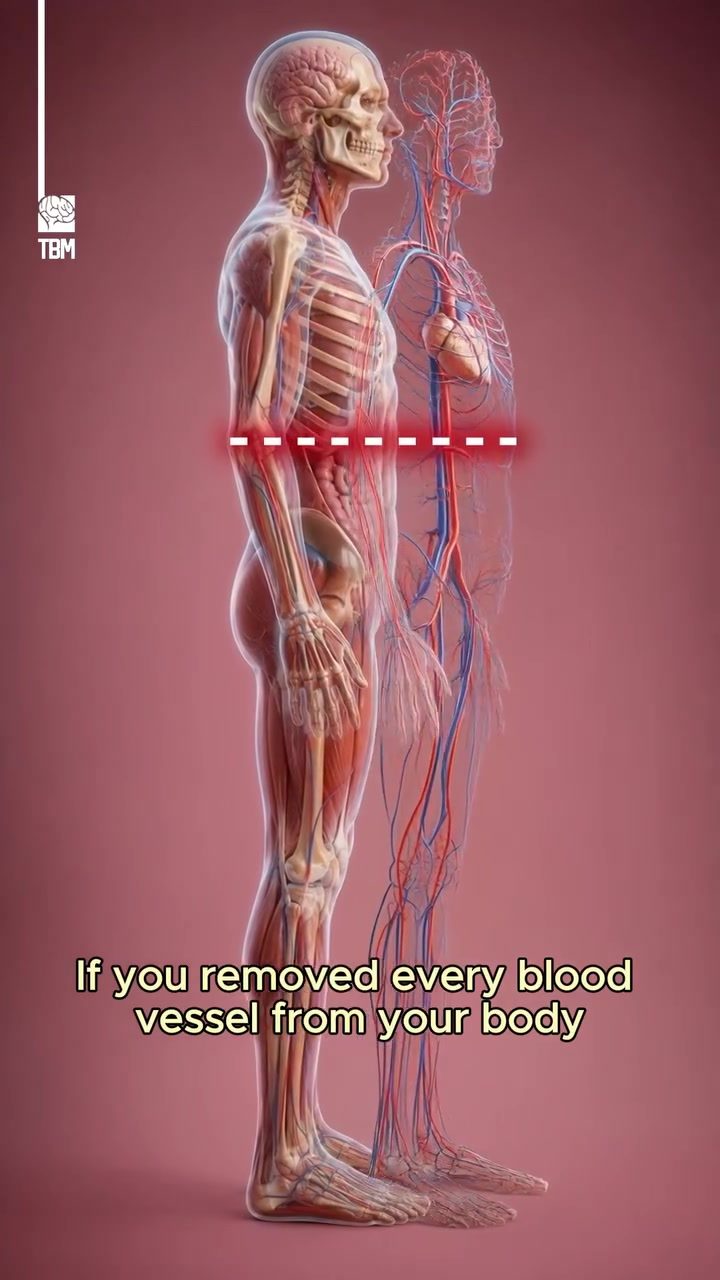
Human Circulatory System
Your body is an astonishing marvel of intricate systems, and none is more vital or extensive than the human circulatory system. This network of arteries, veins, and microscopic capillaries reaches almost every tissue in the body, totaling an incredible length. If you were to extract every blood vessel and line them up end to end, the line would stretch far and wide, crossing continents and circling the globe more than twice.
Why This Matters
Understanding the vastness of the human circulatory system provides insight into the body's remarkable efficiency and the critical role of blood vessels in maintaining life. This network is essential for transporting nutrients, oxygen, and hormones throughout the body, as well as removing waste products. The sheer length and complexity of the circulatory system highlight its importance in sustaining overall health.
The Extent of the Circulatory System
Arteries, Veins, and Capillaries
The circulatory system is composed of three main types of blood vessels:
- Arteries: These are the vessels that carry blood away from the heart to the rest of the body. They are robust and elastic, capable of withstanding the high pressure of blood flow.
- Veins: Veins transport blood back to the heart from various parts of the body. They are less muscular than arteries and have valves to prevent the backflow of blood.
- Capillaries: These are the smallest and most numerous blood vessels, connecting arteries and veins. Capillaries facilitate the exchange of oxygen, nutrients, and waste between the blood and surrounding tissues.
The Microscopic Capillaries
Microvascular networks are microscopic blood vessels, primarily composed of capillaries. These tiny vessels are found in nearly every tissue and organ, allowing for the efficient exchange of gases, nutrients, and waste products. Despite their small size, capillaries make up a significant portion of the total length of blood vessels in the body. The extensive network of capillaries is crucial for maintaining the health and function of tissues.
The Circulatory System's Journey
Crossing Continents
If you were to extract every blood vessel from your body and lay them end to end, the journey would be astonishing. The line would stretch across the United States, cross the Pacific Ocean past Japan, and continue through Asia and Europe, eventually returning to the starting point. This journey would cover thousands of kilometers, circling the Earth more than twice.
The Global Circuit
Imagine the blood vessels as a global circuit, weaving through every tissue and organ in the body. This extensive network ensures that every cell receives the oxygen and nutrients it needs to function properly. The circulatory system's efficiency is paramount to the body's overall health and well-being.
Practical Tips for Maintaining a Healthy Circulatory System
While the circulatory system is intricate and complex, there are several practical steps you can take to maintain its health:
Regular Exercise
Regular physical activity promotes blood circulation and helps maintain the health of the heart and blood vessels. Aim for at least 150 minutes of moderate-intensity or 75 minutes of vigorous-intensity aerobic activity per week.
Balanced Diet
A balanced diet rich in fruits, vegetables, whole grains, and lean proteins supports overall cardiovascular health. Limit your intake of processed foods, sugars, and unhealthy fats.
Stay Hydrated
Proper hydration is essential for maintaining blood volume and ensuring efficient circulation. Aim to drink at least 8 glasses of water per day, adjusting based on your activity level and environment.
Manage Stress
Chronic stress can negatively impact the circulatory system. Practice stress management techniques such as meditation, deep breathing, or yoga to promote relaxation and overall well-being.
Regular Check-ups
Regular medical check-ups can help detect any issues with your circulatory system early. Consult with healthcare professionals to monitor blood pressure, cholesterol levels, and other key indicators of cardiovascular health.
Avoid Smoking
Smoking damages the blood vessels and increases the risk of heart disease. Quitting smoking can significantly improve the health of your circulatory system and overall well-being.
Important Takeaways
The human circulatory system is a complex and vital network that plays a crucial role in sustaining life. Key takeaways include:
- The circulatory system is composed of arteries, veins, and capillaries, with capillaries making up a significant portion of the total length.
- The extensive network of blood vessels ensures efficient delivery of oxygen, nutrients, and hormones to every tissue and organ in the body.
- Maintaining a healthy lifestyle, including regular exercise, a balanced diet, proper hydration, stress management, regular check-ups, and avoiding smoking, is essential for supporting cardiovascular health.
Conclusion
The human circulatory system is a marvel of engineering, with an intricate network of blood vessels spanning thousands of kilometers. Understanding its vastness and complexity provides insight into the body's remarkable efficiency and the critical role of blood vessels in maintaining life. By taking practical steps to maintain a healthy circulatory system, you can support overall well-being and ensure that this vital network continues to function optimally.
Watch the Reel
Questions readers ask
How long are human blood vessels?
Human blood vessels, when laid out end-to-end, stretch an incredible 60,000 miles (96,560 kilometers). This length is enough to circle the globe more than twice.
What is the human circulatory system?
The human circulatory system is a complex network of arteries, veins, and capillaries. This system transports essential nutrients, oxygen, and hormones throughout your body and aids in removing waste products.
What are the primary functions of the circulatory system?
The circulatory system is vital for transporting oxygen and nutrients to all parts of the body, including microscopic capillaries in tissues. It also ensures hormonal communication and waste removal, highlighting its crucial role in maintaining overall health and bodily functions.
What is the significance of the length of human blood vessels?
The vast length of blood vessels in the human body is indicative of the intricate network that supports life. This extensive system ensures that all tissues receive the necessary oxygen and nutrients and that waste products are efficiently removed.
How are the arteries and veins that make up the circulatory system distributed in the body?
Arteries and veins form an interconnected network that spans the entire body, reaching almost every tissue. This extensive distribution ensures that all body parts receive the necessary oxygen and nutrients, highlighting the efficiency of the circulatory system.
Related deep dives
Similar reads based on topic and creator.




Recent articles
Fresh deep dives from the latest Reels we unpacked.




Comments
Be the first to comment.