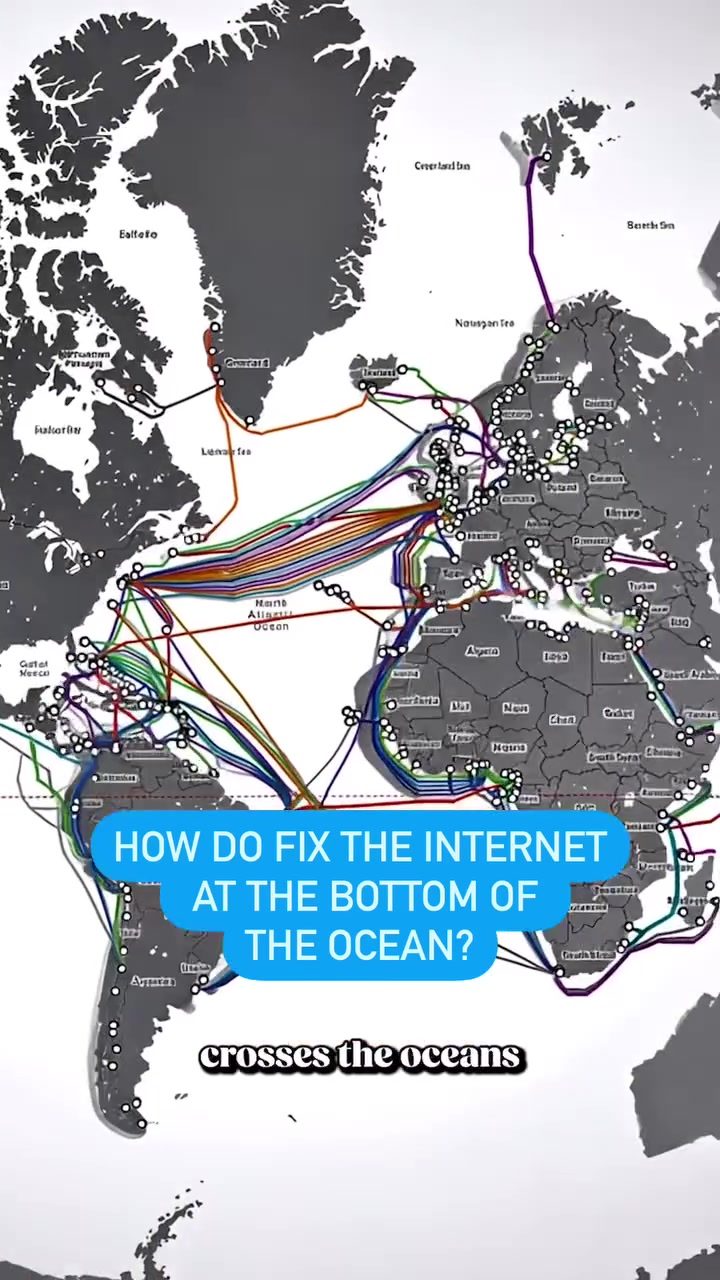
Understanding the Underwater Internet: The Role of Submarine Cables
The internet is a global network that relies on an extensive infrastructure, much of which is hidden beneath the oceans. Submarine cables, often only as thick as a Sharpie, carry an astonishing 99% of global internet traffic. These cables are critical for maintaining our digital connectivity, but how do they withstand the harsh conditions of the deep sea, and what happens when they break?
Why This Matters
Submarine cables are the backbone of global communication. They enable the rapid transfer of data between continents, supporting everything from email and social media to financial transactions and online streaming. Understanding how these cables work and how they are maintained is essential for appreciating the complexity and reliability of our digital infrastructure.
The Science Behind Submarine Cables
The Structure of Submarine Cables
Submarine cables are engineered to withstand the extreme pressures and conditions of the deep sea. They are typically composed of multiple layers:
- Core: At the center of the cable are glass fibers that carry the data. These fibers use light to transmit information at incredible speeds.
- Protection Layers: Surrounding the core are layers of protective materials designed to shield the fibers from physical damage and environmental hazards. These layers include copper or aluminum tubes, steel wires, and polymeric materials.
Surviving the Deep Sea
The deep sea presents numerous challenges for submarine cables. These cables must endure:
- Shark Bites: Sharks occasionally bite into cables, which can cause significant damage.
- Earthquakes: Seismic activity can shift the sea floor, putting cables at risk of being severed.
- Fishing Trawlers: These vessels can accidentally snag and break cables.
- Crushing Pressure: At depths of over 8,000 feet (about 2.5 times the height of the Burj Khalifa), the water pressure is immense. The cables must be designed to withstand this pressure without breaking.
Despite these challenges, submarine cables are remarkably resilient. They are designed to operate continuously for decades, ensuring reliable internet connectivity around the world.
Repairing Submarine Cables
When a cable is damaged, repairs are carried out by specialized ships equipped with robotic systems. Here's a step-by-step overview of the repair process:
- Locate the Damage: The first step is to identify the location of the break. This can be done using acoustic signals or by deploying underwater vehicles.
- Cut and Haul: A robot cuts the damaged section of the cable and hauls it up to the surface.
- Splice a New Section: A fresh piece of cable is spliced in, ensuring that the data transmission pathway is restored.
- Test and Deploy: The repaired cable is tested to ensure it is functioning correctly before being brought back down to the seafloor.
The Importance of Backup Routes
Reliance on a single cable can be risky. If a cable breaks, data transmission can be disrupted for hours or even days. Backup routes are essential to maintain connectivity. When one cable goes down, data is rerouted through other cables, acting as a detour. This ensures that while the connection may be slower, it stays operational.
Practical Tips for Ensuring Reliable Internet Connectivity
For Individuals
- Use Multiple Routers: Having multiple routers or access points can help maintain connectivity even if one router fails.
- Keep Your Equipment Updated: Regularly update your router firmware and other networking equipment to ensure they are operating efficiently and securely.
- Monitor Signal Strength: Use tools to monitor your Wi-Fi signal strength and identify any weak spots in your home or office.
For Businesses
- Redundant Connections: Invest in redundant internet connections to ensure that your business remains operational even if one connection fails.
- Regular Maintenance: Schedule regular maintenance for your networking equipment to prevent potential issues.
- Backup Power Supply: Ensure that your network infrastructure has a reliable backup power supply to keep it running during power outages.
Important Takeaways
Submarine cables play a vital role in maintaining global internet connectivity. They are designed to withstand the harsh conditions of the deep sea but can still be damaged by various factors. When a cable breaks, specialized repair processes ensure that connectivity is restored as quickly as possible. Backup routes are crucial for maintaining service during repairs, highlighting the importance of redundancy in our digital infrastructure.
Conclusion
Understanding the intricacies of submarine cables provides a deeper appreciation for the complex infrastructure that supports our digital world. While these cables are often overlooked, they are essential for maintaining the reliability and speed of our internet connections. As our reliance on digital technology continues to grow, the importance of these underwater data highways will only increase.
Watch the Reel
Questions readers ask
Why are submarine cables so important for the internet?
Submarine cables are vital because they carry 99% of global internet traffic. They enable rapid data transfer between continents, supporting various online activities from communication to financial transactions.
How do submarine cables withstand harsh conditions under the sea?
These cables are designed to endure extreme pressures and temperatures. They are also equipped with protective layers to prevent damage from underwater hazards. Shark bites, for example, are accounted for in the design of the cables.
What are the most common causes of damage to submarine cables?
The most common causes of damage include natural hazards like earthquakes, fishing activities that accidentally cut the cables, and human activities such as ship anchors. Marine life, such as sharks, can also occasionally cause damage.
What technologies are used to repair submarine cables?
Repairing submarine cables involves specialized ships equipped with advanced tools. Remotely Operated Vehicles (ROVs) and other underwater robots are used to locate and repair the damaged sections. The process can take several weeks, depending on the location and extent of the damage.
Why do submarine cables often run along the shortest paths between landmasses?
Submarine cables run along the shortest paths to minimize latency, which is the delay before a transfer of data begins following an instruction for its transfer. This ensures faster data transmission and better performance for users.
How often do submarine cables need to be repaired?
The frequency of repairs varies, but it can range from a few times a year to several times a month, depending on the region and the number of cable systems in operation. Maintenance and repair schedules are planned to minimize disruptions to internet services.
Related deep dives
Similar reads based on topic and creator.


Recent articles
Fresh deep dives from the latest Reels we unpacked.




Comments
Be the first to comment.