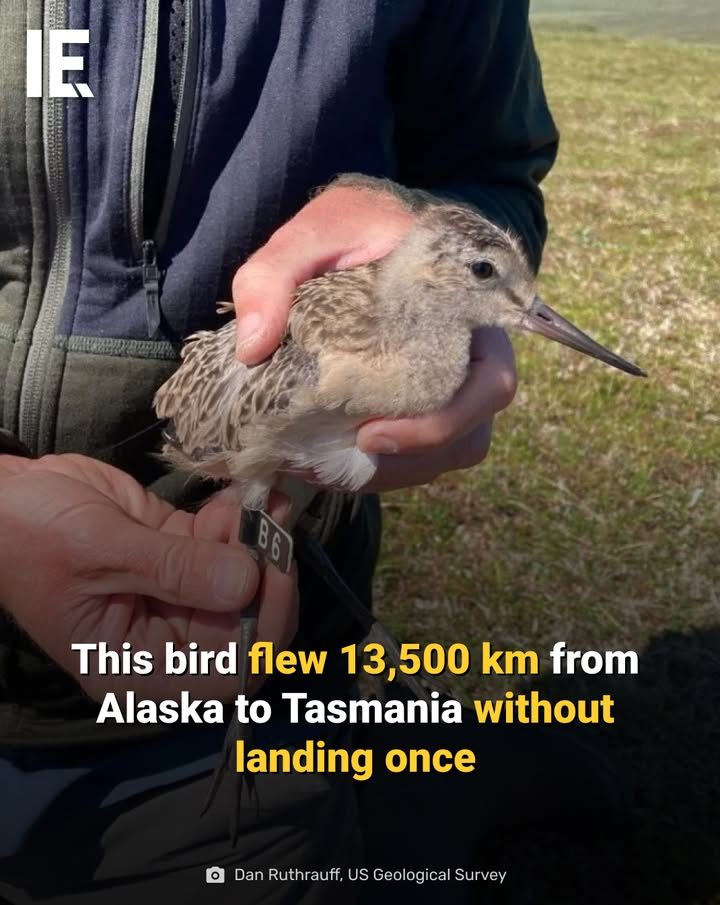
Bird Migration: The Incredible Journey of the Bar-Tailed Godwit
The bar-tailed godwit holds the remarkable record for the longest nonstop bird migration, an extraordinary feat that involves flying about 13,560 kilometers from Alaska to Tasmania in roughly 11 days. This journey is not just about distance; it is also about endurance, as the bird does not stop for food, water, or rest throughout its voyage.
Why This Matters
Understanding the migration patterns and adaptations of birds like the bar-tailed godwit offers valuable insights into the natural world. These migrations are a testament to the incredible resilience and adaptability of wildlife, and they highlight the complex ecological systems that support such long-distance journeys. By studying these migrations, scientists can better understand avian biology, behavior, and the broader impacts of environmental changes on migratory species.
Main Discussion
The Journey
The bar-tailed godwit's migration is a staggering accomplishment. The journey from Alaska to Tasmania spans approximately 11 days without a single stop. This nonstop flight requires meticulous preparation and extraordinary physiological adaptations.
Preparations for the Flight
Before embarking on this epic journey, bar-tailed godwits build up massive fat reserves. These reserves serve as their primary energy source during the flight, allowing them to sustain the long journey without stopping for food. In addition, these birds shrink some of their internal organs to reduce weight and energy use, an extreme adaptation that underscores their commitment to this migration.
Physiological Adaptations
One of the most fascinating adaptations of the bar-tailed godwit is its ability to shrink internal organs. By doing so, the bird reduces its overall weight, conserving energy to power its flight across the Pacific. This adaptation is a remarkable example of how animals evolve to meet the demands of their environment and lifestyle.
Tracking and Research
The remarkable journey of the bar-tailed godwit was made possible through the use of satellite tracking. By tagging the bird with a satellite device, researchers from the US Geological Survey, including Dan Ruthraff, were able to monitor its movements and gather detailed data on the migration route, speed, and duration. This technology has revolutionized the study of bird migration, providing unprecedented insights into the behavior and physiology of migratory birds.
Satellite tracking has been crucial in understanding the migratory patterns of bar-tailed godwits. Scientists have learned that these birds utilize specific migratory routes and take advantage of favorable winds and currents to conserve energy during their journey. The data collected from these studies help in formulating protective measures and conservation strategies for migratory birds.
Climate and Environmental Factors
The successful completion of such a long journey is contingent upon several environmental factors, including favorable winds and ocean currents. The bar-tailed godwit typically departs from Alaska in the fall, taking advantage of prevailing winds that can push it along its route to Tasmania. This strategic timing maximizes energy efficiency and minimizes the risk of exhaustion.
Conservation Efforts
Understanding the migration patterns of birds like the bar-tailed godwit is essential for conservation efforts. These birds face numerous threats, including habitat loss, climate change, and environmental degradation. By studying their migratory routes and behavior, scientists and conservationists can implement measures to protect these birds and the ecosystems they rely on.
Practical Tips
- Support Conservation Organizations: Contribute to organizations that work on migratory bird conservation. Your support helps in funding research and protective measures for these birds.
- Educate Others: Share information about the bar-tailed godwit and other migratory birds with friends, family, and community members. Raising awareness can foster a greater appreciation for these remarkable creatures and their conservation needs.
- Reduce Environmental Impact: Make sustainable choices in your daily life to minimize your carbon footprint and contribute to a healthier environment for migratory birds and other wildlife.
Important Takeaways
- The bar-tailed godwit's migration from Alaska to Tasmania is a testament to the incredible endurance and adaptability of migratory birds.
- Birds like the bar-tailed godwit employ physiological adaptations, such as shrinking internal organs, to conserve energy during long flights.
- Satellite tracking has played a crucial role in understanding the migratory patterns of bar-tailed godwits, providing valuable data for conservation efforts.
- Environmental factors, including favorable winds and currents, are essential for the successful completion of the migration.
- Conservation efforts, supported by scientific research and public awareness, are vital for protecting migratory birds and their habitats.
Conclusion
The journey of the bar-tailed godwit from Alaska to Tasmania is a captivating example of the extraordinary capabilities of migratory birds. Through meticulous preparation, physiological adaptations, and the use of advanced tracking technology, these birds complete one of the most remarkable migrations in the avian world. Understanding and preserving the migratory patterns of birds like the bar-tailed godwit is crucial for their survival and the health of the ecosystems they traverse. By appreciating and supporting the study of these incredible journeys, we can contribute to the conservation of these remarkable creatures and the natural world they inhabit.
Watch the Reel
Questions readers ask
What is the longest non-stop flight recorded for a bird?
The longest non-stop flight ever recorded is that of the bar-tailed godwit, which flies approximately 13,500 km from Alaska to Tasmania without stopping for food, water, or rest. This incredible journey showcases the bird's remarkable resilience and endurance.
How long does it take for a bar-tailed godwit to complete its migration from Alaska to Tasmania?
The bar-tailed godwit completes its migration from Alaska to Tasmania in roughly 11 days. This is an extraordinary feat of endurance, given that the bird does not stop for any food, water, or rest throughout the journey.
What physiological adaptations allow the bar-tailed godwit to undertake such a long journey?
The bar-tailed godwit has several physiological adaptations that enable it to undertake such a long journey. These include the ability to store large amounts of fat to fuel the trip, and changes in metabolism that conserve energy and water. Additionally, the birds have the ability to convert protein into energy to survive such a long journey.
What role do migrations play in the lives of birds like the bar-tailed godwit?
Migrations are crucial for the survival and reproduction of birds like the bar-tailed godwit. These long-distance journeys allow the birds to take advantage of seasonal resources, such as food and breeding grounds, in different parts of the world, and to avoid harsh winter conditions.
How do scientists track the migration patterns of birds like the bar-tailed godwit?
Scientists use various methods to track the migration patterns of birds, including satellite tagging. By attaching small satellite transmitters to the birds, researchers can monitor their movements and gather data on their migration routes, stopover sites, and other important aspects of their journeys.
What can we learn from studying the migration of the bar-tailed godwit?
Studying the migration of the bar-tailed godwit provides valuable insights into the natural world. It highlights the incredible resilience and adaptability of wildlife, and the complex ecological systems that support such long-distance journeys. Additionally, understanding these migrations can help in conservation efforts and in preserving the habitats that these birds depend on.
What is the godwit migration route?
The godwit migration route for the bar-tailed godwit is from Alaska to Tasmania, covering approximately 13,500 km. The birds fly directly from their breeding grounds in Alaska across the Pacific Ocean, and onto the southern hemisphere, landing in Tasmania without stopping for food, water, or rest along the way.
Related deep dives
Similar reads based on topic and creator.




Recent articles
Fresh deep dives from the latest Reels we unpacked.




Comments
Be the first to comment.