Anti-inflammatory Foods
Incorporating anti-inflammatory foods into your daily diet can significantly support recovery, joint health, heart health, and overall wellness. Small, consistent changes in your diet can yield substantial benefits over time. Let's explore some of the top anti-inflammatory foods and how they can benefit your health.
Why This Matters
Chronic inflammation is linked to a variety of health issues, including heart disease, diabetes, and arthritis. While certain medications can help manage inflammation, dietary choices play a crucial role in both preventing and treating inflammation. By focusing on foods that naturally reduce inflammation, you can support your body's healing processes and improve your overall health.
Main Discussion
Turmeric
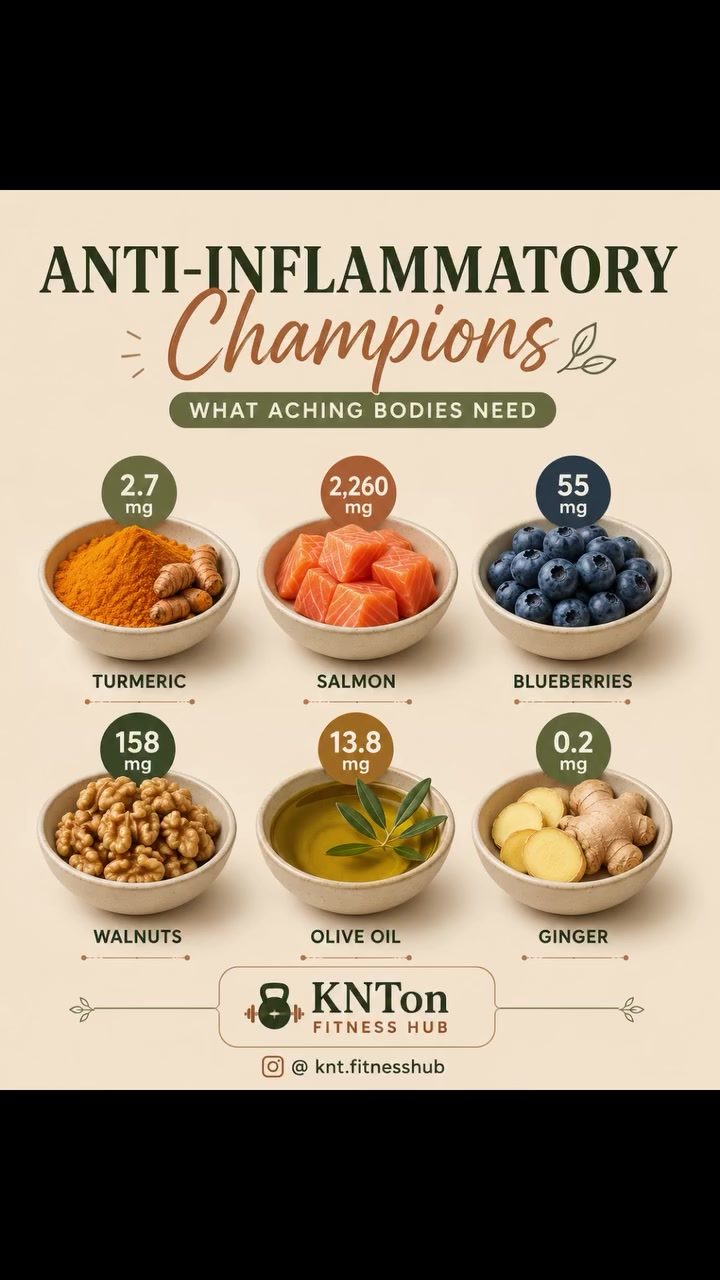
Turmeric is a vibrant yellow spice commonly used in Indian cuisine. It contains curcumin, a powerful anti-inflammatory compound. The graphic showcases that turmeric provides 158mg of curcumin, making it a potent addition to meals. Adding turmeric to dishes like curries, soups, and smoothies can help reduce inflammation and provide numerous health benefits.
Salmon
Rich in omega-3 fatty acids, salmon is another food credited with anti-inflammatory properties. Salmon contains 13.8mg of anti-inflammatory compounds, making it a valuable addition to any diet. Omega-3s, particularly EPA and DHA, are essential for reducing inflammation and supporting heart health. Incorporating salmon into your meals a few times a week can be beneficial.
Blueberries
Blueberries are packed with antioxidants, which help reduce inflammation in the body. They contain 0.2mg of anti-inflammatory compounds. While this may seem like a small amount, the overall health benefits of blueberries make them a worthy addition to your diet. Blueberries can be enjoyed as a snack, in smoothies, or as a topping for oatmeal and yogurt.
Walnuts
Walnuts are a great source of alpha-linolenic acid (ALA), an omega-3 fatty acid that has anti-inflammatory properties. They contain 2.7mg of anti-inflammatory compounds. Adding walnuts to salads, oatmeal, or enjoying them as a snack can help reduce inflammation and support heart health.
Olive Oil
Olive oil is known for its heart-healthy benefits, and it also contains potent anti-inflammatory properties. Olive oil contains 55mg of anti-inflammatory compounds. Using olive oil for cooking or as a dressing for salads can help reduce inflammation and support overall health.
Ginger
Ginger is a versatile spice with powerful anti-inflammatory properties. It contains 2,260mg of anti-inflammatory compounds, making it one of the most potent options on this list. Ginger can be added to teas, smoothies, and various dishes to enhance flavor and reduce inflammation.
Practical Tips
Incorporating Anti-inflammatory Foods into Your Diet
-
Meal Planning: Plan your meals around anti-inflammatory foods. Incorporate turmeric, salmon, blueberries, walnuts, olive oil, and ginger into your weekly meal plan.
-
Cooking Methods: Use olive oil for cooking and as a dressing for salads. Add ginger to your tea or smoothies. Turmeric can be added to curries, soups, and stews.
-
Snacking: Keep a stash of walnuts and blueberries for healthy snacking. These can help curb cravings and provide a boost of anti-inflammatory benefits.
-
Smoothies and Juices: Blend turmeric, ginger, and blueberries into your smoothies for a nutrient-rich drink. Add a splash of olive oil to juices for extra anti-inflammatory benefits.
-
Herbs and Spices: Experiment with different herbs and spices to enhance the flavor of your dishes. Turmeric and ginger can add a unique flavor to your meals while providing anti-inflammatory benefits.
Important Takeaways
-
Consistency is Key: The cumulative effect of small, consistent changes in your diet can lead to significant health benefits over time.
-
Variety Matters: Incorporating a variety of anti-inflammatory foods into your diet can help ensure you get a broad range of nutrients and health benefits.
-
Prevention and Treatment: Anti-inflammatory foods can help both prevent chronic inflammation and alleviate existing inflammatory conditions, such as arthritis and heart disease.
-
Simplicity: Adding anti-inflammatory foods to your diet doesn't have to be complicated. Simple changes, such as using olive oil for cooking or adding turmeric to your meals, can make a big difference.
Conclusion
Adding anti-inflammatory foods to your daily diet is a practical and effective way to support your overall health and wellness. Whether you're looking to reduce joint pain, improve heart health, or simply boost your recovery, incorporating foods like turmeric, salmon, blueberries, walnuts, olive oil, and ginger can help. Small, consistent changes can lead to significant benefits, so start by adding these foods to your meals and enjoy the long-term health advantages they provide. Stay consistent, experiment with new recipes, and watch your health improve over time.
Watch the Reel
Questions readers ask
What are the key benefits of incorporating turmeric into my diet?
Turmeric is renowned for its potent anti-inflammatory properties, primarily due to a compound called curcumin. It can help alleviate symptoms of arthritis, improve heart health, and support digestion. To maximize absorption, consume turmeric with black pepper and a healthy fat like olive oil.
How does salmon support overall health and reduce inflammation?
Salmon is rich in omega-3 fatty acids, which have been shown to reduce inflammation in the body. Regular consumption of salmon can support heart health, improve joint function, and even enhance brain function. Aim for at least two servings of fatty fish like salmon per week to reap these benefits.
What makes blueberries a powerful anti-inflammatory food?
Blueberries are packed with antioxidants and phytonutrients that help combat inflammation. They are particularly high in anthocyanins, which give them their deep blue color and contribute to their anti-inflammatory effects. Adding a handful of blueberries to your daily diet can support your immune system and promote overall well-being.
Can adding olive oil to my meals help reduce inflammation?
Yes, olive oil is a excellent source of monounsaturated fats and oleocanthal, a compound with noted anti-inflammatory properties. Using olive oil as your primary cooking oil and in dressings can help lower inflammation, improve heart health, and even reduce the risk of chronic diseases.
What are some easy ways to incorporate an anti-inflammatory diet into my daily meals?
Start by including a variety of colorful fruits and vegetables in your meals. Opt for lean proteins like salmon and turkey, and healthy fats from sources like avocados, nuts, and seeds. Spices like turmeric and ginger can be added to dishes for extra anti-inflammatory benefits. Gradually replace refined carbohydrates with whole grains for a balanced, inflammation-fighting diet.
How can ginger help in fighting inflammation?
Ginger contains powerful anti-inflammatory compounds called gingerols. It can help reduce muscle soreness, alleviate symptoms of arthritis, and improve digestion. You can add fresh ginger to your meals, brew it as a tea, or use it as a natural remedy for nausea and inflammation.
Are walnuts a good addition to an anti-inflammatory diet plan?
Yes, walnuts are an excellent choice for an anti-inflammatory diet. They are rich in omega-3 fatty acids, which help reduce inflammation. Additionally, walnuts provide important minerals and antioxidants. Snack on a small handful of walnuts daily or sprinkle them on salads and oatmeal to boost your intake of these beneficial nutrients.
Related deep dives
Similar reads based on topic and creator.




Recent articles
Fresh deep dives from the latest Reels we unpacked.




Comments
Be the first to comment.