Facial Analysis and Beauty
Beauty trends often dominate social media, making it seem like everyone is striving for the same look. However, the reality is that each person's face is uniquely their own. Understanding the science behind facial anatomy and how beauty trends shape our perceptions can help individuals appreciate and enhance their natural features.
Why This Matters
In recent years, the influence of social media on beauty standards has become increasingly apparent. Platforms like Instagram and TikTok are filled with images of people who appear to have similar facial structures and features. This phenomenon is not just about aesthetics; it can affect self-esteem and create unrealistic expectations about beauty. By understanding the unique aspects of facial anatomy and how trends evolve, we can better appreciate and celebrate individuality.
The Science of Facial Anatomy
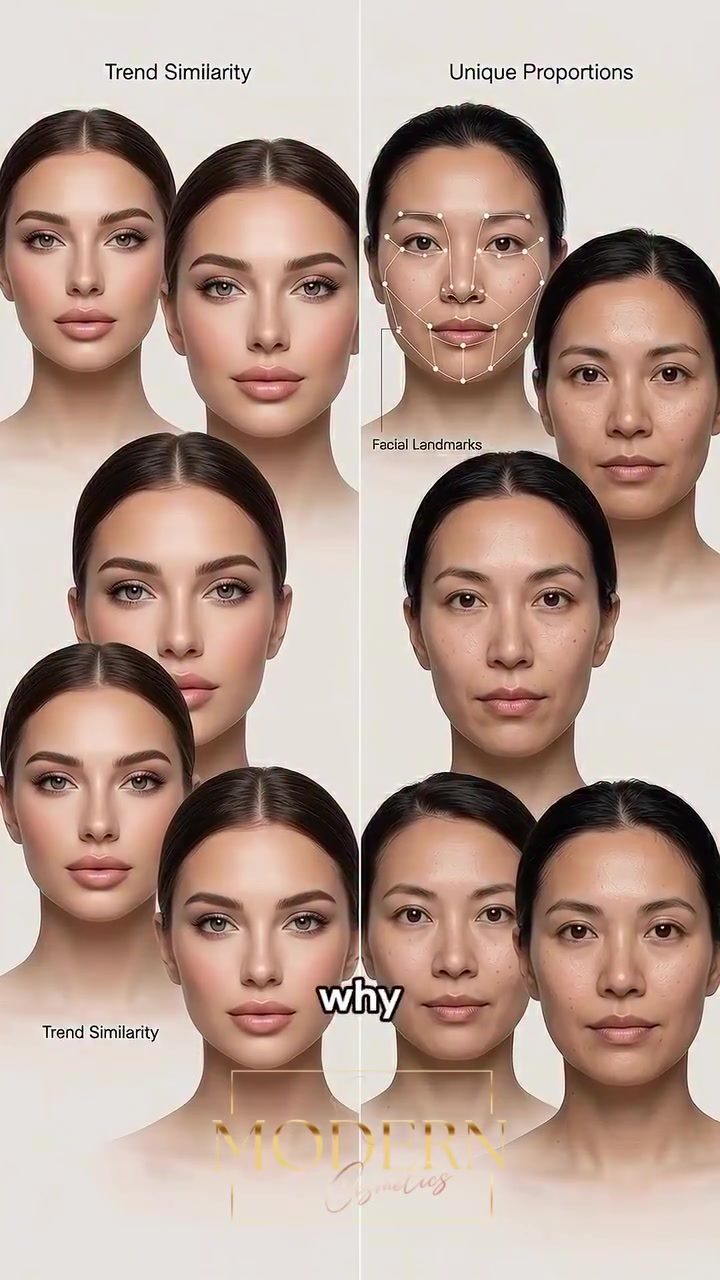
Unique Proportions
Every face is a combination of proportions, bone structure, muscles, soft tissue, and expressions. These elements come together to create a unique facial harmony that sets each person apart. Key factors that contribute to this uniqueness include:
- Proportions: The ratios between different facial features, such as the width of the nose, the distance between the eyes, and the length of the jawline.
- Bone Structure: The underlying framework of the face, which includes the shape of the skull, cheekbones, and jaw.
- Muscles and Soft Tissue: The muscles that control facial expressions and the soft tissue that provides volume and contour.
Facial Landmarks
Facial landmarks are specific points on the face that help in analyzing and understanding its structure. These landmarks are used in various fields, including cosmetic surgery, makeup artistry, and facial recognition technology. Some key landmarks include:
- Nasion: The point between the eyebrows.
- Gnathion: The lowest point of the chin.
- Subnasale: The point where the nose meets the upper lip.
- Trichion: The point where the hairline meets the forehead.
The Impact of Social Media
Social media platforms often play a significant role in shaping our perception of beauty. The constant exposure to edited and filtered images can lead to the belief that certain features are more desirable. Over time, this can create a homogenization effect, making many faces appear more alike. However, it's essential to remember that there is no single "perfect" face. The diversity in facial features is what makes each person unique.
Trend Similarity
Beauty trends often emerge from social media, where influencers and celebrities set the standard for what is considered beautiful. These trends can influence how people view their own features and may lead to a desire to conform to a particular look. However, it's crucial to recognize that trends are temporary, and individuality is timeless.
The Role of Personalized Assessment
Understanding your own facial features is far more valuable than trying to fit a trend. Personalized assessment involves evaluating your unique facial anatomy and determining the best approach to enhance your natural beauty. This can include:
Cosmetic Consultations
Consultations with beauty professionals can provide tailored advice on how to highlight your natural features and address any concerns you may have. These consultations often involve a detailed analysis of your facial proportions, bone structure, and skin type to recommend the most effective treatments and products.
Beauty Treatments
Cosmetic treatments can help enhance your natural beauty without altering your unique features. These treatments can range from non-invasive procedures like Botox and fillers to more permanent solutions like surgery. The key is to choose treatments that complement your individual anatomy and aesthetic goals.
Makeup Techniques
Makeup can be a powerful tool for enhancing your natural features. Understanding the basics of makeup techniques, such as contouring and highlighting, can help you create a more balanced and harmonious look. Working with a makeup artist or makeup enthusiast can also provide valuable insights and tips tailored to your specific features.
Practical Tips
- Self-Assessment: Spend time examining your own facial features in the mirror. Note the unique proportions, bone structure, and expressions that make your face distinct.
- Consult a Professional: Schedule a consultation with a beauty or cosmetic professional to get personalized advice and recommendations.
- Explore Different Looks: Experiment with different makeup techniques and styles to find what works best for your unique facial structure.
- Embrace Natural Beauty: Celebrate your natural features and avoid comparing yourself to edited or filtered images on social media.
Important Takeaways
- Facial anatomy is unique to each individual, with proportions, bone structure, muscles, and expressions contributing to overall harmony.
- Social media can influence beauty standards, making certain features appear more desirable and leading to a homogenization effect.
- Personalized assessment, including cosmetic consultations and specialized beauty treatments, can help enhance natural features effectively.
- Embracing individuality and understanding your own facial features are key to achieving a balanced and harmonious look.
Conclusion
In a world where beauty trends come and go, it's essential to remember that each person's face is uniquely their own. By understanding the science behind facial anatomy and the impact of social media on beauty standards, we can better appreciate and celebrate our individuality. Embracing your natural features and seeking personalized advice can help you enhance your natural beauty and achieve a look that truly reflects who you are.
Watch the Reel
Questions readers ask
How does social media influence current beauty standards?
Social media platforms often showcase similar facial features and structures, creating a dominant aesthetic that many users strive to achieve. This can lead to a narrow perception of beauty, as users may compare themselves to these standards and feel pressured to alter their appearance. However, understanding that each person's face has unique features can help mitigate these pressures.
What role does facial anatomy play in beauty trends?
Facial anatomy is the foundation of our unique features. Understanding the science behind facial structures helps individuals appreciate the diversity and beauty of different faces, instead of conforming to social media trends.
Why are there so many similar-looking faces on social media?
The prevalence of similar facial features on social media can be attributed to the popularity of beauty trends that promote specific facial proportions and structures. This often leads to people emulating these looks, which can inadvertently diminish the appreciation for individual facial features.
How can I appreciate my unique facial features in the face of social media beauty standards?
Appreciating your unique facial features involves understanding that your face is a composite of individual characteristics that make you distinct. By learning about the science of facial anatomy, you can gain a deeper appreciation for your own features and resist the pressure to conform to social media trends.
What are the impacts of modern cosmetics trends on facial beauty standards?
Modern cosmetics trends often emphasize achieving a specific facial beauty ideal. While there’s nothing wrong with enhancing your appearance, it’s important to remember that these trends can create unrealistic expectations and diminish the appreciation for the natural diversity of facial features.
Can social media have a positive impact on facial beauty perceptions?
Yes, social media can positively impact facial beauty perceptions by exposing users to a wide range of beauty trends and individual facial features. By embracing the diversity of faces and promoting self-acceptance, social media can help users appreciate the beauty in their own unique features and challenge the narrow beauty standards imposed by media.
Recent articles
Fresh deep dives from the latest Reels we unpacked.




Comments
Be the first to comment.