Emotional Labor and Mankeeping: Understanding the Disparity in Relationships
In heterosexual relationships, women often carry a disproportionate amount of emotional labor. This burden, often referred to as "mankeeping," involves supporting a partner emotionally, managing their emotional state, and anticipating their needs, often at the expense of one's own wellbeing.
Context / Why This Matters
Why discuss this issue? The disparity in emotional labor can lead to serious consequences. Unreciprocated emotional caretaking has been linked to burnout, fatigue, depression, and resentment. This imbalance also impacts relationship satisfaction, creating long-term issues that can affect both partners and their overall wellbeing.
Main Discussion
The Prevalence of Emotional Labor
Emotional labor is a significant issue in many relationships. Research indicates that 81% of all caregivers are female, and they spend as much as 50% more time giving care than males. Even when both partners work full time, studies suggest women spend approximately 40% more time on caregiving tasks than men. This emotional labor is often invisible and unrecognised, adding to the emotional burden women carry.
The Impact of Socialization
The roots of this issue can be traced back to early socialization. From childhood, girls are often encouraged to be nurturing and emotionally attuned, while boys may be taught to be stoic and self-reliant. These learned patterns carry into adult relationships, creating imbalances that feel natural but are actually cultural conditioning.
Socialization plays a significant role in shaping these dynamics. Girls are often taught to prioritize the needs of others and to be emotionally available. Boys, on the other hand, are often encouraged to suppress their emotions and to be self-reliant. These patterns, reinforced through social interactions and cultural norms, carry into adult relationships. A study by Thomeer et al. found that women often take on the role of emotional caretaker in relationships, managing their partner's emotional state and anticipating their needs.
The Concept of Mankeeping
The term "mankeeping" encapsulates the phenomenon where women take on the mental and emotional load of supporting their partner. This includes managing their partner's emotional state, anticipating their needs, and providing emotional support. This term highlights the asymmetric nature of the emotional labor in relationships, where one partner consistently gives more than they receive.
The Consequences of Emotional Labor Imbalance
The toll of unreciprocated emotional caretaking is documented. It has been linked to burnout, fatigue, depression, and resentment. When one partner consistently gives more than they receive, relationship satisfaction suffers. This imbalance can create a cycle of resentment and emotional exhaustion, affecting both partners and the overall health of the relationship.
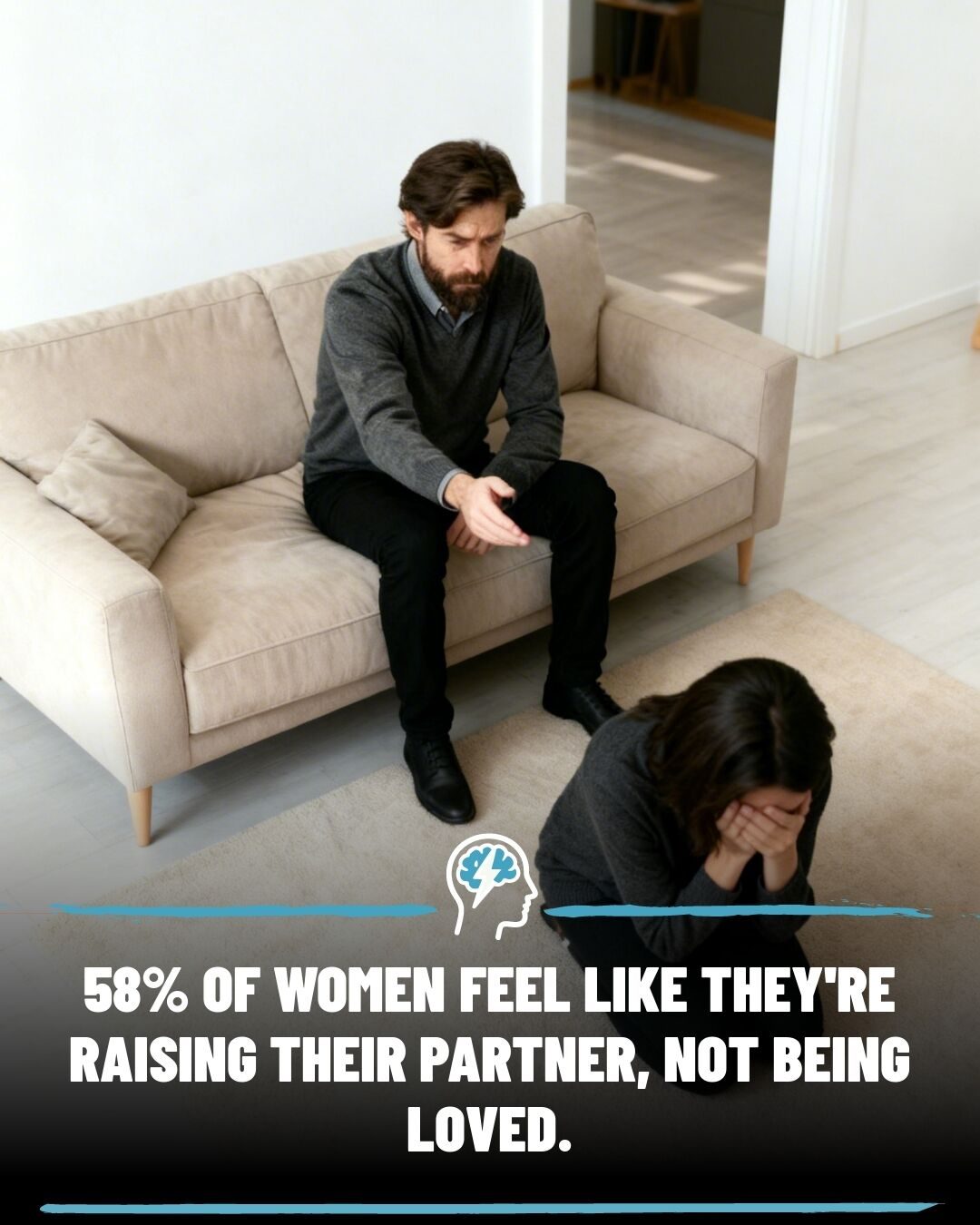
One common symptom of this imbalance is feeling more like a caregiver than a partner. A visual split-screen image captures this sentiment: one side shows a man sitting on a couch, looking down, while the other side shows a woman with her head in her hands. The text overlay highlights the statistic: 58% of women feel like they are raising their partner, not being loved. This visual representation underscores the emotional burden many women carry.
The Role of Communication in Addressing the Issue
Open communication about emotional needs and genuinely shared responsibility may improve relationship dynamics. This approach emphasizes collaboration and mutual support, rather than blame and resentment. By recognizing the patterns of emotional labor and working together towards balance, couples can create more equitable and fulfilling relationships.
Practical Tips
Recognize the Patterns
The first step in addressing emotional labor imbalance is recognizing the patterns. This involves being aware of the emotional labor you are performing and how it affects your partner and the relationship. By identifying these patterns, you can start to address them more openly and collaboratively.
Communicate Openly
Open communication is crucial in addressing emotional labor imbalance. This involves expressing your needs and concerns to your partner. By communicating openly, you can work together to create a more balanced and fulfilling relationship.
Share Responsibility
Sharing responsibility is essential in addressing emotional labor imbalance. This involves both partners taking on a fair share of the emotional labor in the relationship. By sharing responsibility, you can create a more equitable and fulfilling relationship.
Seek Support
Sometimes, addressing emotional labor imbalance may require external support. This could involve seeking help from a therapist or counselor, or joining a support group. By seeking support, you can gain valuable insights and tools to address emotional labor imbalance in your relationship.
Important Takeaways
Emotional labor is a significant issue in many relationships. It is often invisible and unrecognized, adding to the emotional burden women carry. The roots of this issue can be traced back to early socialization, where girls are often encouraged to be nurturing and emotionally attuned, while boys may be taught to be stoic and self-reliant. These learned patterns carry into adult relationships, creating imbalances that feel natural but are actually cultural conditioning. By recognizing the patterns, communicating openly, sharing responsibility, and seeking support, couples can create more balanced and fulfilling relationships and address the challenges of emotional labor.
Conclusion
The emotional labor imbalance in relationships is a widespread issue. By recognizing the patterns, communicating openly, sharing responsibility, and seeking support, couples can work towards creating more balanced and fulfilling relationships. Understanding the concept of mankeeping and its impact on relationships can help address this issue and create healthier, more equitable partnerships.
Watch the Reel
Questions readers ask
What is emotional labor and why is it commonly associated with women in relationships?
Emotional labor refers to the work of managing one's own emotions and those of others, often to fulfill social and relational expectations. In heterosexual relationships, women frequently take on a significant amount of emotional labor, which includes supporting their partners emotionally, managing their emotional states, and anticipating their needs. This dynamic can lead to an imbalance, where women bear a disproportionate emotional burden.
What does the term 'mankeeping' mean in the context of emotional labor?
'Mankeeping' refers to the act of supporting and managing a partner's emotional needs in a heterosexual relationship. This term is used to highlight the disproportionate amount of emotional labor often required of women to sustain their partners' emotional well-being, often at the expense of their own. Mankeeping is an often unrecognized form of emotional labor that can have significant effects on a woman's emotional and psychological state.
How does early socialization contribute to the emotional labor imbalance in relationships?
Early socialization plays a significant role in shaping gender roles and expectations, which often lead to an imbalance in emotional labor. From a young age, individuals are taught to conform to societal norms that may dictate how they should express and manage emotions. These norms can lead to unrecognized emotional labor, as women are often expected to prioritize their partner's emotional needs over their own.
What are some signs of emotional labor burnout in women?
Emotional labor burnout in women can manifest in various ways, including persistent fatigue, feelings of resentment, and a decline in overall wellbeing. Women may also experience increased stress, anxiety, and even depression as a result of unreciprocated emotional caretaking. These symptoms often indicate that the emotional labor in a relationship is disproportionate and unsustainable.
How does emotional labor impact relationship satisfaction for both partners?
Emotional labor, particularly when it is disproportionate, can significantly impact relationship satisfaction for both partners. The partner primarily bearing the emotional burden may experience burnout and resentment, leading to a decrease in overall happiness and satisfaction in the relationship. This imbalance can also create long-term issues, including communication problems, and strain on the emotional and psychological well-being of both individuals.
What are some steps women can take to address the emotional labor imbalance in their relationships?
Addressing the emotional labor imbalance in relationships requires open communication and a mutual understanding. Women can start by expressing their feelings and needs to their partner, and setting boundaries to prevent emotional overload. Couples can work together to redistribute emotional responsibilities, fostering a more balanced and equitable partnership.
How does emotional labor relate to power dynamics in relationships?
Emotional labor is closely tied to power dynamics in relationships, as the partner who bears more of the emotional burden often holds less power. This imbalance can create a dynamic where one partner's needs are consistently prioritized over the other's, leading to feelings of resentment and dissatisfaction. Recognizing and addressing this power imbalance is crucial for achieving a healthier, more equitable relationship.
Recent articles
Fresh deep dives from the latest Reels we unpacked.




Comments
Be the first to comment.