Optical Illusion Crosswalks: A Creative Approach to Traffic Safety
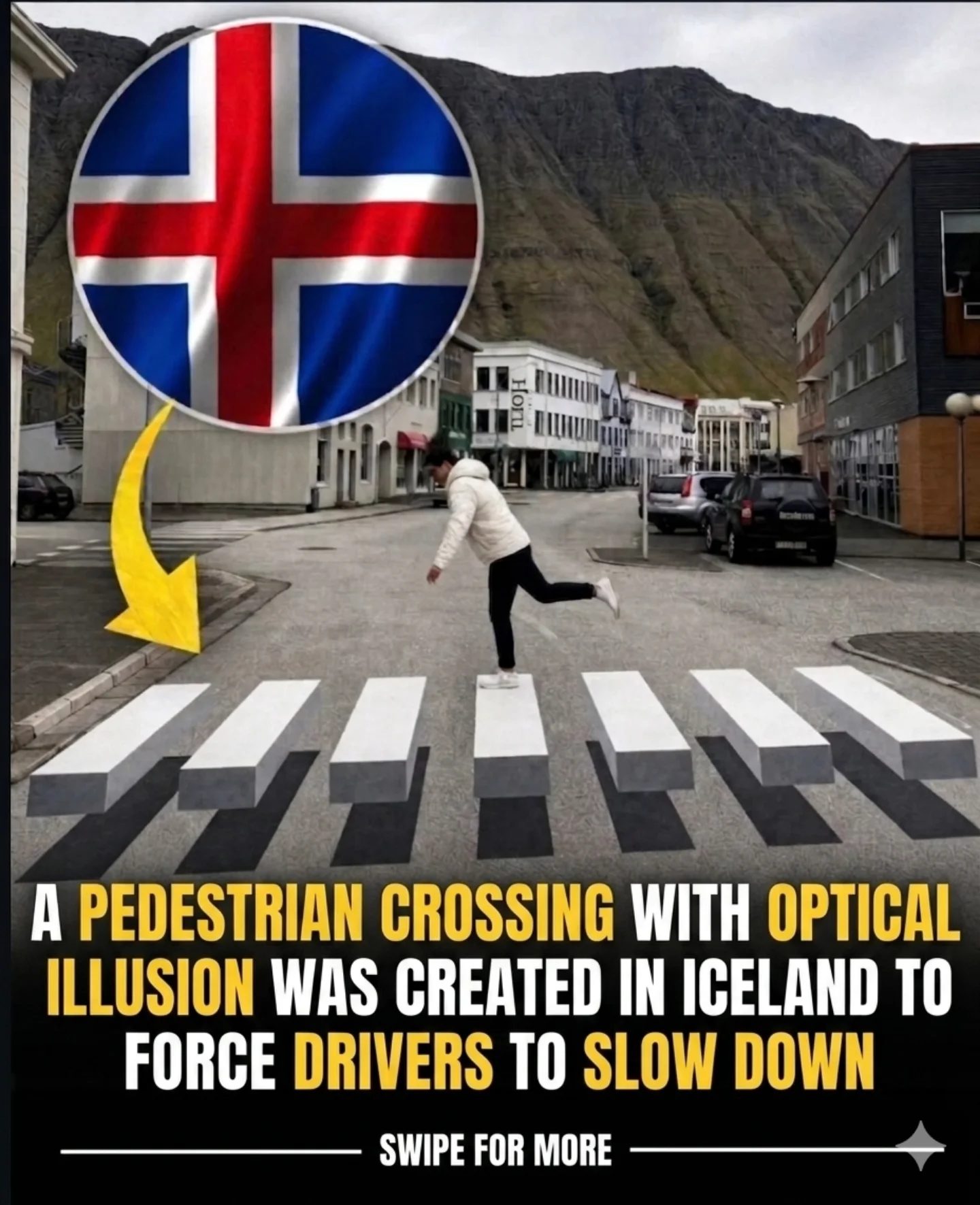
In the charming fishing village of Ísafjörður, Iceland, a unique and innovative approach to traffic safety has emerged. This pedestrian crossing, featuring a cleverly designed optical illusion, has captured attention for its effectiveness and creativity. The crosswalk is engineered to make the white stripes appear as three-dimensional concrete blocks hovering above the asphalt, giving the visual impression of a physical barrier. This illusion naturally encourages drivers to slow down and exercise increased caution, merging street art with urban engineering to enhance safety without traditional speed bumps.
Context: Why This Matters
In urban planning, safety is paramount, especially at crosswalks where pedestrians and vehicles interact frequently. Traditional methods like speed bumps and signs can be effective but often come with drawbacks such as noise pollution and potential damage to vehicles. An optical illusion crosswalk, however, offers a novel solution. By leveraging the power of visual perception, these crosswalks can influence driver behavior in a more subconscious and effective manner.
Main discussion
The Science Behind the Illusion
The optical illusion at the crosswalk in Ísafjörður works by creating a visual distortion that makes the flat surface appear as if it has protrusions. This effect is achieved through the strategic placement and design of the white stripes, which resemble concrete blocks. The brain interprets this distortion as a physical barrier, prompting drivers to slow down instinctively. This psychological cue is subtle yet powerful, as it does not rely on explicit instructions or warnings.
Perception and Behavior
Human perception is heavily influenced by visual cues, and optical illusions exploit this aspect of our cognition. The brain processes visual information quickly, often before conscious thought can intervene. In the case of the crosswalk illusion, the visual cue of a protruding barrier is processed instantly, triggering a reflexive response to slow down. This immediate reaction is crucial in traffic scenarios where split-second decisions can make a significant difference in safety.
The Artistic and Engineering Aspects
Creating an optical illusion crosswalk involves a blend of artistic design and engineering precision. The design process begins with the artistic vision of what the illusion should look like. Artists and designers work on the visual concept, ensuring that the illusion is both effective and aesthetically pleasing. Engineers then take over, calculating the exact measurements and placement of the stripes to achieve the desired effect.
Design Elements
The design of the optical illusion crosswalk includes several key elements:
- Stripe Pattern: The white stripes are not randomly placed but are carefully designed to create the illusion of depth and dimension. The pattern is often a repetition of specific shapes and angles that fool the eye into seeing a three-dimensional structure.
- Color Contrast: The contrast between the white stripes and the dark asphalt plays a crucial role in creating the illusion. The high contrast makes the stripes stand out, enhancing the visual effect.
- Perspective: The illusion is designed from a driver's perspective, ensuring that the effect is most pronounced when viewed from a moving vehicle. This perspective is crucial in making the illusion effective in real-world scenarios.
Practical Use and Effectiveness
The optical illusion crosswalk in Ísafjörður has proven to be highly effective in practice. Drivers approaching the crosswalk are naturally compelled to slow down, reducing the risk of accidents involving pedestrians. This effectiveness is a testament to the power of psychological cues in traffic management.
Real-World Applications
The success of the optical illusion crosswalk in Iceland has sparked interest in similar projects around the world. Urban planners and traffic engineers are exploring the potential of optical illusions in various settings, from busy city intersections to residential areas. The adaptability of this approach makes it a versatile tool in the arsenal of traffic safety measures.
Practical Tips
For Urban Planners
- Community Involvement: Engaging the local community in the design process can ensure that the illusion is not only effective but also visually appealing to residents.
- Testing and Feedback: Before implementing the illusion on a large scale, conducting pilot tests and gathering feedback from drivers and pedestrians can help refine the design.
For Drivers
- Stay Alert: Even with effective safety measures, staying alert and aware of your surroundings is crucial.
- Obey Crosswalk Signals: Always respect traffic signals and pedestrian crossings, regardless of any visual illusions or distractions.
For Artists and Designers
- Research and Experimentation: Explore different patterns and designs to understand what works best in creating a compelling illusion.
- Collaboration: Work closely with engineers to ensure that the artistic vision translates into a practical and effective solution.
Important Takeaways
- Optical illusion crosswalks leverage visual perception to influence driver behavior, making them an effective traffic safety measure.
- The design of these crosswalks combines artistic creativity with engineering precision, ensuring both aesthetic appeal and practical effectiveness.
- Real-world applications of optical illusion crosswalks have shown promising results, leading to increased interest and potential for widespread adoption.
Conclusion
The optical illusion crosswalk in Ísafjörður, Iceland, stands as a testament to the innovative fusion of art and engineering in urban planning. By harnessing the power of visual perception, these crosswalks offer a creative and effective solution to enhancing traffic safety. As more cities explore the potential of such illusions, the future of urban design looks increasingly vibrant and safe.
Watch the Reel
Recent articles
Fresh deep dives from the latest Reels we unpacked.




Comments
Be the first to comment.