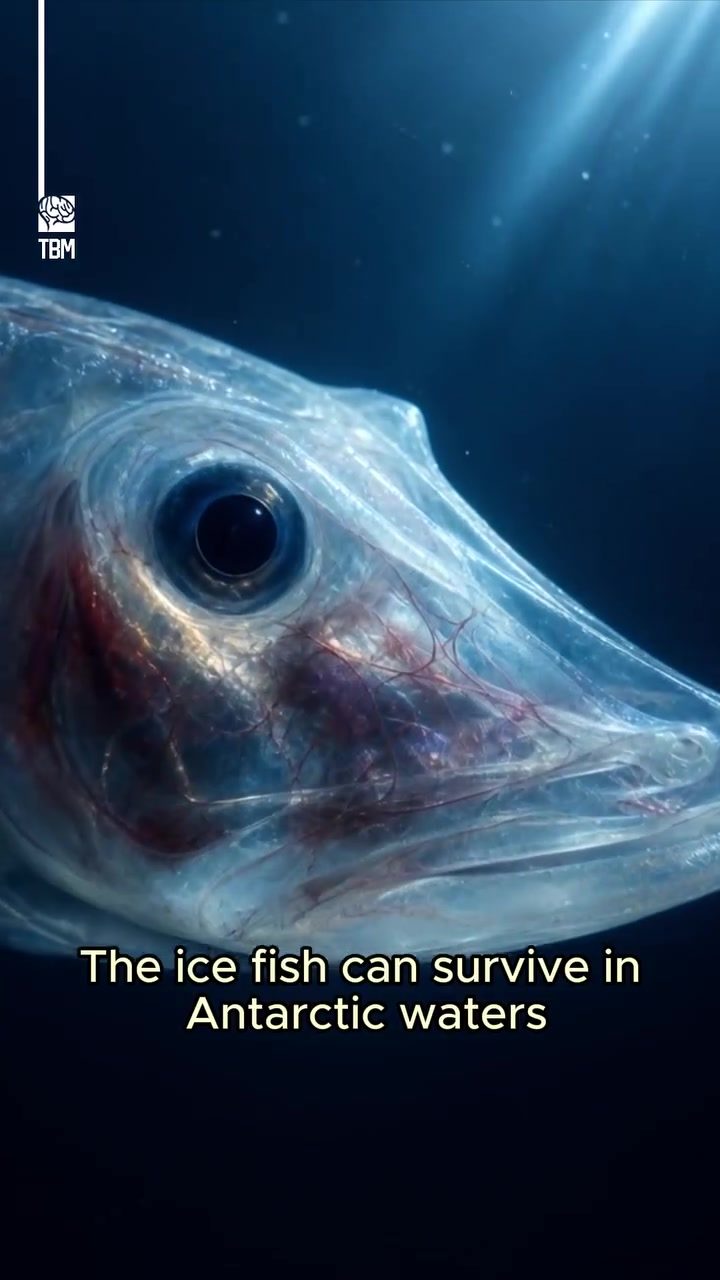
Antarctic Icefish: Masters of Extreme Adaptation
Antarctic icefish are some of the most uniquely adapted creatures on Earth, thriving in the harsh, icy waters of the Antarctic. Their most striking feature is their transparent blood, which lacks red blood cells. This adaptation allows oxygen to dissolve directly into their plasma, a critical survival mechanism in the cold, oxygen-rich Antarctic environment.
Context / Why This Matters
Icefish inhabit one of the most extreme environments on the planet. The Antarctic waters are characterized by subzero temperatures and high oxygen saturation. These conditions would be lethal to most vertebrates, but the icefish has evolved remarkable adaptations to not only survive but thrive in this harsh setting. Understanding these adaptations offers insights into the incredible resilience and diversity of life on Earth.
Main Discussion
The Unique Blood of Icefish
The transparent blood of icefish is one of their most notable adaptations. Unlike other fish, icefish do not produce red blood cells, which are essential for transporting oxygen in most vertebrates. Instead, their blood plasma can directly absorb oxygen from the water, thanks to the high oxygen concentration in the Antarctic environment. This unique adaptation reduces the viscosity of the blood and eliminates the energy cost of producing and maintaining red blood cells.
Icefish blood contains specialized antifreeze glycoproteins. These proteins prevent ice crystals from forming in their bodily fluids, which is crucial for their survival in subzero temperatures.
Semi-Translucent Skulls and Light Permeability
Another remarkable feature of icefish is their semi-translucent skulls. These skulls allow certain light wavelengths to pass through, which aids in camouflage or sensory functions in the dark ocean depths. This adaptation is particularly useful in the low-light conditions of the Antarctic waters, where visibility is limited. The ability to perceive light can help icefish detect predators or prey, enhancing their survival chances.
The Evolutionary Path of Icefish
The combination of transparent blood, antifreeze properties, and light-permeable skull structures reveals a delicate balance between biology and extreme climate. Icefish have evolved through a pathway where genetics and the environment intersect, creating a fish that thrives in conditions where most vertebrates cannot. This evolutionary process showcases how life can adapt to some of the harshest habitats on Earth.
Practical Tips
While there are no direct practical applications for humans from icefish adaptations, studying these creatures can provide valuable insights into biological resilience and adaptation. Researchers can learn from the antifreeze glycoproteins in icefish blood to develop new technologies for cryopreservation or even medical applications. Understanding how icefish perceive light in low-visibility environments could also inspire advancements in underwater imaging and sensing technologies.
Important Takeaways
- Transparent Blood: Icefish blood lacks red blood cells, allowing oxygen to dissolve directly into the plasma, which is crucial for survival in cold, oxygen-rich waters.
- Antifreeze Glycoproteins: These proteins prevent ice crystals from forming in the fish's bodily fluids, protecting them in subzero temperatures.
- Semi-Translucent Skulls: These enable certain light wavelengths to pass through, aiding in camouflage or sensory functions in the dark ocean depths.
- Evolutionary Adaptation: The unique combination of these adaptations showcases how life can evolve to thrive in extreme environments.
Conclusion
Icefish are a testament to the incredible adaptability of life on Earth. Their ability to survive in the harsh Antarctic environment, with transparent blood, antifreeze properties, and light-permeable skulls, makes them one of the most fascinating examples of evolutionary adaptation. By studying these remarkable creatures, we gain a deeper understanding of how life can thrive in even the most challenging conditions.
Watch the Reel
Questions readers ask
Why do icefish have transparent blood?
Icefish have transparent blood as an adaptation to their cold, oxygen-rich environment. Without red blood cells, oxygen can dissolve directly into their plasma, making it easier to absorb the abundant oxygen in the Antarctic waters.
How do icefish prevent freezing in subzero temperatures?
Icefish produce specialized antifreeze glycoproteins that bind to small ice crystals, preventing them from growing and protecting the fish from freezing. This adaptation is crucial for their survival in the frigid Antarctic waters.
What is the primary survival strategy of icefish in the Antarctic?
The primary survival strategies of icefish include their transparent blood for efficient oxygen absorption and the production of antifreeze glycoproteins to prevent ice crystal formation, allowing them to thrive in the extreme Antarctic environment.
Can icefish be found in other cold water environments besides the Antarctic?
Icefish are uniquely adapted to the extreme conditions of the Antarctic and are not found in other cold water environments. Their specific adaptations, such as transparent blood and antifreeze proteins, are tailored to the harsh conditions of the Southern Ocean.
How do icefish absorb oxygen without red blood cells?
Icefish absorb oxygen directly through their skin and gills and into their plasma, which is facilitated by their transparent blood and high oxygen solubility. This unique mechanism is well-suited to the oxygen-rich, cold waters of the Antarctic.
Do icefish have any other unique physical adaptations besides transparent blood?
Yes, icefish have other unique adaptations including antifreeze proteins, and they lack scales and pigmentation. These adaptations contribute to their ability to conserve energy and thrive in the dark, cold Antarctic environment.
Can transparent blood in icefish absorb other elements besides oxygen?
While transparent blood in icefish is specifically adapted for absorbing oxygen, it also absorbs carbon dioxide (and can transfer nutrients). These adaptations allow icefish to maintain energy efficiency in the harsh Antarctic environment.
Related deep dives
Similar reads based on topic and creator.




Recent articles
Fresh deep dives from the latest Reels we unpacked.




Comments
Be the first to comment.