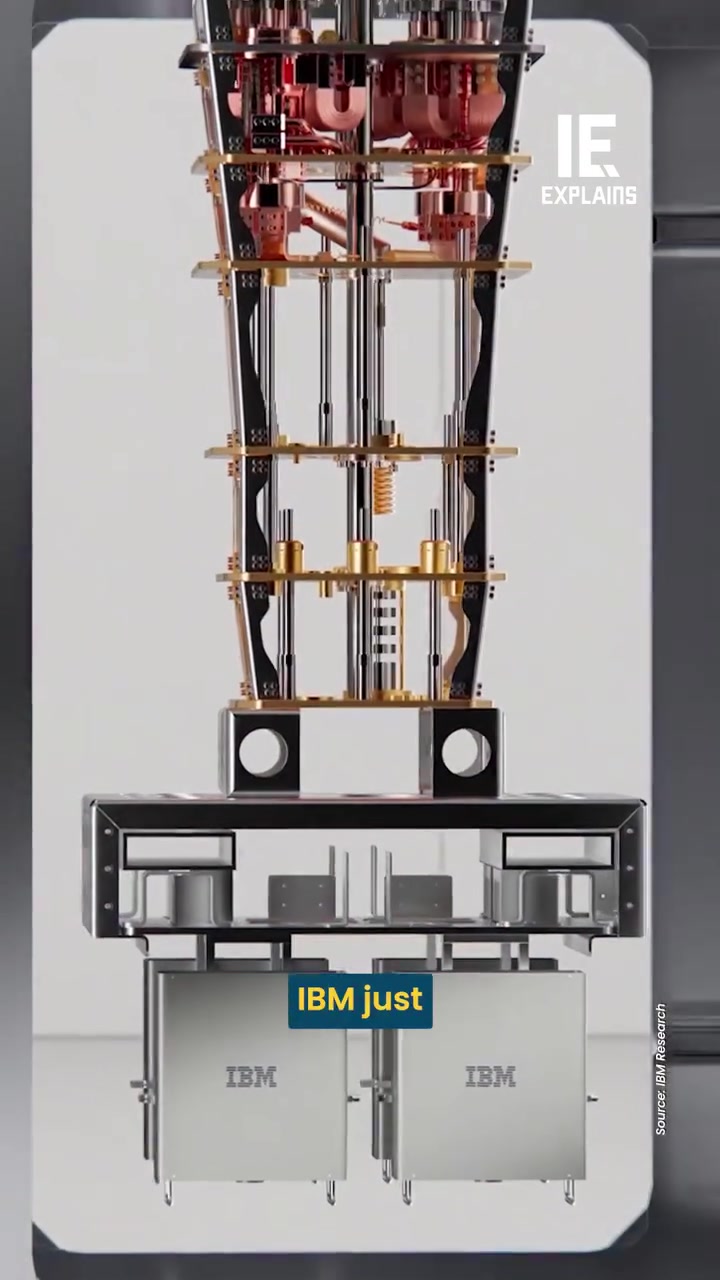
IBM's quantum leap may well be found in a pair of interconnected aluminum boxes located in the company's lab in Yorktown Heights, New York. IBM has achieved one of the largest steps toward a reliable quantum computer by extending a pair of modular cryogenic systems. The setup stands more than eight feet tall and wide, dubbed a quantum computer refrigerator.
The Quantum Fridge: Chilling Progress
The quantum refrigerator, an engineering marvel, is a feat connecting two modular cryogenic systems into one larger unit. The quantum fridges are large aluminum cells, which face the same temperature as liquid helium, reaching 4 Kelvin in under five days. The cold environment is essential for quantum computers. Inevitably, superficial users require a system that works reliably. IBM has engineered a machine to perform this task both effectively and quickly.
What Quantum Computers Will Mean For Us
Quantum computers are the future of data processing and computation. Unlike classical computers, they can solve complex problems much faster. The technology represents a computational leap, handling multiple data sets and solving complex problems simultaneously. These possibilities range from drug discovery in medicine to climate modeling and cryptography. IBM's strides show that quantum computing is moving from theoretical to practical.
Building the Quantum Computer Refrigerator
One hurdle in making a practical quantum computer is fitting a quantum processor into a limited space. IBM’s latest design—box-shaped aluminum cells—solves this problem. Until now, quantum fridges have been tall cylinders. The box system provides a tighter fit and provides up to 12 times more wiring space. This allows the chips to connect through cables called L couplers that move through "tunnels" held at cryogenic temperatures. The design aims to run cables at a low risk of interference. Each cell provides unique technology advancements. The aluminium cells create a half square meter of wiring area and 2.75 cubic meters of vacuum chamber. This provides enough wire to connect the quantum processors and their chips. IBM’s Nighthawk processors will be deployed in these modules later this year. The wiring area and vacuum chamber of the modules provide a secure and efficient environment to perform the tasks expected.
The Cryogenic Environment
IBM's quantum fridge achieves this temperature by chilling the system to 4 Kelvin—just above absolute zero and colder than deep space by 180 times. This extreme cooling prevents quantum bits, or qubits, from losing their quantum state. Qubits must remain stable to perform calculations, and this level of cooling ensures that they do. The cooling process itself is intricate, involving complex cryogenic systems. Each cell involves thermal shielding layers of protection, and ensures that the processors running the system remain stable. IBM is also looking into ways to make its cryogenic environment more accessible and stable.
Linking modules together
IBM's modular approach is key to its quantum computing plans. By creating smaller, more manageable modules that can be connected, IBM aims to build a scalable quantum computer. This approach has the advantages of scalability and flexibility. The modular design allows for easier repair and upgrades, as individual modules can be replaced or updated without disrupting the entire system. IBM’s plan is to connect 1,000 programmable qubits with their L couplers by 2027. The use of L couplers allows the system to handle a larger volume of data, providing a faster and more efficient working performance.
What's next?
IBM's ultimate goal is to create the world’s first fault-tolerant quantum computer, which allows machines to operate without failure. IBM is aiming to deliver Starline, its first fault-free computer, in 2029. While IBM's progress is notable, the challenges of quantum computing are still significant. IBM's vision for a fault-tolerant quantum computer represents a giant leap forward in quantum computing. The company's focus on modularity, scalability, and stability positions it as a leader in the field.
Inside Quantum Computing for the Curious Non-Expert
The concept of quantum computing can be daunting, but IBM has taken steps to make the technology more accessible. One way is through its modular design, which allows for easier maintenance and upgrades. The technology is more accessible to the general public, allowing for consumer and business application access. IBM's quantum computing advances aim to make the technology more user-friendly. IBM is also working on developing programming languages and software tools that make it easier for developers to create quantum algorithms. Furthermore, IBM provides educational resources and partnerships with academic institutions to foster quantum computing research and development.
- Education and Outreach: IBM offers a range of educational resources, including online courses and tutorials, to help anyone interested in learning about quantum computing.
- Cloud Access: IBM’s Quantum Experience allows users to access quantum processors via the cloud, making it possible to experiment with quantum algorithms without needing specialized hardware.
- Partnerships: IBM collaborates with academic institutions and research organizations to advance the field of quantum computing. These partnerships help to foster innovation and drive progress in the field.
The Quantum Horizon
The date is set: 2027, and IBM's goal is to have at least 1,000 of these programmable qubits linked together. And 2029 is the year when IBM plans to unveil Starling, its first fault-tolerant quantum computer. IBM is focusing on building a fault-tolerant quantum computer. IBM's progress shows the potential of quantum computers, which could revolutionize industries. IBM's advancements in quantum computing highlight the potential of the technology to transform various industries and solve complex problems. As IBM continues to push the boundaries of what's possible with quantum computing, the future looks bright for this transformative technology.
Watch the Reel
Questions readers ask
What exactly is a quantum computer refrigerator, and how does it help in quantum computing?
The quantum computer refrigerator is an engineering marvel designed by IBM. It's essentially a large aluminum box that chills quantum processors to an extremely low temperature of 4 Kelvin, which is crucial for maintaining the stability of quantum bits, or qubits. This cold environment prevents qubits from losing their quantum state, ensuring accurate and reliable calculations.
How does IBM's new design for the quantum fridge improve on previous models?
IBM's new design for the quantum fridge is a significant improvement over previous models. The box-shaped aluminum cells provide a tighter fit and up to 12 times more wiring space, allowing for better connectivity and reduced interference. This design also includes unique technology advancements, such as a larger wiring area and vacuum chamber, which create a secure and efficient environment for the quantum processors.
What are the advantages of IBM's modular approach to quantum computing?
IBM's modular approach to quantum computing allows for scalability and manageability. By creating smaller, interconnected modules, IBM can build a more flexible and adaptable quantum computer. This approach also makes it easier to maintain and upgrade the system over time.
How does IBM's quantum fridge achieve such low temperatures?
IBM's quantum fridge achieves temperatures as low as 4 Kelvin, which is colder than deep space, through a complex cryogenic system. This system involves thermal shielding layers of protection to maintain the stability of the processors and prevent interference.
What are qubits, and why is it important to keep them stable?
Qubits, or quantum bits, are the basic units of quantum information. Unlike classical bits, qubits can exist in multiple states at once, allowing quantum computers to solve complex problems much faster. Keeping qubits stable is crucial because they can easily lose their quantum state due to environmental factors, leading to errors in calculations.
What are some practical applications of quantum computing?
Quantum computing has the potential to revolutionize various fields. Some practical applications include drug discovery in medicine, climate modeling, and advancements in cryptography. IBM's strides in quantum computing are bringing these possibilities closer to reality.
When can we expect to see IBM's Nighthawk processors in action?
IBM's Nighthawk processors are expected to be deployed in the modular quantum fridge cells later this year. These processors will benefit from the improved design and cryogenic environment, allowing for more efficient and reliable quantum computing.
Related deep dives
Similar reads based on topic and creator.




Recent articles
Fresh deep dives from the latest Reels we unpacked.




Comments
Be the first to comment.